A Terrible Marvel

or Typology: Deadly Weapon or game of Scattergories?
“Chiastic literary analysis has completely destroyed liberal literary criticism. Liberalism is in tatters, bleeding and dying. Liberalism cannot survive Dorsey’s chiastic proof of the total unity of Isaiah, for instance. Dorsey finds loads of 7-fold chiasms in the Bible. I’ve found scores more, quite independently. What Dorsey does not see is that these are recaps of the chiasm of the 7 days in Genesis 1. And that’s good, because it means he did not go through the Bible forcing passages into heptamerous chiasms. He just found them there, and others can see that these track Genesis 1 as ‘new creation’ passages.”
—James B. Jordan, A Reply on the Nature of the Psalter, Biblical Horizons blog, biblicalhorizons.wordpress.com, referring to David A. Dorsey, The Literary Structure of the Old Testament.
If chiastic literary analysis (along with typology as I posted recently) is such a powerful weapon against a modernist interpretation of the Bible, why are these methods of study shunned by those who oppose liberal theology? Why are theologians hauled over the coals for using it if it leaves the enemy in shreds?
Although each case had very different emphases (and mostly handled in a godly manner on both sides), Peter Leithart, David Field and Warren Gage have all been put through the wringer for their conclusions.1 To some, a wider, though complementary, level of meaning for any Scripture is a dangerous proposition.
But to my mind, these methods demonstrate powerfully that the Bible is a fortress that can withstand any attack. The darts of liberal theology bounce off the Scriptures like Leviathan because it has scales like roofing tiles.
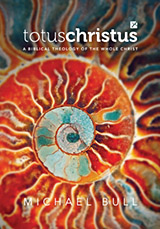
One beloved pastor who read parts of my book Totus Christus took offense at my comments on Matthew 6:25-34:
Using images of flocks of birds, fields of lilies and the grass of the field, Jesus reminds the saints not to worry about the things that concern the Gentiles—food (the tree of life), drink (the tree of wisdom) and clothing (robes of glory). Like Jesus, if they submit to God, He will give them a better robe than Solomon’s (Hebrews 12:2). If the saints put the kingdom of God first and refuse to lay their hands on the riches of the world, they will receive “all these things” as plunder! The dominion of beasts is always given to men.
His point was that this is reading way too much into the text. His brother was a missionary in China for decades, and the Lord was faithful to His promise to provide for his family’s needs. But literary analysis doesn’t override the obvious meaning of the text.
The Sermon on the Mount follows the Creation/Tabernacle/Feasts pattern, and it just so happens that after Jesus’ comments on the lamp of the body being the eye (Day 4 - Ruling Lights - Lampstand - Pentecost), the rest of the chapter follows the theme of Day 5 (Swarms - Incense Altar - Trumpets). My book traces this pattern through the Bible, and a ‘Day 5′ very often includes plundering the enemy. It is Ruth brought in from Moab; the animals submitting to Noah, David plundering Amalek, and Solomon bringing the plunder into the Temple; a Gentile church sending aid to Jerusalem in famine; the proclamation of the gospel throughout the Roman empire summoning the firstfruits church, and in the Liturgy, it is the offertory. It is when Daniel is robed by Nebuchadnezzar and offered incense, and when Esther puts on her best robes and ascends before Ahasuerus as a fragrant “Myrtle”. It is the army of God summoned as clouds of incense before Him with their tithes, ready to conquer the Land. (This point will be much clearer if you read the book.)
Of course, such statements leave one wide open for criticism. Dave wrote me:
Ever play Scattegories? It’s a game based on trying to come up with things from different random categories. The interesting thing is the way people can relate different categories to different groups. Is incense like fish because they swarm in clouds, or because they both involve water (the river, the steam)? Once thinking this way it is possible to make anything seem like anything.
My main problem is I see no evidence that the bible treated things in these categories. There are obvious analogies when the Apostles themselves explained them, such as Moses crossing the Red Sea as “baptism”.
Otherwise I cannot think of any historical or biblical evidence that the apostles or contemporaries read the bible in this “Scattegories” manner.
In my view this misses some of the obvious correlations with history. Revelation has some fairly significant contemporary historical events it seems to be commenting on. So I’m with Greg Clarke and John Dickson’s “666 and all that”, and Paul Barnett’s work on Revelation. This stuff? No idea how some of the correlations are worked in.
That’s a fair comment. Typology has certainly been abused, but literary structure is one of the balances that keeps it in check. It is systematic typology. For instance, if a passage obviously follows the Creation week pattern, there are conclusions we can come to on certain things that don’t have to be written in the passage. Modern commentators who love the word nuanced seem unable to cope with the organic subtleties of the Bible itself. Anyhow, here’s my reply to Dave:
I obviously disagree. The symbolism is repeated consistently within the same structure, so there is ample evidence that a ‘Middle C’ relates to a ‘High C’. The meanings are in no way up for grabs as you suggest. The Bible defines them carefully within a set pattern.
Also, I spend a bit of time on the history after Acts later in the book, in the Revelation commentary. I quote Frederick Farrar’s short summary of the Roman siege as well as a few other authors, including Josephus.
Revelation is not written as a blow-by-blow account of the history. It is biblical theological in structure. It is a de-creation and re-creation, and uses these conventions accordingly.
I’m not familiar with Barnett, but I have found that most commentaries fail to understand many of the details because they refuse, like just about all modern commentators, to give any validation to typology. They are quite happy to tell us what it doesn’t mean, but are totally unable to tell us what it does mean, bar some fluffy applications and generalities. But the symbols are very specific.
As for the “multitudes” quote concerning the Incense Altar, the pattern is repeated hundreds of times (possibly over a thousand) throughout the Bible, which was the point of my book. There is far more than ample evidence for this approach. For instance, the Exodus plagues (swarms) correspond to this as well within the structure of events. It’s not rocket science to observe the structure, and it is not imposed on the text. I found myself ‘ticking the boxes’ in many passages.
The reason there is such debate over the apostles’ use of the Old Testament is precisely because they did read it in this manner. They recognised repeated patterns in history and quoted the OT accordingly. Modern scholars refuse to do this and so end up in knots over it. I cover this in an early chapter.
So, different it is. But Scattergories it is not. I hope you are willing to spend a little more time with it. You will find it does actually play out in practice.
Dorothy wrote:
Don’t get discouraged because others don’t see it. I think it was Sproul who thought it was imposing “two” interpretations on Scripture but it isn’t. All Scripture testifies to Christ. Typology is very Christocentric imho.
It’s like you have been staring at a page of coloured dots, and all of a sudden your eyes refocus and you see the 3D dinosaur in all his glory (remember those books?). But your best friend tells you to just keep counting the dots of each colour (systematic theology). I am just thankful I can testify to the typological dimension of Scripture (in full) and not put my career on the line.
“You cannot depend on your eyes when your imagination is out of focus.”
—Mark Twain
PS. I have a few copies left of the review edition of Totus Christus.
PPS. Thanks to David Dorsey, we can chuckle when anyone mentions so-called Deutero-Isaiah. His book is a must-have.
________________________________
1 I realise this is a sweeping generalisation, and am just drawing attention to the fact that there is disagreement about widening the scope of meaning.


June 20th, 2009 at 7:24 pm
I don’t get why people are suspicious of what I’d call ’symbolic’ interpretation of scripture.
Take Psalm 1. The normal conundrum would make you choose between:
a) A nice short Psalm contrasting a righteous lifestyle (moralism)
b) Only one man is consistently like this whose name is Jesus (straightforward typology).
The thing that Jordan (et al) notice is that you really don’t have to choose. The themes of men and trees bearing fruit, planted by streams of water and so on are so prominent and connected throughout the Bible that you can’t separate a) from b).
John Frame showed me that all of systematics is interconnected (multiperspectivalism). Jordan et al showed me that all of Biblical history/symbolism is connected and structured.
I just read your ‘about me’ section on the right. I’m pleased to say that I’m a trained musician.
June 20th, 2009 at 7:35 pm
Thanks for your comment, Paul. Very true.
I just added a phrase to this post. I hereby register the trademark Systematic Typology.
June 20th, 2009 at 8:22 pm
Hey - nice to hear from a pom, too. And a musical one.
June 21st, 2009 at 2:31 am
Systematic Typology - I love it. lol
I have contended for years that man is a creature of habit. We get up every morning and follow the same routine, day in and day out. Our lives are patterns.
Imho, God, in His infinite wisdom, gave us patterns to find our way. Typology defines those patterns and I find them quite comforting because I do believe they confirm we are on the straight and narrow.
Can’t wait to get my hands on the book.