Apr
20
2016
The Myth of Covenant Membership

Reformed theology is the best school in which to learn about covenant theology, yet it is also the worst place to learn about New Covenant theology. Why is this so?

Reformed theology is the best school in which to learn about covenant theology, yet it is also the worst place to learn about New Covenant theology. Why is this so?
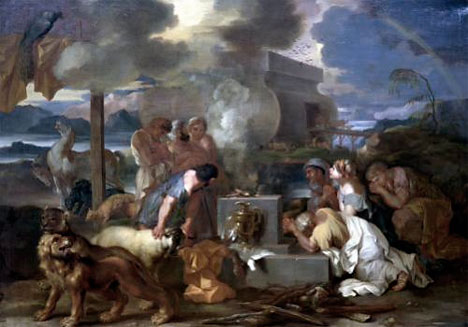
The analogy between human beings and animals, seen throughout the Bible, means that in the animal world there are some who represent the whole.
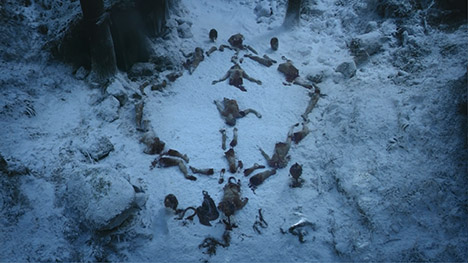
Why was the unique sacrificial rite in Genesis 15 required, and what did it signify? Was it simply a self-maledictory oath on the Lord’s behalf, or was there something deeper going on?
For as in those days before the flood they were eating and drinking, marrying and giving in marriage, until the day when Noah entered the ark, and they were unaware until the flood came and swept them all away, so will be the coming of the Son of Man. (Matthew 24:38-39)
Most disputes concerning the meaning of the Scriptures are not due to a lack of trying when it comes to hermeneutics. They result from a lack of due process. By this, I do not mean the process of interpretation but the identification in the Scriptures of the processes of God.
An example would be the meaning of Christ’s words concerning the unpardonable sin, which have terrified many Christians unnecessarily. Blasphemy against the Spirit is unpardonable not because it is the worst sin. It is unpardonable because it is the last sin.
This post has been slain and resurrected for inclusion in my 2015 book of essays, Inquietude.
And Jesus, perceiving in himself that power had gone out from him, immediately turned about in the crowd and said, “Who touched my garments?” (Mark 5:30)
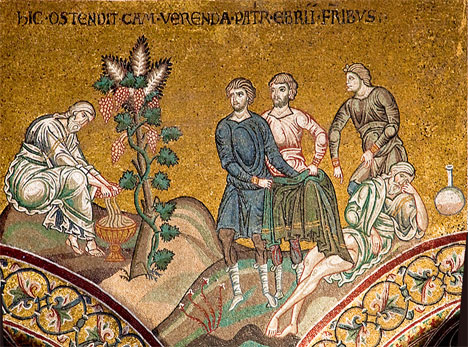
We aren’t told in Genesis 9 what Ham’s intention was when he “uncovered” his father, Noah. Peter Leithart and James Jordan both present some fascinating insights (which differ from each other), but perhaps there is a solution elsewhere in Genesis, which, combined with both these possibilities, offers something new.
This post has been slain and resurrected for inclusion in Praxeme: Journal of Systematic Typology.
And he opened his mouth and taught them, saying: “Blessed… Blessed…”
(Matthew 5:2-11)
Part 1 is here.

“Whoever sheds the blood of man,
by man shall his blood be shed,
for God made man in his own image.”
(Genesis 9:6)
James Jordan’s contribution to the study of any particular book of the Bible is invaluable, but the most important is very likely his work on Genesis. Because spineless modern theologians are unwilling to stand for its complete veracity, and yet very willing to jettison basic logic, they often miss the significance of its early chapters for the rest of the Bible and of history.
[This post has been refined and included in Sweet Counsel: Essays to Brighten the Eyes.]
Continue reading
 “And, most heartbreaking, most breathtaking of all, is His willingness to actually become the veil, the flesh that was torn away to reveal the “naked” mind of the Father, the unhidden face of His mission for a bride for His Son.”
“And the Lord was sorry that he had made man on the earth, and it grieved him to his heart.” (Genesis 6:6)
“But concerning that day and hour no one knows, not even the angels of heaven, nor the Son, but the Father only. For as were the days of Noah, so will be the coming of the Son of Man.” (Matthew 24:36-37)
The relationship between the Father and the Son is an eternal to-and-fro. It is this primary “chiasm,” a “there-and-back-again,” a forming and a filling, which gave shape to the Creation Week and every facet of the Word of God and of human life.
This post has been slain and resurrected for inclusion in my 2015 book of essays, Inquietude.
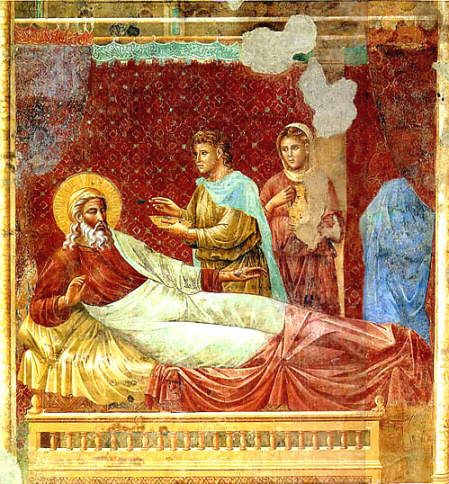
“Jacob didn’t steal the future. He rescued it from a Man who put food first and whose eyes were not yet opened.”
James Jordan has done the Church a great service by rehabilitating the reputations of Noah the drunk, Abraham the liar, Jacob the swindler and Moses the murderer. He has shown us that the context of these so-called sins and crimes mean that they are nothing of the sort. [1] By this, I don’t mean “cultural context” but Covenant context. The reason these great men of God (and their wonderful women) get such a bad rap is because their stories are treated like a bunch of separate things that occurred, from which we must draw obvious and disconnected morals, rather than a single narrative begun in Genesis 1.
 Bible Matrix blog