Mar
8
2015

Satan’s desire was always to turn the “pruning” of circumcision into an ax laid at the root of the tree of Israel.
A handful of treatments of the “massacre of the innocents” by Herod the Great see this bloodshed as the first of the New Covenant’s martyrs. But these miss the point of Matthew’s use of the word “fulfilled,” rendering it as good as meaningless. This massacre was the harbinger of the end of the old era and its promises. It said nothing about the promises of the new.
Continue reading
Comments Off | tags: Acts, AD70, Babylon, Baptism, Circumcision, Communion, Covenant curse, Covenant Theology, Herod, Jeremiah, Joseph, Literary Structure, Matthew | posted in Bible Matrix, Biblical Theology, The Last Days
Oct
25
2014
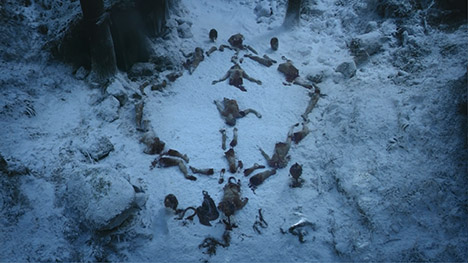
Why was the unique sacrificial rite in Genesis 15 required, and what did it signify? Was it simply a self-maledictory oath on the Lord’s behalf, or was there something deeper going on?
Continue reading
Comments Off | tags: Abraham, Baptism, Covenant curse, Covenant Theology, Genesis, Melchizedek, Noah | posted in Bible Matrix, Biblical Theology
Oct
8
2014
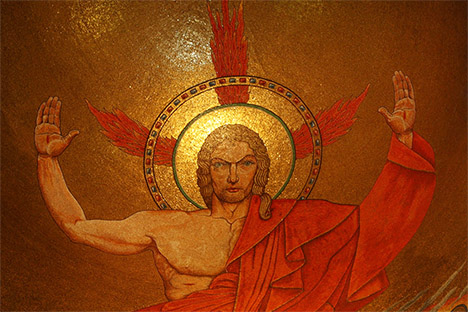
After describing to an older Christian friend what happened in Jerusalem during the Jewish war, he replied, “Why have I never been taught this?”
Without their Covenant context and historical bearings, the pointy words of Jesus become so “generalized” that they seem inconsequential. In the wisdom of God, the tragic events of AD70 were recorded that we might understand the consequences of ignoring Jesus. They nail the New Testament Scriptures to the ground.
Continue reading
Comments Off | tags: AD70, Covenant curse, Covenant Theology, Literary Structure, Matthew | posted in Bible Matrix, Biblical Theology
Aug
17
2014
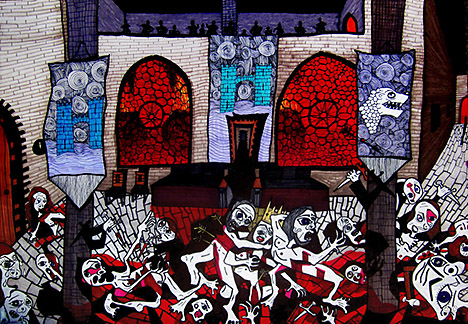
For as in those days before the flood
they were eating and drinking,
marrying and giving in marriage,
until the day when Noah entered the ark…
(Matthew 24:38)
The Oath/Sanctions section of the Revelation seems to have three parts. The judgment begins in the house of God (Temple bowls – Garden), then follows the revelation of the “mystery” of the Woman and the kings of the Land, and finally the judgment reaches out to the borders of the World (the oikoumene). This corresponds not only with the Garden, Land, World architecture of the nations in Genesis 1-10, it brings an end to the “intermarriage,” the compromise of the Priestly people with idolatrous kings. It is fitting that the third part of this judgment (chapters 18-19) culminates in a Red Wedding.
Continue reading
Comments Off | tags: AD70, Covenant curse, Covenant Theology, Josephus, Literary Structure, oikoumene, Revelation, Temple | posted in Bible Matrix, Biblical Theology, The Last Days
Jul
21
2014
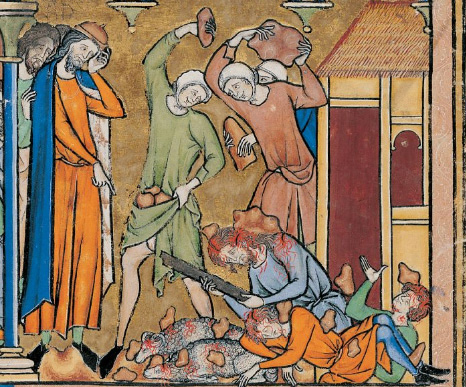
For seizing the devoted plunder of Jericho, Achan was stoned to death and burned with fire, along with his children, livestock, and all his possessions. This judgment appears to contradict Deuteronomy 24:16, which forbids the punishment of children for the sins of their fathers.
It seems that the solution is architectural. Here’s an excerpt from the forthcoming Sweet Counsel:
Continue reading
Comments Off | tags: Achan, Covenant curse, Covenant Theology, Joshua, Tabernacle, Ten Commandments | posted in Bible Matrix, Biblical Theology
Jun
28
2014
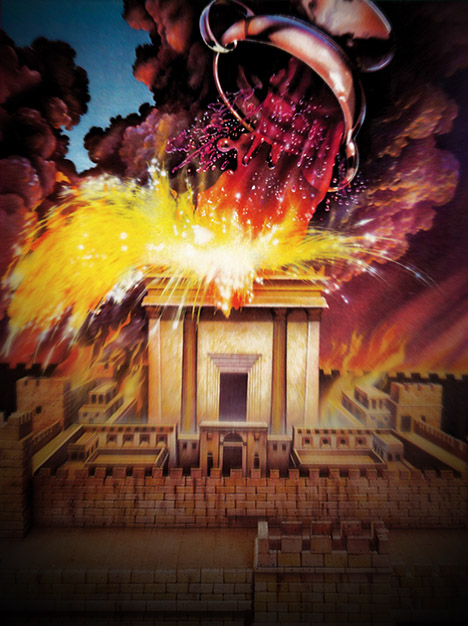
or Where Kenneth Gentry Is Wrong on the Revelation
Part 1 here.
I’ve been meaning to write this post since I wrote Part 1 (over two years ago). A friend’s recent question concerning Kenneth Gentry’s lectures on the Revelation encouraged me to bite the bullet and bust a gut and get it done. The question is this: Is the Revelation to be interpreted in the light of Josephus’ Jewish War, or in the light of the Bible itself?
Continue reading
6 comments | tags: AD70, Ark of the Covenant, Covenant curse, Covenant Theology, Deuteronomy, James B. Jordan, Kenneth Gentry, Leviticus, Literary Structure, Peter Leithart, Revelation, Revelation 20, Thessalonians | posted in Against Hyperpreterism, Bible Matrix, Biblical Theology, The Last Days
Dec
20
2013

God loves His architecture. The first chapter of the Bible is architecture. The books of Moses and the book of Revelation are filled with architecture, and the same floorplan underlies every book in between. Most Christians don’t understand the Bible’s architecture and modern Christians not only do not understand it, they do not care for it. But God loves His architecture. To love the Bible one must love its architecture. To understand the Bible, one must let the architecture inform one’s understanding.
Continue reading
Comments Off | tags: Abel, Baptism, Cain, Circumcision, Covenant curse, Covenant Theology, Genesis, High Priest, Numbers, Peter Leithart | posted in Biblical Theology, Quotes
Dec
9
2013
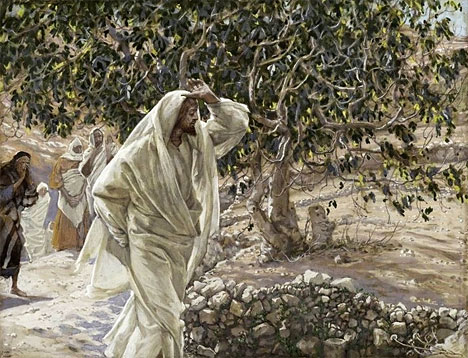
“A stone would be rejected by builders because it was ‘unhewn,’ like an Altar stone. But priestly submission was the only possible foundation for the perfectly chiseled stones of Israel’s temples, including the one still taking shape as Jesus spoke these words.”
Matthew 16-25: ETHICS
The third cycle moves us from the “Exodus” of Jesus and His ministry to the threshing of Israel under His new Law. His growing influence among the people (Hierarchy) brings Him into conflict with the authorities (Ethics).
Continue reading
1 comment | tags: Covenant curse, Covenant Theology, Literary Structure, Matthew | posted in Bible Matrix, Biblical Theology, The Last Days
Nov
5
2013
or Semina Divina
And Jesus, perceiving in himself that power had gone out from him, immediately turned about in the crowd and said, “Who touched my garments?” (Mark 5:30)
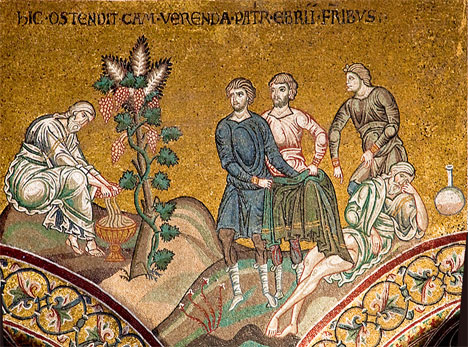
We aren’t told in Genesis 9 what Ham’s intention was when he “uncovered” his father, Noah. Peter Leithart and James Jordan both present some fascinating insights (which differ from each other), but perhaps there is a solution elsewhere in Genesis, which, combined with both these possibilities, offers something new.
This post has been slain and resurrected for inclusion in Praxeme: Journal of Systematic Typology.
Continue reading
Comments Off | tags: Abraham, Ark of the Covenant, Covenant curse, Covenant Theology, Genesis, James Jordan, Literary Structure, Moses, Noah, Peter Leithart | posted in Bible Matrix, Biblical Theology