Mar
8
2015

Satan’s desire was always to turn the “pruning” of circumcision into an ax laid at the root of the tree of Israel.
A handful of treatments of the “massacre of the innocents” by Herod the Great see this bloodshed as the first of the New Covenant’s martyrs. But these miss the point of Matthew’s use of the word “fulfilled,” rendering it as good as meaningless. This massacre was the harbinger of the end of the old era and its promises. It said nothing about the promises of the new.
Continue reading
Comments Off | tags: Acts, AD70, Babylon, Baptism, Circumcision, Communion, Covenant curse, Covenant Theology, Herod, Jeremiah, Joseph, Literary Structure, Matthew | posted in Bible Matrix, Biblical Theology, The Last Days
Nov
22
2014
Chiasms are everywhere in the Bible, yet “chiasm” is a word I had never heard before the age of 40. What’s up with Bible teachers? So, if you’re like I was, and totally unaware of these cool things, a chiasm is an occurrence of literary symmetry. Not only are these the way the entire Bible is constructed, you’ll always find them working at multiple levels. And they are not merely cool: they show us the shape of the work of God.
Continue reading
Comments Off | tags: Chiasm, Covenant Theology, Eric Greene, Genesis, Jacob, Joseph | posted in Bible Matrix, Biblical Theology, Quotes
Sep
10
2014

This post has been slain and resurrected for inclusion in my 2015 book of essays, Inquietude.
Continue reading
2 comments | tags: Abraham, Absalom, Baptism, Cain, Circumcision, David, Deuteronomy, Esau, Genesis, Jacob, Joseph, Laban, Lamech | posted in Bible Matrix, Biblical Theology, The Last Days
Jun
20
2013
 The intro to the Reading the Bible in 3D seminar mentions the “jokes” in the Bible. In his book Deep Exegesis, Peter Leithart gives us a rundown on what a joke is to justify using the word to describe some of the allusions in Scripture. One of the reasons jokes are funny is their reliance on inside information.
Here’s my all-time favourite joke in the Bible.
Continue reading
Comments Off | tags: Covenant Theology, Daniel, Esther, Genesis, James Jordan, Joseph, Mordecai, Peter Leithart, Revelation, Typology | posted in Bible Matrix, Biblical Theology, Reading the Bible in 3D
Sep
19
2012
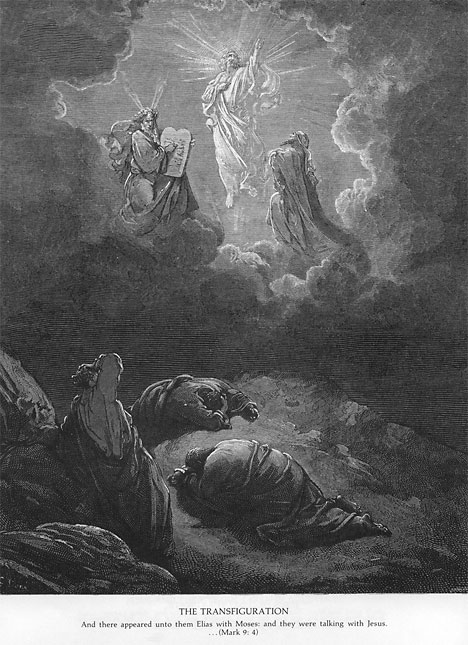
“To have a God-given internal moral compass is to have God Himself.”
Maturation is the process of making God’s “external law” into our internal law, our operating, animating principle. This has huge implications for sanctification, but it also explains a lot of what is going on in the Bible’s symbolism and architecture.
[This post has been refined and included in Sweet Counsel: Essays to Brighten the Eyes.]
Continue reading
13 comments | tags: Covenant Theology, Elijah, Joseph, Moses, Robert Ervin Hough | posted in Bible Matrix, Biblical Theology, Christian Life, Quotes
Jun
6
2012
 Just as the death and resurrection of Israel in Egypt follows the pattern of the Feasts, so does the death and resurrection of Israel in Babylon. [1]
Continue reading
Comments Off | tags: AD70, Babylon, Covenant Theology, Daniel, Jacob, James Jordan, Jeremiah, Joseph, Nebuchadnezzar, Revelation | posted in Bible Matrix, Biblical Theology, Quotes, The Last Days, The Restoration Era
Apr
28
2012
“Touching a bone made an Israelite unclean. Burning bones upon Jeroboam’s altars defiled them. This was not because bones were unholy but because they were already holy.”
 Here’s a new chapter from God’s Kitchen (members only).
“This is now bone of my bones
And flesh of my flesh;
She shall be called Woman,
Because she was taken out of Man.”
Genesis 2:23
Continue reading
Comments Off | tags: Ezekiel, Genesis, Jeroboam, Joseph, Leprosy, Resurrection, Totus Christus | posted in Bible Matrix, Biblical Theology, Creation
Dec
13
2010
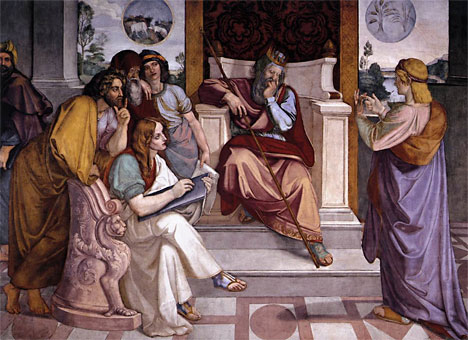
“Deny that God speaks to any area of life, and you have denied God’s jurisdiction in that area of life.”
A very intelligent Christian recently posed the question, “What will be the most pressing intellectual challenge facing the church over the next 50 years?” What if the biggest challenge facing the church is not intellectual at all, but ethical. [1]
Continue reading
1 comment | tags: Barth, Brueggemann, C. S. Lewis, Gary North, Genesis, Joseph, Postmillennialism, Socialism, Toby Sumpter, Van Til | posted in Ethics, Quotes
Nov
23
2010
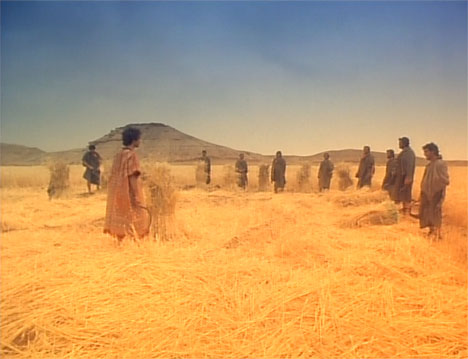
“Therefore I say to you, the kingdom of God will be taken from you
and given to a nation bearing the fruits of it.” Matthew 21:43
We unpacked the “face of the deep” of Day 1 and the “flat universe” created on Day 2. Time to analyse Day 3! Continue reading
Comments Off | tags: Add new tag, Covenant Theology, Creation Week, Firstfruits, Genesis, Joseph, Literary Structure, Tabernacle | posted in Bible Matrix, Biblical Theology, Creation