Sep
25
2013

“The serious magical endeavour and the serious scientific endeavour are twins: one was sickly and died, the other strong and throve. But they were twins. They were born of the same impulse.”
The Dangerous Trajectory of Those Who Seek to Be Gods
An excerpt from Joe Rigney’s new book, Live Like a Narnian: Christian Discipleship in
Lewis’s Chronicles.
Reading Lewis today, it’s easy to believe that he was a prophet (or at least the son of a prophet). His analysis of education, government, culture, society, and the church has proved to be unusually prescient. One of the chief reasons for this is that Lewis understood the deep reality of narrative, of story, of progression and trajectory.
Continue reading
Comments Off | tags: C. S. Lewis, Culture, Evolution, Joe Rigney | posted in Apologetics, Christian Life, Quotes
Jul
12
2012
 “We steadily covet more than our humble (but beautiful) selves can ever contain.”
A thought-provoking post from Matthew Jepsen. (Reproduced here with permission).
Below, Lewis articulates a contemporary rendition of Augustine’s “God-shaped hole”:
Continue reading
2 comments | tags: C. S. Lewis, Rene Girard, Robert Farrar Capon | posted in Christian Life, Ethics, Quotes
Sep
21
2011

William Booth’s eldest daughter, Founder of the Salvation Army in France and Switzerland, known later in life as “the Maréchale,” said, “Go for souls, and go for the worst.” So should we. After all, Jesus does.
Continue reading
Comments Off | tags: Baptism, C. S. Lewis, Power of the Gospel, Typology | posted in Christian Life, Quotes
Jan
3
2011
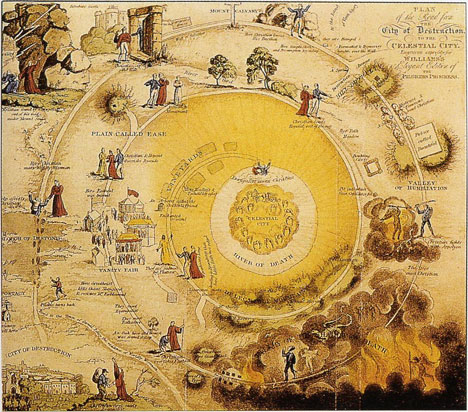
or Three Ways to Live
“You are already full! You are already rich! You have reigned as kings without us — and indeed I could wish you did reign, that we also might reign with you! For I think that God has displayed us, the apostles, last, as men condemned to death; for we have been made a spectacle to the world, both to angels and to men. We are fools for Christ’s sake, but you are wise in Christ! We are weak, but you are strong! You are distinguished, but we are dishonored!” 1 Corinthians 4:8-10
John Bunyan’s Pilgrim’s Progress and its sequel speak some sharp truths and great comforts to the heart of a Christian, in bold images and colourful scenarios that are impossible to forget. But there’s something the famous author got terribly wrong. He omitted Hierarchy.
Continue reading
3 comments | tags: C. S. Lewis, Covenant Theology | posted in Biblical Theology
Dec
13
2010

“Deny that God speaks to any area of life, and you have denied God’s jurisdiction in that area of life.”
A very intelligent Christian recently posed the question, “What will be the most pressing intellectual challenge facing the church over the next 50 years?” What if the biggest challenge facing the church is not intellectual at all, but ethical. [1]
Continue reading
1 comment | tags: Barth, Brueggemann, C. S. Lewis, Gary North, Genesis, Joseph, Postmillennialism, Socialism, Toby Sumpter, Van Til | posted in Ethics, Quotes
Dec
8
2010
or Takes One to Know One

We saw Voyage of the Dawntreader last night. Biblical themes and symbols abound. Of course, the story follows the Bible Matrix formula, but the message of a courageous Maturity via Testing at God’s hand, in such a visual form, was striking, especially for young people. All the characters are transfigured by the end, particularly Eustace, whose cowardice and courage were really the heart of the proceedings. Narnia is foolishness to him, but a time in the wilderness gives him a different Spirit. He moves from the unbroken natural, through brokenness, to a humble, spiritual wisdom that judges rightly between good and evil.
The final scene encapsulated everything I have been trying to communicate concerning baptism. It pictures the reception of saints into government as enrobed heavenly elders, God’s council of wise men who sit at court with Him as Great Prophets, co-Mediators.
Although only one character “passes across” into Aslan’s country, all the saints “pass through” in their return home as human argosies of wisdom and understanding. Wise distinctions and tough decisions must be made before the crystal walls and gates.
Continue reading
Comments Off | tags: Baptism, C. S. Lewis, Crystal Sea, Doug Wilson | posted in Bible Matrix, Biblical Theology
Mar
9
2010

or Understanding Apostolic Wine Science
Scholars talk about identifying the “apostolic hermeneutic,” which sounds intimidating. The reason for this phrase is that according to the commonsense rules of interpretation, the apostles are merrily delinquent. They quote many Old Testament texts, rip them out of their historical contexts and claim they are fulfilled in Christ.
Our problem is that the apostles are neither hacks nor mystics. They are authoritative. Some rightly explain that the apostles are just seeing Christ prefigured in the Old Testament Scriptures, which they are, but this explanation is too vague. God’s Word is meticulous.
Continue reading
Comments Off | tags: C. S. Lewis, Hermeneutics, Literary Structure | posted in Biblical Theology
Feb
22
2010
or Show Me the Tropes

Literary agent Peter Rubie would undoubtedly have read many story synopses, both fiction and non-fiction. His colleague Janet Reid advises that anyone wishing to write a bestseller should read at least two thousand novels before attempting to write their own. Peter gives some helpful advice:
Continue reading
Comments Off | tags: C. S. Lewis, Culture, Feasts, Joke, Literary Structure | posted in Biblical Theology
Jan
22
2010

“If you asked twenty good men today what they thought the highest of the virtues, nineteen of them would reply, Unselfishness. But if you had asked almost any of the great Christians of old, he would have replied, Love. You see what has happened? A negative term has been substituted for a positive, and this is more than a philological importance.
Continue reading
1 comment | tags: C. S. Lewis, Love, Postmillennialism | posted in Quotes
Jan
4
2010
or Collision II
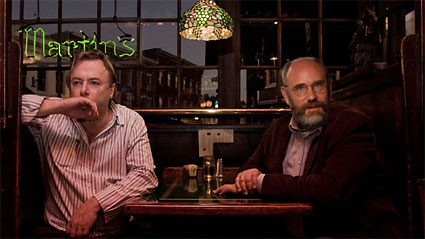
In the movie Collision, Christopher Hitchens relies a lot on the idea of a moral consensus, the idea that humanity has an innate sense of what’s right and what’s wrong and that we all agree on the basics. Is there any merit in this assumption? Or is Hitchens assuming that the benefits of Christianity are the result of human reason? Peter Leithart argues that Calvin, as an heir of 1200 years of Christendom, made exactly this mistake.
(I present below just the head and tail of Dr Leithart’s argument. I highly recommend getting a hold of the essay and reading his full argument and evidences.)
Excerpts from Did Plato Read Moses?
Peter Leithart on Middle Grace and Moral Consensus
The Bible presents a bleak view of the moral potential of the natural man. In this respect it seems to fly in the face of the facts. What are we to make of the empirical phenomenon of the “good pagan”?
Continue reading
10 comments | tags: C. S. Lewis, Calvin, Christopher Hitchens, Church History, Peter Leithart | posted in Apologetics, Biblical Theology, Ethics