Apr
20
2016
The Myth of Covenant Membership

Reformed theology is the best school in which to learn about covenant theology, yet it is also the worst place to learn about New Covenant theology. Why is this so?

Reformed theology is the best school in which to learn about covenant theology, yet it is also the worst place to learn about New Covenant theology. Why is this so?
“The telos of baptism is not faith but resurrection.” Bull vs. Leithart again, this time a response to The Ambivalence of Baptismal Theology.
Modern individualism has resulted in a dislocated society, but ancient or medieval corporatism is not the solution to it. The Bible deals with people as individuals and as groups, so neither “ism” is a solution to the other. An understanding of the one and the many based on biblical theology reveals both “isms” to be unnecessary enemies. So then, what accounts for the fundamental difference in baptismal theologies? The answer is that history is chiastic. Circumcision was a corporate sign whose telos was the personal faith of each Jew, making him or her a “Jew indeed.” Baptism is the opposite. It begins with the believer as a “Jew indeed,” the individual with the circumcised heart, and gathers them into a prophetic body. The telos of circumcision was faith, conversion. The telos of baptism is not faith but resurrection.
“In the days when our courts are declaring that good is evil and evil is good, the recovery of baptism as a delegation of divine legal authority rather than a sign of ‘limited Covenantal obligation’ is crucial.”
Every biblical Covenant is a word from heaven designed to bring a response from the earth. When the laws in the Ark of the testimony were given to Israel, the response of a legal oath was required, intended to culminate in the legal witness of Israel to the nations. Thus, every biblical Covenant is also a process which leads to maturity, beginning with cultivation and ending in representation.
A child must be schooled before he can be employed. A man must be a disciple before he can be an apostle. Adam was to be qualified before he could represent God as a just and merciful judge on earth. But the difference between cultivation and representation is the difference between circumcision and baptism, and this facet of the biblical Covenants is something paedobaptists are unable to accept, at least in its full glory.
There are no “Abrahamic” promises concerning offspring — or real estate — for New Covenant believers.
Like the dogma of evolution, the doctrine of paedobaptism is not supported by indisputable evidence. Rather, the data must be interpreted through the lens of a pre-existing framework. The paedobaptistic lens is, however, a biblical one, being Abrahamic, and it comes in extremely handy when used in the right way. It deals with the few texts which paedobaptists rely on for proof, showing that they are not establishing a revised Abrahamic tent, but bringing the old one to an end.
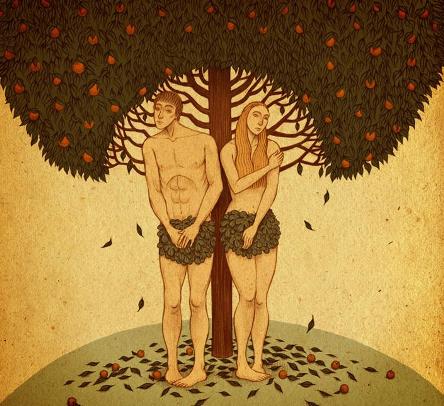
Is our justification a past event or a future one? The debate continues while the answer is, like Adam and Eve, hidden in plain sight.
The problem with most theological discussions concerning our justification is that they are imagined in the courts of men rather than in the court of God. What is the difference between these two courts?
Satan’s desire was always to turn the “pruning” of circumcision into an ax laid at the root of the tree of Israel.
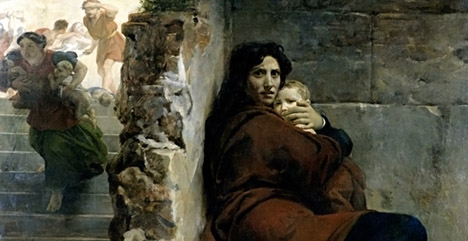
A handful of treatments of the “massacre of the innocents” by Herod the Great see this bloodshed as the first of the New Covenant’s martyrs. But these miss the point of Matthew’s use of the word “fulfilled,” rendering it as good as meaningless. This massacre was the harbinger of the end of the old era and its promises. It said nothing about the promises of the new.
“O foolish Galatians! Who has bewitched you?”
Having written a (basically word-by-word) commentary on Paul’s epistle to the Galatians, one which demonstrates his use of the biblical pattern of maturity at every point and every level, it amazes me how sacramentalists are not aware that their doctrine makes them the modern targets of Paul’s ire.
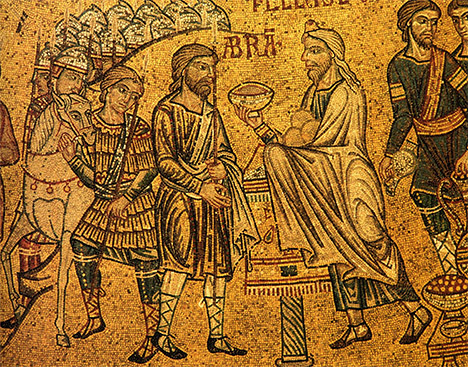
Jesus is the Alpha and Omega, the beginning and the end, and all His works are chiastic. Because of this, a solid understanding of any Covenant requires us to identify its “bookends.” According to Hebrews, the Melchizedekian bookends are crucial for a comprehension of the limitations of the Abrahamic Covenant.
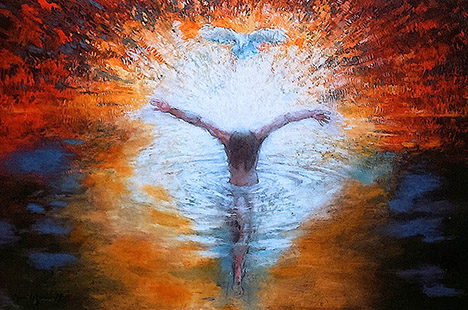
“A baptism which does not discern between the fruit of the womb and the fruit of the tomb is anti-Christ, denying He has come in the flesh.”
This post follows on from Exposed To The Elements.
An online paedobaptist friend commented that he had never heard sacred architecture offered as an argument for credobaptism before. My experience with the brilliant Bible teaching by the various Federal Vision gents is that I get a principle under my belt, then automatically begin to see its implications for all of Scripture. But then numerous times I would be surprised when no one had thought of applying it consistently. The main offender is paedobaptism. Despite their claims, it is a rite that does not spring naturally from Scripture. In fact, it has to be protected from Scripture, from the very principles I have been taught by paedobaptists.
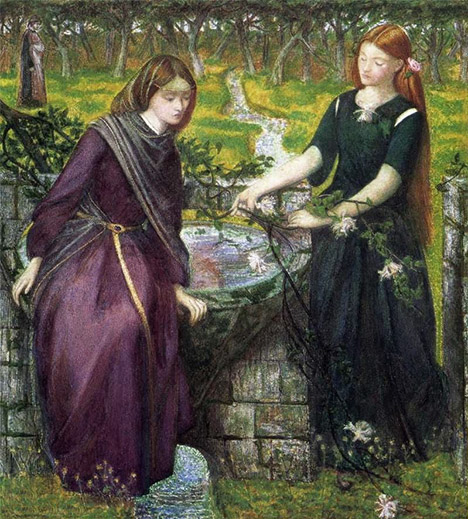
This post has been slain and resurrected for inclusion in my 2015 book of essays, Inquietude.
 Bible Matrix blog