Apr
27
2017
Aug
26
2016
Brexit and the Binding of Satan – Part 3
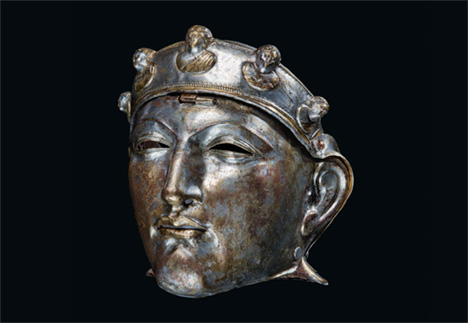
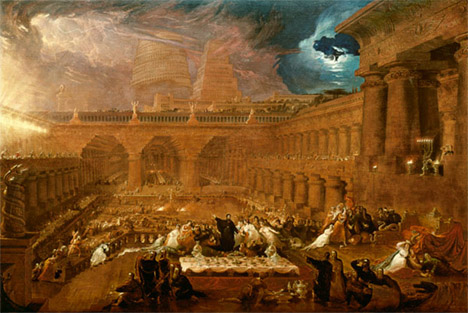
The feet of the great statue in Nebuchadnezzar’s dream cannot be interpreted as a prediction of the states of modern Europe, but the lessons from their failure can certainly be applied.

Dec
24
2014
Babylonian Bookends
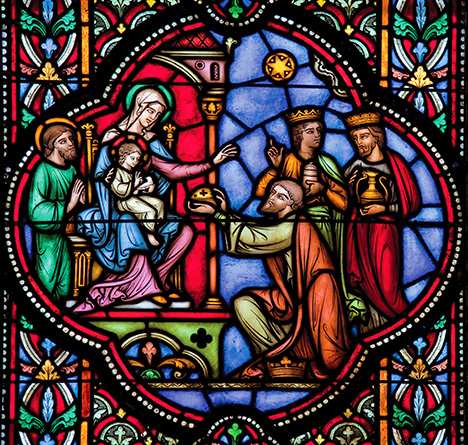 Merry Christmas from Bully’s Blog
Now after Jesus was born in Bethlehem of Judea in the days of Herod the king, behold, wise men from the east came to Jerusalem, saying, “Where is he who has been born king of the Jews? For we saw his star when it rose and have come to worship him.” When Herod the king heard this, he was troubled, and all Jerusalem with him… (Matthew 2:1-2)
The arrival of the wise men from the East signalled the beginning of the end for Old Covenant Israel. These men were influenced by the prophet Daniel, one of the Jewish captives who was taken to Babylon by Nebuchadnezzar half a millennium earlier.
Sep
5
2014
A Castrated Heart
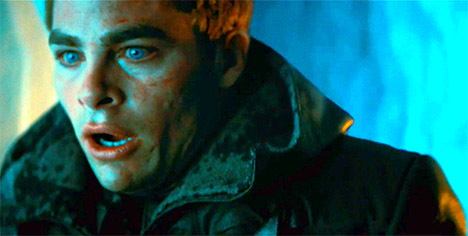
James Kirk learns via Vulcan mind meld that he will never marry.
Now as a concession, not a command, I say this. I wish that all were as I myself am. But each has his own gift from God, one of one kind and one of another. (1 Corinthians 7:6-7)
Reliance upon rules and regulations is a sign of immaturity. There’s nothing wrong with them, of course, just as there is nothing wrong with the “gutter guards” used to keep the ten pin bowling ball moving towards the pins for children’s parties at the bowling alley. Likewise, there was nothing wrong with creeds, rosary beads or religious paintings in their early days. They were simply mnemonic devices for the illiterate. But, just as it was with the Pharisees in the first century, these lifeless, inflexible “stoicheia” become a problem when they turn into legislation and become mandatory. Failing to tithe one’s kitchen herbs leads to certain destruction. The celibacy of certain prominent men in the Bible is part of this discussion. The question is not “Is celibacy holier than marriage?” but why were these spiritual giants, including Jesus, celibate at all?
This post has been slain and resurrected for inclusion in my 2015 book of essays, Inquietude.
Aug
7
2014
The Fifth Element
Why are there four Gospels? There would be so much less confusion — and theological spade work — if there were just the one. The most obvious answer is that each one was written for a different audience, as described here. The least obvious answer is that God was not only writing the commandments in human flesh, He was also “measuring out” the architecture of the Tabernacle in humanity.
Jun
1
2014
Esther in Ezekiel’s Temple
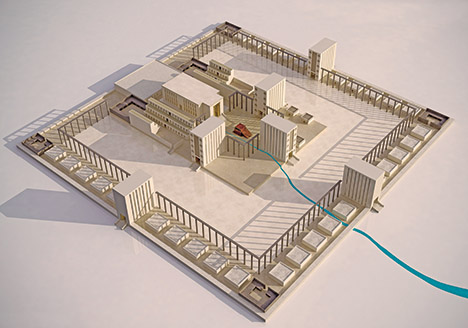
The final vision of Ezekiel is one of the most hotly debated passages in the Bible. Since the structure described has never been built, those who take the passage as fulfilled in history believe it to be figurative. However, the building is described in such careful detail that common sense suggests that something else is going on. The precise measurements remind us of the instructions given concerning the Tabernacle and Solomon’s Temple for the purpose of physical construction. Is Ezekiel’s temple a false prophecy, or does it describe a third, and as yet unbuilt, Temple in Jerusalem?
Mar
19
2014
Weighed And Found Wanting
And I looked, and behold, a black horse! And its rider had a pair of scales in his hand. (Revelation 6:5)
The book of Revelation is a mystery, yet like all good mysteries it is a book made entirely of clues. It is a glimpse through the torn veil of the Temple, that is, the flesh of Jesus, into the heavenlies. The cloud into which He was taken up is opened to John’s eyes that he might see the horses and chariots of God (2 Kings 6:17). But John is a prophet who knows the Bible, and like John we will only understand the symbols if we know the Bible. The conversation at God’s table is for those who know their Master’s mind, who hear His voice as children and thus quit themselves like men. To them, this is indeed a Revelation. To those outside His commission, it remains an enigma, terrible lightning and thunder and the sound of trumpets (Exodus 19:19; 20:18).
This post has been slain and resurrected for inclusion in my 2015 book of essays, Inquietude.
Feb
28
2014
One Like The Son Of Man
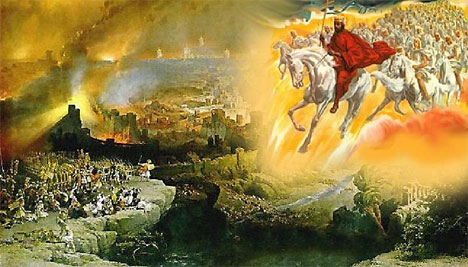
Jesus’ reference to Daniel 7 in Matthew 26:64 (and Mark 14:62) is a source of some confusion. To figure out what is actually going on in Daniel’s vision, we have to go back to Leviticus 16. James Jordan writes:
…when Jesus calls Himself “the Son of Man,” He is referring to Ezekiel, not to Daniel 7 (except perhaps indirectly). Jesus is the Greater Ezekiel. Christians are those who are “like the Son of Man,” like Jesus.
Dec
27
2013
Babylonian Bookends
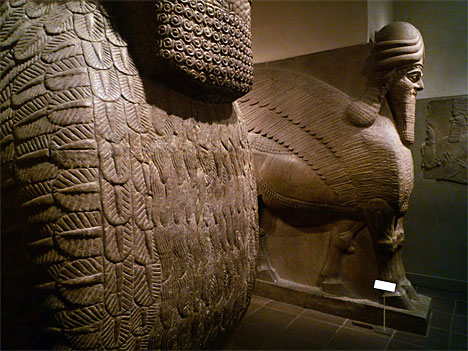
Now after Jesus was born in Bethlehem of Judea in the days of Herod the king, behold, wise men from the east came to Jerusalem, saying, “Where is he who has been born king of the Jews? For we saw his star when it rose and have come to worship him.” When Herod the king heard this, he was troubled, and all Jerusalem with him… (Matthew 2:1-2)
An atheist recently declared to me that a cumulative reading of the Bible makes no sense, since the Bible is not a single book but an anthology. I agree, but this “anthology” is indeed a single work because it was compiled by God. Without that foundation, the significance of much of its detail appears redundant. A good example is the wise men from the east in Matthew 2.
Nov
19
2013
The Household of Faith – 3
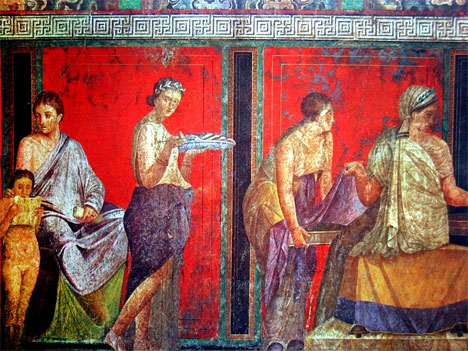 Part III – The Feast of Clouds
“But Peter said, ‘I have no silver and gold, but what I do have I give to you.”’ (Acts 3:6)
Israel consistently failed to keep the final feast, the Feast of Sukkot, because she took her calling to be elitist rather than priestly. She thought her calling, gifts and purification were for herself, rather than for the healing of the nations.
OUT NOW
COMING SOON
 Bible Matrix blog
-





IN THE WORKS


Jordan Complete