May
5
2015

I recommend this article by Pastor Bill Smith.
Christ is absent. Though he is not dead, he did go away, leaving his ministers to care for his bride and “raise up seed” for him. As levirs, they have the right to profit from the inheritance of the heir–the entire church–until the seed/son comes of age.
The church in Corinth was a pastoral nightmare. Factionalism, sexual immorality, incipient syncretism, using the church as a stage for self-promotion, and denial of the final resurrection were just some of the problems.
Continue reading
Comments Off | tags: Bill Smith, Corinthians, Deuteronomy, Ecclesiology | posted in Biblical Theology, Christian Life, Ethics
Sep
5
2014

James Kirk learns via Vulcan mind meld that he will never marry.
Now as a concession, not a command, I say this. I wish that all were as I myself am. But each has his own gift from God, one of one kind and one of another. (1 Corinthians 7:6-7)
Reliance upon rules and regulations is a sign of immaturity. There’s nothing wrong with them, of course, just as there is nothing wrong with the “gutter guards” used to keep the ten pin bowling ball moving towards the pins for children’s parties at the bowling alley. Likewise, there was nothing wrong with creeds, rosary beads or religious paintings in their early days. They were simply mnemonic devices for the illiterate. But, just as it was with the Pharisees in the first century, these lifeless, inflexible “stoicheia” become a problem when they turn into legislation and become mandatory. Failing to tithe one’s kitchen herbs leads to certain destruction. The celibacy of certain prominent men in the Bible is part of this discussion. The question is not “Is celibacy holier than marriage?” but why were these spiritual giants, including Jesus, celibate at all?
This post has been slain and resurrected for inclusion in my 2015 book of essays, Inquietude.
Continue reading
2 comments | tags: Corinthians, Daniel, James B. Jordan, Leviticus, Paul | posted in Biblical Theology, Christian Life, The Restoration Era
Jul
26
2013
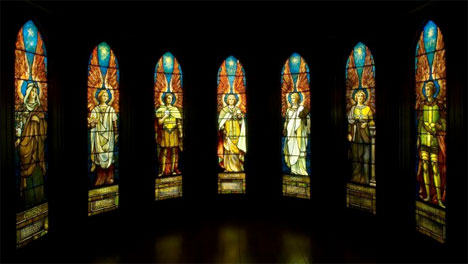 Is the book of Revelation a “Covenant lawsuit”? It certainly follows the fivefold legal Covenant pattern. However, its prophetic warnings are not addressed to the Jewish leaders. It was too late for them. The book does describe the destruction of Jerusalem through “the testimony of two witnesses,” but Gary DeMar suggests it was more like a libretto for the Christian spectators. He writes:
Continue reading
Comments Off | tags: Corinthians, Covenant Theology, Galatians, Gary DeMar, Hebrews, Paul, Revelation | posted in Against Hyperpreterism, Biblical Theology, Quotes, The Last Days
Jul
3
2013
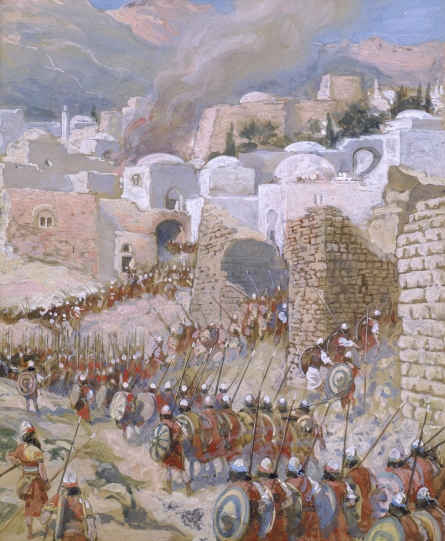 James B. Jordan was the first Bible teacher I ever heard who had an opinion on the gift of tongues in relation to the rest of the Bible. This gent cops a lot of criticism from the establishment for various things, but he is one who really “gets” the Bible. This is because he asks the right questions. And, without being too harsh, he most often makes all the other theologians and Bible teachers in any debate, on both sides of the debate, look like kindergarten children.
Continue reading
1 comment | tags: AD70, Babylon, Corinthians, Luke Welch, Numbers, Systematic typology, Tongues, Trumpets | posted in Biblical Theology, Quotes, The Last Days
May
11
2013

What is the referent of “body of Christ” in 1 Corinthians 11:29?
“For anyone who eats and drinks without discerning the body eats and drinks judgment on himself.”
Continue reading
Comments Off | tags: Baptism, Communion, Corinthians, Covenant curse, Covenant Theology, Doug Wilson, Literary Structure, Melchizedek, Numbers 5 | posted in Bible Matrix, Biblical Theology, Christian Life, Q&A
Nov
18
2012
or Mixed Blessings
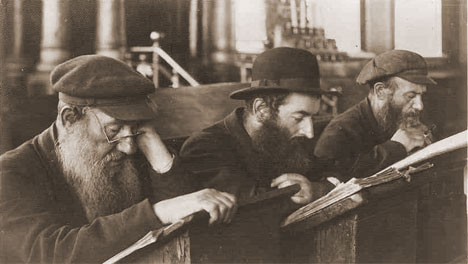
Doug Wilson sees evidence for the classification of “Covenant children” in 1 Corinthians 7:14.
“For the unbelieving husband is sanctified by the wife, and the unbelieving wife is sanctified by the husband: else were your children unclean; but now are they holy” (1 Cor. 7:14).
The Corinthians had wanted to know whether unbelief on the part of a spouse was in itself grounds for divorce. Paul has replied no, provided that the unbelieving partner is pleased to be together with the Christian in a marriage as biblically defined. If the only thing that is wrong is the spouse’s failure to believe in Christ, then the couple should still remain together.
Continue reading
Comments Off | tags: Baptism, Corinthians, Doug Wilson, Federal Vision, Hermeneutics, Mark Horne, Matthew Colvin | posted in Biblical Theology, Quotes
Mar
21
2012
 Following a masterful and beautiful explanation of Israel’s priestly glory, Alastair Roberts writes:
In 1 Corinthians 11:7 we encounter a verse that many might find perplexing.
For a man indeed ought not to cover his head, since he is the image and glory of God; but woman is the glory of man.
I believe that careful attention to the logic of this verse is absolutely crucial to unlocking the puzzle of the difference between the female helper apostle, and the male helper apostle.
Continue reading
Comments Off | tags: Alastair Roberts, Corinthians, Ecclesiology, Genesis, N. T. Wright | posted in Biblical Theology, Creation, Quotes
Mar
7
2012
or Will Jesus Spit Us Out?
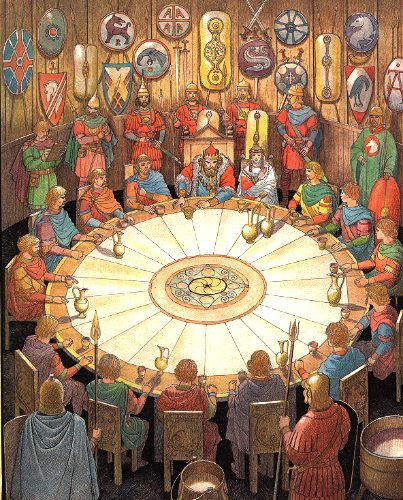
“But let a man examine himself, and so let him eat of the bread and drink of the cup. For he who eats and drinks in an unworthy manner eats and drinks judgment to himself, not discerning the Lord’s body. For this reason many are weak and sick among you, and many sleep.” (1 Cor. 11:28-30)
Some more detailed thoughts on what God is doing in the Lord’s Table. Part 1 here.
Covenant Renewal Worship follows the Bible Matrix. This means that our Christian worship recapitulates the Creation Week, the Feasts of Israel, and the journey from slavery to Sabbath (servants to sons), and the process of maturity, from childhood to adulthood. [1]
Continue reading
Comments Off | tags: Baptism, Communion, Corinthians, Covenant Theology, Federal Vision, Hebrews, James Jordan, Judas, Worship | posted in Biblical Theology, Christian Life, The Last Days
Aug
12
2011

“…sprinkling or pouring conflates the Covenant head with the Covenant body.”
Doug Wilson writes:
“God, in baptizing the disciples with the Holy Spirit at Pentecost, did so by pouring out His Spirit upon them. Pouring is therefore very clearly described as a biblical mode of baptism” (To a Thousand Generations, p. 102).
God poured out the Spirit, certainly. But can we then assume that the apostles poured water on new believers and their babies? Single words are clues, but they can be misleading. The effectiveness of word studies is limited because context is crucial. And the context of the Bible is most importantly structural. Structure is the answer.
The reason is that all of God’s new creations follow the structure of Genesis 1. It’s almost like, when God speaks, the Spirit will pick up anything available, anything lying around, and arrange it into the familiar pattern. This means that the Bible Matrix is crucial in identifying the meanings of many Bible symbols. Baptism and the Day of Atonement might not look anything like each other to us, but the Bible keeps tying them together, along with some other things, to tell us the same part of the Creation story. If we have eyes to see, this method also gives us hints as to the correct mode of baptism. It’s not about the motion of the water. It’s about the motion of the one being baptized. [1]
Continue reading
3 comments | tags: Baptism, Corinthians, Covenant Theology, Daniel, Doug Wilson, Incense Altar, Totus Christus | posted in Bible Matrix, Biblical Theology, The Last Days
May
11
2010
Thoughts on 2 Corinthians 4

One thing I have realised over the last few years is how little the New Testament is commonly taught in the context of God’s “worship economy.” This is mostly due to the fact that the destruction of the Herods’ temple—or at least its significance—doesn’t even register on most Bible college lecturers’ radar, let alone that of the average Christian. We understand why the temples of the pagan gods were abandoned. Do we understand that the Temple of the true God had become a synagogue of Satan?
Continue reading
Comments Off | tags: Commentary, Corinthians, Literary Structure, Paul | posted in Biblical Theology, Christian Life