Nov
29
2014
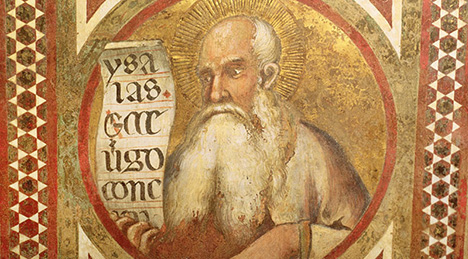
The Death of Deutero- and Trito-Isaiah
The heart of typology is representation, and representation is the heart of sacrifice.
A great deal of so-called theology seems to me to be a waste of time, breath and ink. Theologians and commentators insist on applying a “lens” to Scripture, or building a case from cherry-picked particulars or accumulations of fragmented data, when the answer to the debated question is staring right back at them. Literary structure should be the first recourse, not the last. When it comes to the Bible, literary structure is the label on the tin.
Continue reading
Comments Off | tags: Brueggemann, David A. Dorsey, Isaiah, Literary Structure, oikoumene, Peter Leithart, Systematic typology | posted in Bible Matrix, Biblical Theology, Quotes, The Restoration Era
Sep
19
2014
Alpha and Omega
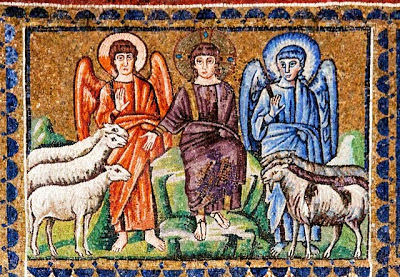
Since the sacred architecture of the Jew-Gentile social structure set up in Daniel was a spiritual expansion of the previous physical sanctuaries, we should not be surprised to find its shape serving as the foundation for the New Testament. Since the Holy Place symbolised the court of the King of Heaven, the Tabernacle sheds some helpful light on Jesus’ cryptic description of judgment from His throne in Matthew 25. It not only becomes clear why the Lord uses sheep and goats as symbols for Gentile nations, but their locations and destinies bring to an end a narrative thread which can be traced back to Genesis 4.
Continue reading
Comments Off | tags: Cain, Jacob, Jeremiah, Leviticus, Matthew, Peter Leithart, Zedekiah | posted in Bible Matrix, Biblical Theology, The Last Days, The Restoration Era
Sep
5
2014

James Kirk learns via Vulcan mind meld that he will never marry.
Now as a concession, not a command, I say this. I wish that all were as I myself am. But each has his own gift from God, one of one kind and one of another. (1 Corinthians 7:6-7)
Reliance upon rules and regulations is a sign of immaturity. There’s nothing wrong with them, of course, just as there is nothing wrong with the “gutter guards” used to keep the ten pin bowling ball moving towards the pins for children’s parties at the bowling alley. Likewise, there was nothing wrong with creeds, rosary beads or religious paintings in their early days. They were simply mnemonic devices for the illiterate. But, just as it was with the Pharisees in the first century, these lifeless, inflexible “stoicheia” become a problem when they turn into legislation and become mandatory. Failing to tithe one’s kitchen herbs leads to certain destruction. The celibacy of certain prominent men in the Bible is part of this discussion. The question is not “Is celibacy holier than marriage?” but why were these spiritual giants, including Jesus, celibate at all?
This post has been slain and resurrected for inclusion in my 2015 book of essays, Inquietude.
Continue reading
2 comments | tags: Corinthians, Daniel, James B. Jordan, Leviticus, Paul | posted in Biblical Theology, Christian Life, The Restoration Era
Aug
7
2014

Why are there four Gospels? There would be so much less confusion — and theological spade work — if there were just the one. The most obvious answer is that each one was written for a different audience, as described here. The least obvious answer is that God was not only writing the commandments in human flesh, He was also “measuring out” the architecture of the Tabernacle in humanity.
Continue reading
3 comments | tags: Balaam, Daniel, Esther, Genesis, Herod, James Jordan, Mordecai, oikoumene, Revelation, Satan, Tabernacle, Zechariah | posted in Bible Matrix, Biblical Theology, The Last Days, The Restoration Era
Jul
18
2014
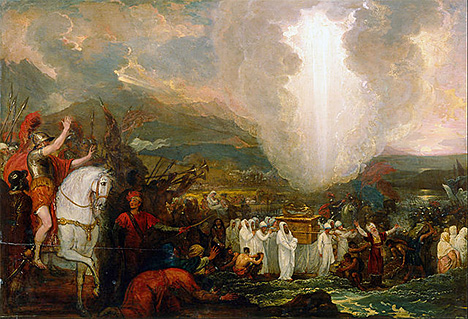
At that time the Lord said to Joshua,
“Make flint knives and circumcise
the sons of Israel a second time.”
(Joshua 5:2)
Was Israel disobedient in its failure to circumcise every male born in the wilderness? The Lord never chastised them for this. If this lapse in the practice of circumcision was in the plan of God, what was the purpose of that plan? The example which first comes to mind is the circumcision of the firstborn son of Moses in Exodus 4:24-26.
This post has been slain and resurrected for inclusion in my 2015 book of essays, Inquietude.
Continue reading
Comments Off | tags: Circumcision, Covenant Theology, Egypt, Exodus, Firstfruits, James B. Jordan, Jericho, Moses, Revelation, Sodom | posted in Bible Matrix, Biblical Theology, The Last Days, The Restoration Era
Jun
1
2014

The final vision of Ezekiel is one of the most hotly debated passages in the Bible. Since the structure described has never been built, those who take the passage as fulfilled in history believe it to be figurative. However, the building is described in such careful detail that common sense suggests that something else is going on. The precise measurements remind us of the instructions given concerning the Tabernacle and Solomon’s Temple for the purpose of physical construction. Is Ezekiel’s temple a false prophecy, or does it describe a third, and as yet unbuilt, Temple in Jerusalem?
Continue reading
3 comments | tags: AD70, Daniel, Esther, oikoumene | posted in Bible Matrix, Biblical Theology, The Restoration Era
Nov
19
2013
 Part III – The Feast of Clouds
“But Peter said, ‘I have no silver and gold, but what I do have I give to you.”’ (Acts 3:6)
Israel consistently failed to keep the final feast, the Feast of Sukkot, because she took her calling to be elitist rather than priestly. She thought her calling, gifts and purification were for herself, rather than for the healing of the nations.
Continue reading
Comments Off | tags: Acts, Babylon, Baptism, Covenant Theology, Daniel, Esther, Feasts, Lampstand, Paul, Pentecost, Tabernacles | posted in Bible Matrix, Biblical Theology, The Last Days, The Restoration Era
Oct
14
2013
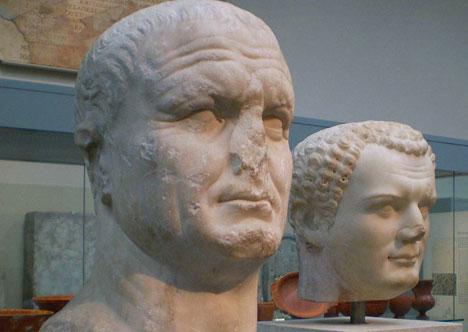
Busts of Vespasian and Titus in the British Museum
or The Coming of the Father and the Son
The chief priests answered,
“We have no king but Caesar.”
So he delivered him over to them to be crucified.
(John 19:15-16)
Is there any significance in the fact that apostate Jerusalem was destroyed by two generals, a father and a son, founders of a new Roman dynasty?
Continue reading
Comments Off | tags: AD70, Covenant Theology, Daniel, James Jordan, Revelation | posted in Bible Matrix, Biblical Theology, Quotes, The Last Days, The Restoration Era
Sep
28
2013
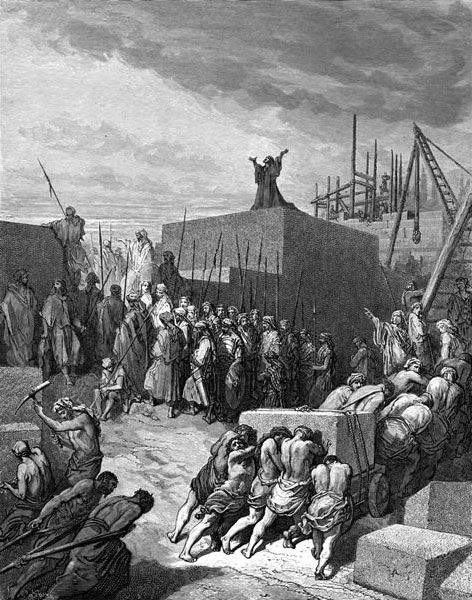
“God’s word is His presence, when delivered in a true setting.”
Continue reading
Comments Off | tags: Angels, Haggai, James Jordan, Prayer, Psalms, Stephen, Temple, Zechariah | posted in Biblical Theology, Quotes, The Restoration Era
Mar
3
2013

Is dispensationalism a theological framework or a hermeneutical approach?
Dispensationalism pretends to be a “literalistic” hermeneutical approach, but it is in fact a contrived framework which results from a single, fundamental error. The fact that this error is so foundational is the reason why its “prophetic plan” is so complicated.
Continue reading
3 comments | tags: AD70, Dispensationalism, Ezekiel | posted in Biblical Theology, Q&A, The Last Days, The Restoration Era