Nov
29
2014
The Death of Deutero- and Trito-Isaiah
The heart of typology is representation, and representation is the heart of sacrifice.
A great deal of so-called theology seems to me to be a waste of time, breath and ink. Theologians and commentators insist on applying a “lens” to Scripture, or building a case from cherry-picked particulars or accumulations of fragmented data, when the answer to the debated question is staring right back at them. Literary structure should be the first recourse, not the last. When it comes to the Bible, literary structure is the label on the tin.
Continue reading
Comments Off | tags: Brueggemann, David A. Dorsey, Isaiah, Literary Structure, oikoumene, Peter Leithart, Systematic typology | posted in Bible Matrix, Biblical Theology, Quotes, The Restoration Era
Nov
18
2014

The waters closed in over me to take my life; the deep surrounded me… (Jonah 2:5)
The Errant Typology of Baptismal Sprinkling
The Bible is an incredibly complex book, however it is also an incredibly consistent book. Its symbolism is a language, which means that although it is flexible enough to allow for new combinations, it has a core which remains steadfast from Genesis to Revelation. This means that, just as we have no excuse for refusing to read this book of types for what it is, we also have no excuse for misusing its types to support any otherwise unsupportable dogma.
Continue reading
Comments Off | tags: Baptism, Dustin Messer, Joshua Luper, Systematic typology, Typology | posted in Biblical Theology, Quotes
Feb
28
2014
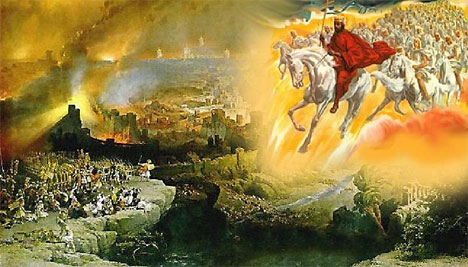
Jesus’ reference to Daniel 7 in Matthew 26:64 (and Mark 14:62) is a source of some confusion. To figure out what is actually going on in Daniel’s vision, we have to go back to Leviticus 16. James Jordan writes:
…when Jesus calls Himself “the Son of Man,” He is referring to Ezekiel, not to Daniel 7 (except perhaps indirectly). Jesus is the Greater Ezekiel. Christians are those who are “like the Son of Man,” like Jesus.
Continue reading
Comments Off | tags: Atonement, Daniel, Ezekiel, High Priest, James Jordan, Leviticus, Systematic typology | posted in Against Hyperpreterism, Bible Matrix, Biblical Theology, The Last Days
Jul
3
2013
 James B. Jordan was the first Bible teacher I ever heard who had an opinion on the gift of tongues in relation to the rest of the Bible. This gent cops a lot of criticism from the establishment for various things, but he is one who really “gets” the Bible. This is because he asks the right questions. And, without being too harsh, he most often makes all the other theologians and Bible teachers in any debate, on both sides of the debate, look like kindergarten children.
Continue reading
1 comment | tags: AD70, Babylon, Corinthians, Luke Welch, Numbers, Systematic typology, Tongues, Trumpets | posted in Biblical Theology, Quotes, The Last Days
Jun
4
2013
or Bird’s Eye View
[This post has been refined and included in Sweet Counsel: Essays to Brighten the Eyes.]
Continue reading
2 comments | tags: Genesis, Herod, Noah, Revelation, Systematic typology, Urim and Thummim | posted in Bible Matrix, Biblical Theology, The Last Days
Apr
20
2013
 or The Killer Hermeneutic
An online acquaintance asked: “There’s a hermeneutical method that’s been used on this site called ‘systematic typology’. What is it? How does one apply it? Are there contexts where it is considered to be a particularly good or particularly bad fit? Where can one go to learn more about it? And where does it come from? (Who developed it, and based on what?)
Continue reading
Comments Off | tags: Hermeneutics, Literary Structure, Systematic typology | posted in Apologetics, Bible Matrix, Biblical Theology, Q&A
Mar
4
2013
or the Covenanto-Architecturo-Historico-Grammatico-Muso Method
“A seal is meant to be broken.”
During the first of his recent lectures in London, James Jordan tore a page out of his Bible. It was the page announcing the New Testament as a separate book with its own pagination. It is one thing to interpret the New Testament in the light of contemporary literature and history, but their importance pales in comparison to the texts being recognized as a continuation of the Scriptures.
Continue reading
3 comments | tags: Ephesians, Fractals, Hermeneutics, Literary Structure, Revelation, Systematic typology | posted in Bible Matrix, Biblical Theology, The Last Days, Totus Christus
Jan
10
2013
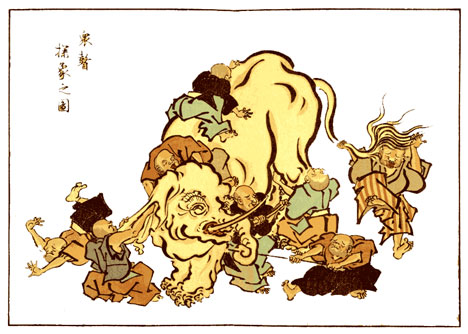
or Bible SatNav
The adage “A picture is worth a thousand words” refers to the notion that a complex idea can be conveyed with just a single still image. It also aptly characterizes one of the main goals of visualization, namely making it possible to absorb large amounts of data quickly. (Wikipedia)
It struck me this morning, as I read one of my regular theology blogs, that theologians don’t much use diagrams. The blog post in question used over a thousand words to describe something that is inherent in the architectures (both literary and spatial) found in the Bible.
What this means is that, for the most part, the way we communicate theology is foreign to the way our God does it.
Continue reading
Comments Off | tags: Bible Matrix III, Literary Structure, Systematic typology | posted in Against Hyperpreterism, Bible Matrix, Biblical Theology
Sep
11
2012
The Holy Herringbone
 Part 1 here.
We’ve covered the first “Covenant cycle” in Numbers, which in theory should set the pattern (fractally) for the remainder of the book. Here’s my go at the second cycle, which (again, in theory, if my suspicions are correct), should be an “exposition” of the second part of the first cycle, which concerned the “military” arrangement of the tribes around the Tent of Meeting (Delegation). So, even though this cycle works through all seven steps, each step should reflect an “Exodus/Hierarchy” or Delegation theme. Each step thus has two literary “spatial coordinates,” an X and a Y. Each step must thus employ a symbol that pertains to two different Covenant steps, or describes the relationship between them.
Continue reading
1 comment | tags: Aaron, Covenant Theology, Fractals, Literary Structure, Miriam, Moses, Numbers, Systematic typology | posted in Bible Matrix, Biblical Theology, The Last Days
Jul
21
2012
Red Blood, Blue Blood
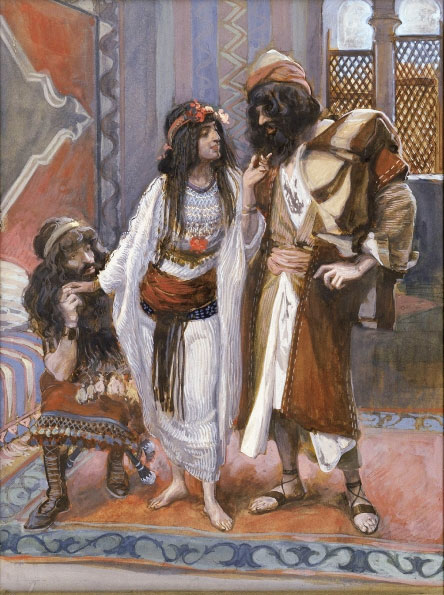 Behold, when we come to the land, you shall bind this line of scarlet thread in the window from which you let us down… Joshua 2:18
Each Israelite was to wear blue tassels on the four corners of his robe. The tassel was a blue cord that unraveled into threads, a “one” that became many. Using the “systematic typology” of the Bible Matrix, we can see that these four blue tassels correspond to the four rivers the flowed down from the spring under the Garden of Eden. [1]
So, what’s the deal with the “red cord” that Rahab was commanded to display in her window in Jericho? Firstly, the Hebrew word isn’t the same word as the “cord” in Numbers 15.
Continue reading
Comments Off | tags: Baptism, Circumcision, Grace, Joshua, Matthew, Peter Leithart, Rahab, Steven Opp, Systematic typology, Totus Christus, Worship as commerce | posted in Bible Matrix, Biblical Theology, Creation, Quotes