Apr
3
2017
Apr
20
2016
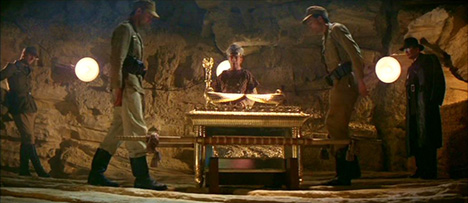
The Myth of Covenant Membership

Reformed theology is the best school in which to learn about covenant theology, yet it is also the worst place to learn about New Covenant theology. Why is this so?

Jul
7
2015
Cultivation and Representation
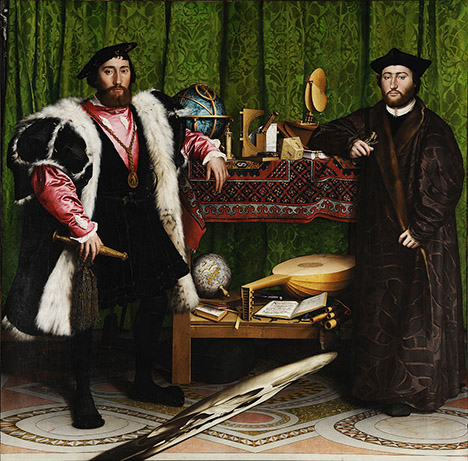
“In the days when our courts are declaring that good is evil and evil is good, the recovery of baptism as a delegation of divine legal authority rather than a sign of ‘limited Covenantal obligation’ is crucial.”
Every biblical Covenant is a word from heaven designed to bring a response from the earth. When the laws in the Ark of the testimony were given to Israel, the response of a legal oath was required, intended to culminate in the legal witness of Israel to the nations. Thus, every biblical Covenant is also a process which leads to maturity, beginning with cultivation and ending in representation.
A child must be schooled before he can be employed. A man must be a disciple before he can be an apostle. Adam was to be qualified before he could represent God as a just and merciful judge on earth. But the difference between cultivation and representation is the difference between circumcision and baptism, and this facet of the biblical Covenants is something paedobaptists are unable to accept, at least in its full glory.
Apr
14
2015
Justified in His Sight
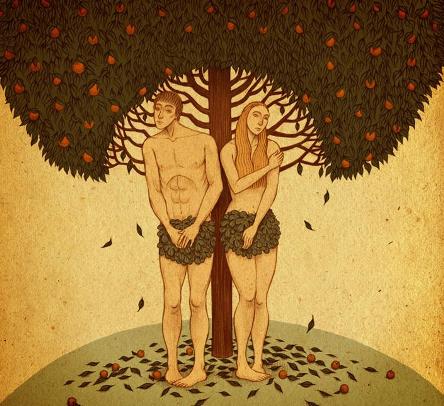
Is our justification a past event or a future one? The debate continues while the answer is, like Adam and Eve, hidden in plain sight.
The problem with most theological discussions concerning our justification is that they are imagined in the courts of men rather than in the court of God. What is the difference between these two courts?
Jul
18
2014
Uncircumcised Jews
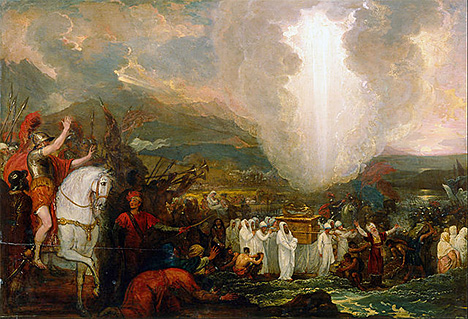
At that time the Lord said to Joshua,
“Make flint knives and circumcise
the sons of Israel a second time.”
(Joshua 5:2)
Was Israel disobedient in its failure to circumcise every male born in the wilderness? The Lord never chastised them for this. If this lapse in the practice of circumcision was in the plan of God, what was the purpose of that plan? The example which first comes to mind is the circumcision of the firstborn son of Moses in Exodus 4:24-26.
This post has been slain and resurrected for inclusion in my 2015 book of essays, Inquietude.
Feb
22
2014
A Place For The Stars

Many of the obscure and apparently obsolete details in the Torah are hints of events later in the Bible. Some of these details are not what is said but what is not said. And some of these unspoken hints are discernible only through identification of common structures. One example is a line missing from Genesis 1.
Continue reading
Nov
7
2013
The Household of Faith – 2

Part II – The Black Sabbath
“For the cloud of the Lord was on the tabernacle by day, and fire was in it by night,
in the sight of all the house of Israel throughout all their journeys.” (Exodus 40:8)
Continued from The Household of Faith – 1
“You shall kindle no fire in all your dwelling places on the Sabbath day.” (Exodus 35:3)
Israel took the man who was collecting kindling on the Sabbath and nipped his sin in the bud. His intentions were plain, so they wanted to know what should be done with him. It sounds brutal, but Exodus and Leviticus give us a plethora of strange laws for Israelites. At least, they seem strange until we understand that not only was Sinai replicated in the Tabernacle, the Tabernacle was to be replicated in every Israelite tent, and indeed in every Israelite. Every household was a tent of God, a cloud, and every Israelite a burning star in the sky. The tribes were, after all, arranged around the tent in military “constellations.” This new Black Sabbath was to reconnect every tent with its source, the tent of God.
Nov
5
2013
Out Of His Belly
or Semina Divina
And Jesus, perceiving in himself that power had gone out from him, immediately turned about in the crowd and said, “Who touched my garments?” (Mark 5:30)
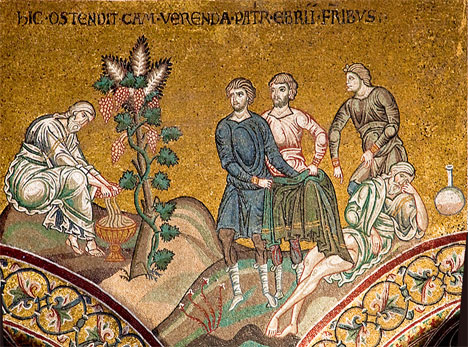
We aren’t told in Genesis 9 what Ham’s intention was when he “uncovered” his father, Noah. Peter Leithart and James Jordan both present some fascinating insights (which differ from each other), but perhaps there is a solution elsewhere in Genesis, which, combined with both these possibilities, offers something new.
This post has been slain and resurrected for inclusion in Praxeme: Journal of Systematic Typology.
Oct
28
2013
Galatians – 10
 Born from Above
I’m currently working hard on Bible Matrix III: The House of God. This third volume is bigger on the inside than it is on the outside. It really is. Being so engrossed in the shape and processes of the Bible (yes, even more than usual), it has struck me how foreign the various theological schools’ thinking and speech is to the actual text.
The debates about “Pauline Theology” are the perfect example, especially the focus on narrow (yet important) topics such as justification. An academic divides and redivides the text in the way an expert in any science overspecializes. He ends up knowing everything about nothing. After spending a few hours each day wandering and describing the halls of biblical architecture, I am more convinced than ever that the only way to fully understand Scripture is architecturally. This is because, for our glorious God, architecture is ethics, and ethics is architecture. Divorced from the biblical mud map, the Edenic grid, modern theologians are discussing less than a dim distorted reflection of the book God has given us. They are feeling their way around the house with their eyes shut. Continue reading
Oct
24
2013
The Household of Faith – 1
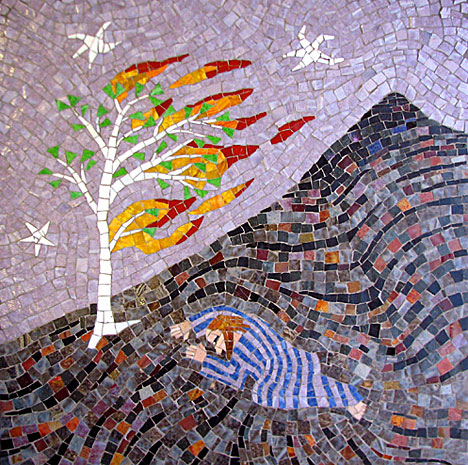
“Once the architecture is taken into account, the text is not ridiculous but terrifying. It marches inexorably through the deep rhythm of the seven days with laser precision, stately deliberation, and omniscient vision. These words were breathed by the source of all breath.”
Part I – Picking Up Sticks
“You shall kindle no fire in all your dwelling places on the Sabbath day.” (Exodus 35:3)
Many Christians ignore, and atheists poke fun at, the weird bits of the Bible, as though these texts are primitive, distorted, or contrived. Nothing could be further from the truth. The truth is that these texts are designed to choke the faithless, and to be chewed over, meditated upon by the faithful, that we might be changed.
Why was fire forbidden on the Sabbath? The first thing to do with any text is identify its context. No more treating Bible texts like fortune cookies, do you hear me?
OUT NOW
COMING SOON
 Bible Matrix blog
-


IN THE WORKS
Jordan Complete