Oct
24
2013
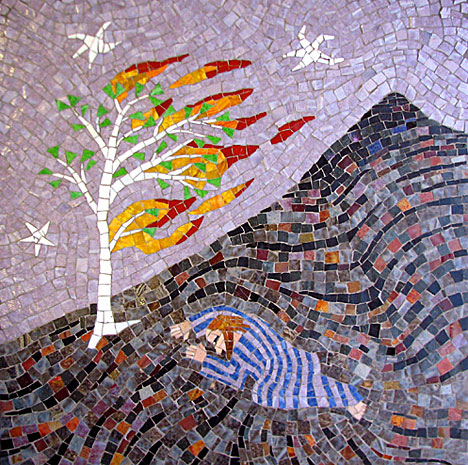
“Once the architecture is taken into account, the text is not ridiculous but terrifying. It marches inexorably through the deep rhythm of the seven days with laser precision, stately deliberation, and omniscient vision. These words were breathed by the source of all breath.”
Part I – Picking Up Sticks
“You shall kindle no fire in all your dwelling places on the Sabbath day.” (Exodus 35:3)
Many Christians ignore, and atheists poke fun at, the weird bits of the Bible, as though these texts are primitive, distorted, or contrived. Nothing could be further from the truth. The truth is that these texts are designed to choke the faithless, and to be chewed over, meditated upon by the faithful, that we might be changed.
Why was fire forbidden on the Sabbath? The first thing to do with any text is identify its context. No more treating Bible texts like fortune cookies, do you hear me?
Continue reading
Comments Off | tags: Booths, Covenant curse, Covenant Theology, Exodus, Feasts, Literary Structure, Moses, Numbers, Tabernacle | posted in Bible Matrix, Biblical Theology
Dec
26
2012
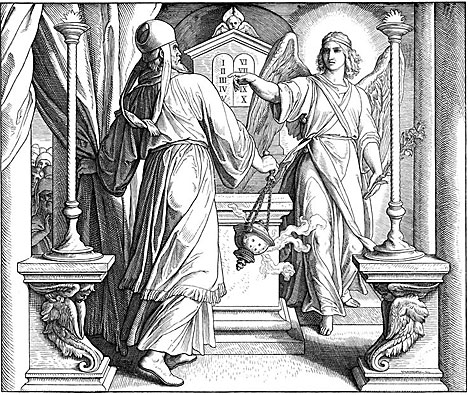
Here’s some interesting calculations concerning the day of Jesus’ birth in relation to Israel’s festal calendar. It was written by Michael Scheifler (a Seventh-day Adventist), and is reproduced here with his permission.
While much of the world celebrates the birth of Jesus Christ on the 25th of December, can the actual day of Jesus’ birth be determined from scripture? This question will be explored in some detail, and will yield a result that is quite intriguing. The first passage we will consider begins with the father of John the Baptist, Zacharias:
Continue reading
Comments Off | tags: 70 Weeks, Bible Chronology, Booths, Christmas, Chronicles, Daniel, Feasts, Luke, Tabernacles, Temple | posted in Biblical Theology, Quotes, The Last Days
Mar
5
2012
“…and they saw the God of Israel. And there was under His feet as it were a paved work of sapphire stone, and it was like the very heavens in its clarity. But on the nobles of the children of Israel He did not lay His hand.” (Exodus 24:10-11)
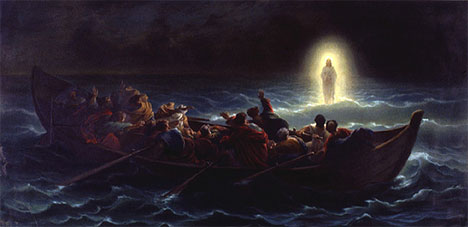
Well, I’ve been blustering on about art and “intuition” in generalities for about a week now. Fluffy generalities are exactly the kind of thing that annoys me about many Biblical scholars, and I reckon it annoys God, too. They never seem to get down to specifics, and He is very specific. This shows in His architecture, and also in His literary architecture. So, here, in a section of Matthew 14, is a chance for me to get specific and show you what is possible with this “killer hermeneutic.” [1]
After a brief look at the structure of this passage the other day, I thought I’d spend some more time on it. A closer analysis has revealed an even greater beauty than I expected. (I have briefly referenced the order of words in the Greek to avoid any great missteps, so it may not be perfect, but it’s close.) Much learning hath indeed made me mad but I hope you’ll take a few minutes to see this passage through my eyes.
Continue reading
Comments Off | tags: Atonement, Booths, Covenant curse, Covenant Theology, Feasts, High Priest, Laver, Literary Structure, Matthew, Moses, Tabernacle, Ten Commandments | posted in Against Hyperpreterism, Bible Matrix, Biblical Theology, The Last Days
Dec
9
2011
The Living Dead and the Dead Living
Creation: In part 1 we saw that the theme of the first stanza of 2 Thessalonians 2 was the “Sabbath” rest of the church. Paul writes to remove the alarm caused by the “conspiracy theorists” who attempted to disturb it.
Division: The second stanza concerned the splitting of the church into two — those who would persevere despite the growing threat of tribulation throughout the empire [1], and those who would succumb to their fears. The attacks would culminate in the completion of Herod’s Temple and the Nero’s burning of Rome in AD64. The first threw doubt upon the words of Christ concerning the Temple, and the second, though hardly believed, was an excuse to scapegoat this new Jew-Gentile sect, now legally separated from the protection afforded to Jews by Rome. The gospel tore Judaism in two. Then it united those believing Jews with Gentiles. But as in the wilderness, new Israel would be threshed and purified.
Continue reading
Comments Off | tags: AD70, Atonement, Booths, Dispensationalism, Feasts, James Jordan, Literary Structure, Paul, Ray Sutton, Revelation, Ten Commandments, Thessalonians | posted in Bible Matrix, Biblical Theology, The Last Days
Jun
8
2011
The debate over infant baptism at Doug Wilson’s blog continues. Pastor Wilson writes:
“The Gentiles were threatened with removal from the same tree the unbelieving Jews had been in. But if this were the tree of salvation, then the elect can lose their salvation — which cannot be defended biblically. And if this is the tree of the covenant, then the point stands” (To a Thousand Generations, p. 36)
This looks logical enough, but trees are a process of maturity, from seed to fruit. So is righteousness, and so is sin.
Continue reading
28 comments | tags: AD70, Baptism, Booths, Doug Wilson, Feasts, Restoration, Revelation, Romans, Tabernacles, Typology | posted in Bible Matrix, Biblical Theology, Quotes, The Last Days, The Restoration Era
Apr
15
2009
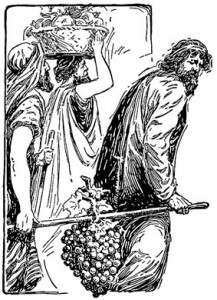
“How is the land, is it fat or lean? Are there trees in it or not? Make an effort then to get some of the fruit of the land.” Now the time was the time of the first ripe grapes… Then they came to the valley of Eshcol and from there cut down a branch with a single cluster of grapes; and they carried it on a pole between two men. (from Numbers 13)
But Christ has indeed been raised from the dead, the firstfruits of those who have fallen asleep. (1 Corinthians 15:20)
 The Tabernacle is an architectural model of the world. Each of the seven speeches of the Lord (Exodus 25-31) is introduced with a variant of the phrase “Then Yahweh spoke to Moses, saying.” The seven speeches follow the pattern of the seven days of the Creation week, and also the seven feasts in Leviticus 23.
The Table of Showbread corresponds to both the grain and fruit created on Day 3, the Feast of Firstfruits and to the Asension of Moses.
This pattern began in the garden, when after Adam’s “Red Sea” death and resurrection, he was united to his bride by Covenant. He “ascended” as covenant head of a new family, with God’s one Law.
On the table in the Holy Place were twelve loaves of bread and jugs of beer (from grain), and later, wine. Like the manna and the grapes of Eshcol, these were a promise of rest and rule with God on a future Sabbath as priest and king. Here is the last supper. As with Adam and Moses, this initial promise of wine was followed by exposure to the serpent for testing under the Law – Pentecost.
Just as the marriage covenant of Adam and Eve at Firstfruits is really a betrothal of their united marriage to God on Day 7, so this Table of Israel was a promise of future glory to the whole world at the final Sabbath feast, Tabernacles.
To use Doug Wilson’s phrase, human marriage is “manifest glory.” It is a Day 3 picture of the Day 7 rest to come at the union of heaven and earth.
Comments Off | tags: Adam, Betrothal, Booths, Doug Wilson, Firstfruits, Holy Place, Last Supper, Manna, Marriage, Numbers, Pentecost, Tabernacle, Tabernacles, Wine | posted in Biblical Theology