May
13
2014
“I am the true vine, and My Father is the vinedresser.” John 15:1
One of the problems with exalting Enlightenment thinking over the Scriptures is that it disconnects theology from the real world. One is left to wade through and deal with the sometimes stimulating but mostly irrelevant tomes of philosophers who jettisoned our only source of light. The main reason modern Christians need to be up-to-speed on philosophy is to deal with godless philosophers in terms they can understand. I don’t consider myself to be up-to-speed, but from what I have read, many if not most of the questions they consider to be profound are really just the shadows left once Jesus is locked out. The average man has more pressing matters to contend with, and subsequently has a better grip on real life. For instance, we can spend hours swatting every available philosopher and lawyer on the existence or nature of natural law, and interact with all of them, or we could just ask the man on the land.
This post has been slain and resurrected for inclusion in my 2015 book of essays, Inquietude.
Continue reading
Comments Off | tags: Culture, Romans | posted in Biblical Theology, Creation, Ethics
Feb
3
2014
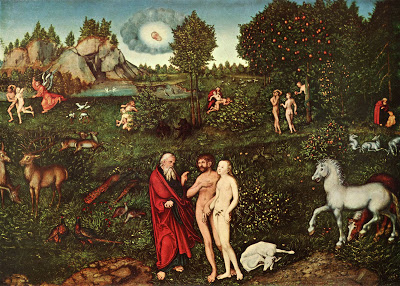
Paul understood God’s ways. God’s ways are “Covenant-shaped,” they concern transformation, and the glory always comes at the end. It is the result of God’s Word going out and coming back with something good, His own goodness multiplied.
Continue reading
4 comments | tags: Circumcision, Covenant Theology, Genesis, Literary Structure, Paul, Romans | posted in Bible Matrix, Biblical Theology
Jan
16
2014
or Baptism into Baal

Then you shall say to Pharaoh,
‘Thus says the Lord,
Israel is my firstborn son,
and I say to you,
“Let my son go that he may serve me.”
If you refuse to let him go,
behold,
I will kill your firstborn son.’”
(Exodus 4:22)
My Federal Vision friends believe baptism is an important subject, from both theological and pastoral points of view. I agree, but for me it is also an issue of aesthetics. The Bible has a wonderfully consistent internal logic, and paedobaptism crunches the gears at every turn.
Peter Leithart just posted something concerning baptism, and it’s worth answering, not only “because somebody on the internet is wrong,” but also because it is an issue I’ve just finished dealing with in The Shape of Galatians. It should be noted that Trinity House is hosting some lectures on sacraments by a baptist, so Dr Leithart and his colleagues have a spirit that should be imitated by theologians everywhere. My own posts here are always bait in the hope of a bite, a friendly disputatio, so don’t take them the wrong way. If a friend has soup on his tie, or wax in his ear, or a fertility rite in his sacrament, what sort of friend isn’t going to point it out!?
Continue reading
4 comments | tags: Abel, Abraham, Baptism, Cain, Federal Vision, Galatians, Genesis, Numbers, Paul, Peter Leithart, Romans, The Shape of Galatians | posted in Bible Matrix, Biblical Theology, Quotes
Jun
27
2013

So I find it to be a law that when I want to do right, evil lies close at hand. For I delight in the law of God, in my inner being, but I see in my members another law waging war against the law of my mind and making me captive to the law of sin that dwells in my members. (Romans 7:21-23)
Interpreters debate the meaning of Paul’s words in Romans 7:14-25. Are we to apply these statements to a Christian or a non-Christian? Could a Christian utter these words? Perhaps a better question is, are these the words of an unregenerate man?
Continue reading
Comments Off | tags: Numbers, Paul, Romans | posted in Biblical Theology, Christian Life, Ethics, The Last Days
Jan
22
2013
Adam’s Challenge in Eden to Become the King He Was
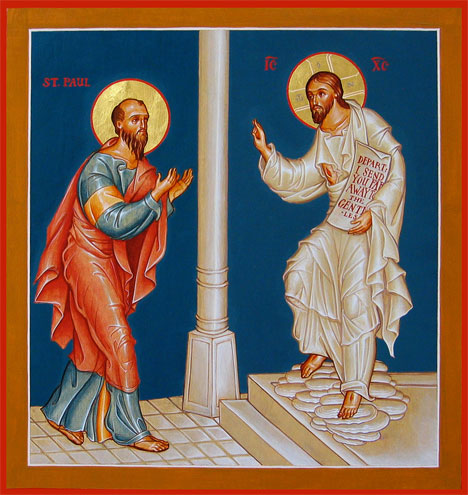 by Mark Horne (reposted with permission)
“What we need to ask ourselves is, why might a righteous and sinless human need to ‘die’ in order to “live”?”
In basic Evangelical Christian teaching, “sanctification” is a process in which a believer, by the working of God’s Spirit, is able more and more to put off sin and live in more complete obedience to God. That way of summarizing the teaching can be misleading since perception is not always the same as reality. After all, one part of the process might involve discovering hidden sin, which means one might, at times in one’s life, be sanctified by (apparently) becoming more sinful, not less. Furthermore (or perhaps the same issue), new stages in life can bring new and more powerful temptations which one might initially fail to resist.
But another problem with “sanctification” as understood as the basic process and calling in the Christian life, is that Evangelical teaching cannot, on this definition, allow that Jesus, from the time he was born to the time he died, went through sanctification.
Continue reading
Comments Off | tags: Mark Horne, Romans | posted in Biblical Theology, Christian Life
Jul
13
2011

Does Christ’s exhortation to His disciples in John 15 to remain in Him allow for the possibility of unregenerate New Covenant members?
Doug Wilson writes:
“For many Christians, [John 15:1-6] is a ‘problem passage.’ We want Christ to use a different figure. We want Him to be the Marble Box, with us as the individual marbles. When we are saved, we are put into the Marble Box, and we had better watch it, or we might find ourselves taken out of the Marble Box, losing our salvation. Or, if we know that salvation is not a possession of ours, which we could lose, we want the Marble Box to have a great big lock on it, and to be full of elect, non-loseable marbles” (To a Thousand Generations, p. 84).
We agree that the truly elect cannot be lost. We also agree that not all of the Old Covenant people were truly elect. But can we import this “not all Israel are Israel” into the New Covenant order?
Continue reading
3 comments | tags: Baptism, Doug Wilson, Feasts, John Bunyan, Paul, Romans, Tabernacles | posted in Biblical Theology, The Last Days
Jun
8
2011

The debate over infant baptism at Doug Wilson’s blog continues. Pastor Wilson writes:
“The Gentiles were threatened with removal from the same tree the unbelieving Jews had been in. But if this were the tree of salvation, then the elect can lose their salvation — which cannot be defended biblically. And if this is the tree of the covenant, then the point stands” (To a Thousand Generations, p. 36)
This looks logical enough, but trees are a process of maturity, from seed to fruit. So is righteousness, and so is sin.
Continue reading
28 comments | tags: AD70, Baptism, Booths, Doug Wilson, Feasts, Restoration, Revelation, Romans, Tabernacles, Typology | posted in Bible Matrix, Biblical Theology, Quotes, The Last Days, The Restoration Era
Aug
9
2010
An Exhortation to Be A Fruitful Tree
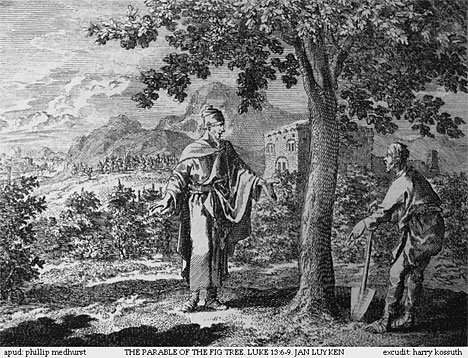
Tabernacles was the final annual feast, a Godfest to be thrown by Jews as a ministry to Gentiles. At the Feast of Clouds [1], every household temporarily became a new house of God, a “local branch” of the Tabernacle, a “priesthood of all believers.” Of course, we see this fulfilled in the book of Acts. Just as we see Paul exhort the Ephesians (Gentiles!) to put on the mediatorial body-armour of the High Priest, [2] his final exhortation to the Roman Christians alludes to not only Israel’s feasts but Israel’s priesthood. Pretty much every church he established was a “booth” made of natural Jewish branches and ingrafted Gentile branches. [3] At Pentecost, the same cloud that received Jesus filled the house. [4] Now every household of faith was a Tabernacle, a glorious cloud with a government of human angel-elders. [5] In the Bible’s literary structure, a recurring motif at Tabernacles is good fruit, godly offspring. God wants more than just a covering of leaves. As in Eden, future generations hang upon wise government.
Continue reading
8 comments | tags: AD70, Add new tag, Atonement, Doug Wilson, Feasts, Genesis, Laver, Literary Structure, Paul, Roman Catholicism, Romans, Systematic typology, Tabernacles, Temple | posted in Bible Matrix, Biblical Theology, The Last Days
Jan
18
2010
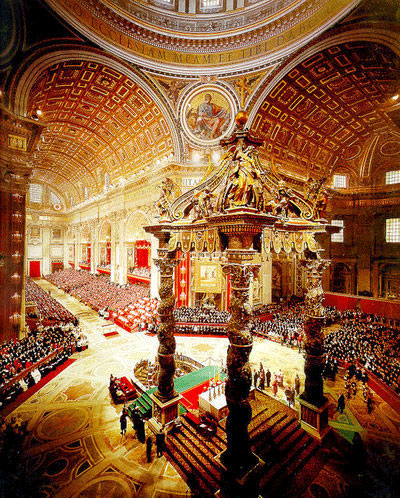
WORDS OF WARNING:
[Romans] is not a letter written to generic Gentiles. These words are given to the saints in Rome. “To all that be in Rome, beloved of God, called to be saints” (Rom. 1:7). When he cautions them against hubris, why would he do this? He did it because he saw the first stirrings of it. Remember that Paul characteristically argues “one of you will say then,” and he does this because he knows how the Q&A sessions usually go. And what happens here? “God cut out the Jews to make way for us Romans” (v. 19). Remember that this was the capital city of the most powerful empire in the world. Anyone who thinks that Christians don’t get caught up by this kind of reflected glory need to ask more pointed questions of their sinful hearts. The Lord spurned the devil’s offer of all the kingdoms of men in their glory—His followers have not always been so successful.
Continue reading
Comments Off | tags: Doug Wilson, Paul, Roman Catholicism, Romans | posted in Biblical Theology, Quotes
Dec
11
2009
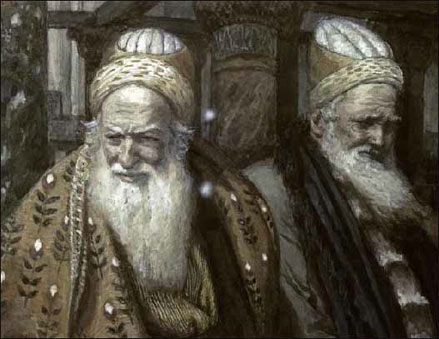
“Paul knew his kinsmen. This is a group of people on whom this tactic would work.”
Doug Wilson has been preaching through Romans (subscribe to his podcast now!) and recently commented on his blog about Romans 11, and the relationship between Christians and Jews today.[1] I’ll have to listen to his sermon to figure out whether Doug sees this as interpretation (“all Israel” is yet to be saved), or application.
I made some comments and a gent called Lemuel replied, and I made some more. It brings out the significance of the phrase “the sons of God.”
Continue reading
1 comment | tags: AD70, Circumcision, Compromise, Doug Wilson, Galatians, Gary DeMar, Judaisers, Noah, Romans, Ruth | posted in Biblical Theology, The Last Days