Jun
16
2015
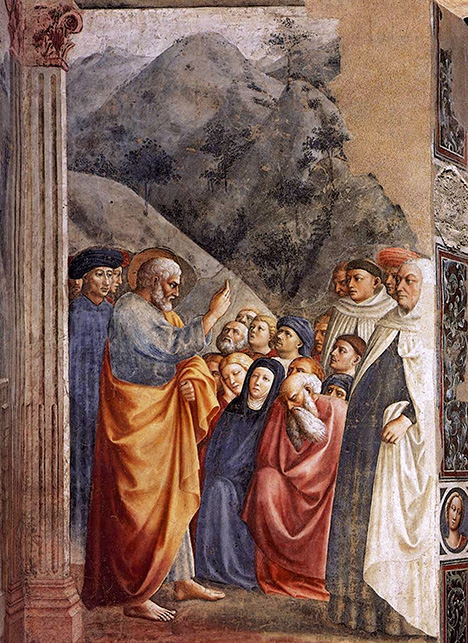
There are no “Abrahamic” promises concerning offspring — or real estate — for New Covenant believers.
Like the dogma of evolution, the doctrine of paedobaptism is not supported by indisputable evidence. Rather, the data must be interpreted through the lens of a pre-existing framework. The paedobaptistic lens is, however, a biblical one, being Abrahamic, and it comes in extremely handy when used in the right way. It deals with the few texts which paedobaptists rely on for proof, showing that they are not establishing a revised Abrahamic tent, but bringing the old one to an end.
Continue reading
4 comments | tags: Acts, AD70, Baptism, Circumcision, Ephesians, oikoumene, Paul, Pentecost, Peter, Tabernacle | posted in Bible Matrix, Biblical Theology, The Last Days
Sep
5
2014

James Kirk learns via Vulcan mind meld that he will never marry.
Now as a concession, not a command, I say this. I wish that all were as I myself am. But each has his own gift from God, one of one kind and one of another. (1 Corinthians 7:6-7)
Reliance upon rules and regulations is a sign of immaturity. There’s nothing wrong with them, of course, just as there is nothing wrong with the “gutter guards” used to keep the ten pin bowling ball moving towards the pins for children’s parties at the bowling alley. Likewise, there was nothing wrong with creeds, rosary beads or religious paintings in their early days. They were simply mnemonic devices for the illiterate. But, just as it was with the Pharisees in the first century, these lifeless, inflexible “stoicheia” become a problem when they turn into legislation and become mandatory. Failing to tithe one’s kitchen herbs leads to certain destruction. The celibacy of certain prominent men in the Bible is part of this discussion. The question is not “Is celibacy holier than marriage?” but why were these spiritual giants, including Jesus, celibate at all?
This post has been slain and resurrected for inclusion in my 2015 book of essays, Inquietude.
Continue reading
2 comments | tags: Corinthians, Daniel, James B. Jordan, Leviticus, Paul | posted in Biblical Theology, Christian Life, The Restoration Era
Feb
3
2014
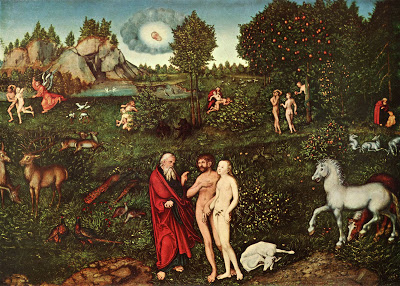
Paul understood God’s ways. God’s ways are “Covenant-shaped,” they concern transformation, and the glory always comes at the end. It is the result of God’s Word going out and coming back with something good, His own goodness multiplied.
Continue reading
4 comments | tags: Circumcision, Covenant Theology, Genesis, Literary Structure, Paul, Romans | posted in Bible Matrix, Biblical Theology
Jan
16
2014
or Baptism into Baal

Then you shall say to Pharaoh,
‘Thus says the Lord,
Israel is my firstborn son,
and I say to you,
“Let my son go that he may serve me.”
If you refuse to let him go,
behold,
I will kill your firstborn son.’”
(Exodus 4:22)
My Federal Vision friends believe baptism is an important subject, from both theological and pastoral points of view. I agree, but for me it is also an issue of aesthetics. The Bible has a wonderfully consistent internal logic, and paedobaptism crunches the gears at every turn.
Peter Leithart just posted something concerning baptism, and it’s worth answering, not only “because somebody on the internet is wrong,” but also because it is an issue I’ve just finished dealing with in The Shape of Galatians. It should be noted that Trinity House is hosting some lectures on sacraments by a baptist, so Dr Leithart and his colleagues have a spirit that should be imitated by theologians everywhere. My own posts here are always bait in the hope of a bite, a friendly disputatio, so don’t take them the wrong way. If a friend has soup on his tie, or wax in his ear, or a fertility rite in his sacrament, what sort of friend isn’t going to point it out!?
Continue reading
4 comments | tags: Abel, Abraham, Baptism, Cain, Federal Vision, Galatians, Genesis, Numbers, Paul, Peter Leithart, Romans, The Shape of Galatians | posted in Bible Matrix, Biblical Theology, Quotes
Nov
26
2013
or Nailed to the Mast
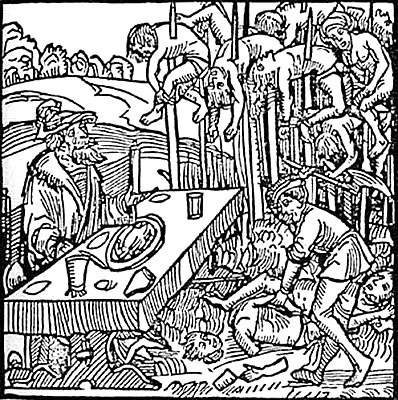
Rachel Held Evans is a writer who likes the challenge of “asking tough questions about Christianity in the context of the Bible Belt” while consulting the howling void of modern culture for the answers. That is indeed a challenge. She takes Christians to task for referring to the de-Christianizing of Christmas as “persecution”, offering a helpful chart.
Continue reading
Comments Off | tags: AD70, Christmas, Doug Wilson, Esther, Mordecai, Paul, Persecution | posted in Apologetics, Christian Life, Ethics, Quotes
Nov
19
2013
 Part III – The Feast of Clouds
“But Peter said, ‘I have no silver and gold, but what I do have I give to you.”’ (Acts 3:6)
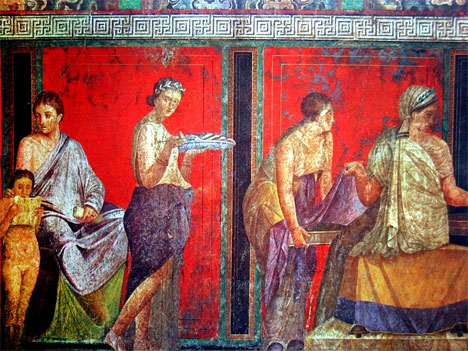
Israel consistently failed to keep the final feast, the Feast of Sukkot, because she took her calling to be elitist rather than priestly. She thought her calling, gifts and purification were for herself, rather than for the healing of the nations.
Continue reading
Comments Off | tags: Acts, Babylon, Baptism, Covenant Theology, Daniel, Esther, Feasts, Lampstand, Paul, Pentecost, Tabernacles | posted in Bible Matrix, Biblical Theology, The Last Days, The Restoration Era
Nov
16
2013
How to Fulfill the Law
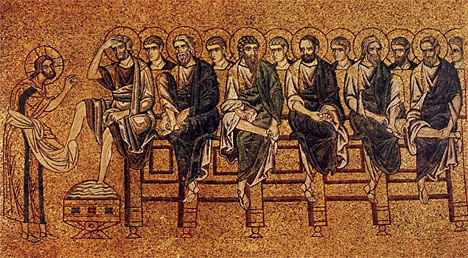
“…men are enthroned as elohim (judicial ‘gods’) but not as God intended. Those who sit in the seat of Moses often lack his meekness before God, and their rule is like that of Lamech. Their seventy times seven ‘fulfilling of the Law’ is vengeance not forgiveness.”
We continue with the Deuteronomy section of Galatians, which has seven cycles. Paul moves from an Ascension/Firstfruits motif to an Testing/Pentecost motif. Being the center of this final group of cycles, and at the center of its Ethics cycles, here we have its turning point. The first half of this cycle is about sacrificial binding. The last half is about being loosed on account of the sacrifice.
Continue reading
Comments Off | tags: Galatians, Literary Structure, Paul | posted in Bible Matrix, Biblical Theology, Christian Life, Ethics
Oct
18
2013
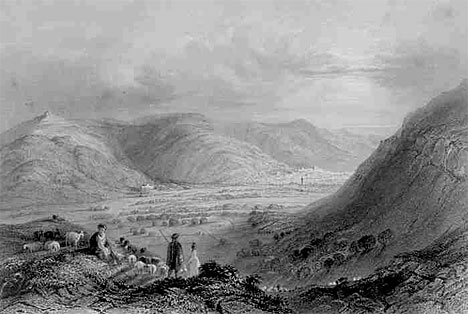
Paul’s Deuteronomy
That day Moses charged the people, saying, “When you have crossed over the Jordan, these shall stand on Mount Gerizim to bless the people: Simeon, Levi, Judah, Issachar, Joseph, and Benjamin. And these shall stand on Mount Ebal for the curse: Reuben, Gad, Asher, Zebulun, Dan, and Naphtali. (Deuteronomy 27:11-13)
Paul now moves into the Deuteronomy section of his epistle to the Galatians, and it becomes clear that, structurally-speaking, Galatians gets no further than Moses. The epistle is fivefold in nature, a recapitulation of the Torah, and thus it ends on the wilderness side of the Jordan. Like Moses, Paul will not live to see the new order, except from afar.
Continue reading
Comments Off | tags: Baptism, Circumcision, Covenant curse, Deuteronomy, Galatians, Literary Structure, Moses, Paul | posted in Bible Matrix, Biblical Theology, Ethics, The Last Days
Sep
5
2013
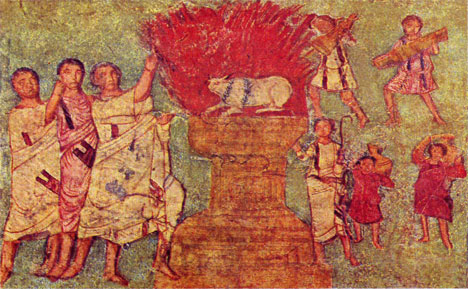
“The promise and the law are the two goats on the Day of Atonement.”
The Blessings of Abraham and the Curses of Moses
This is the fourth cycle within the “Numbers” section of Galatians. Since the next section concerns the Christians’ identity as sons of Abraham (Succession), this cycle seems to correspond to New Covenant Sanctions. I’ll take a risk and outline the epistle as I see it so far, so you can keep a handle on it. (The headings for the sections we have already covered are links to the relevant blog posts.)
Paul’s Numbers:
Sanctions
Succession
Paul’s Deuteronomy
Paul’s Joshua
Paul’s Judges
Continue reading
Comments Off | tags: Abraham, Baptism, Circumcision, Covenant curse, Covenant Theology, Galatians, Literary Structure, Paul | posted in Bible Matrix, Biblical Theology, Reading the Bible in 3D, The Last Days
Aug
24
2013
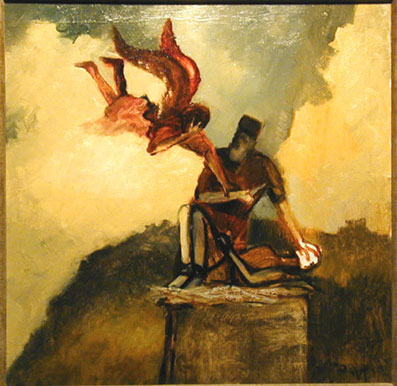
“Show Us the Father And We Will Be Satisfied” (John 14:8)
This is the third cycle within the “Numbers” or Ethics section of Galatians. Paul is contrasting the external Ethics of the Law (requiring the perfect obedience of Man) with the internal Ethics of the Spirit (resulting from trust in the perfect obedience of Christ). But there is something deeper here which, it seems to me, is often overlooked.
Continue reading
Comments Off | tags: Abraham, Covenant curse, Covenant Theology, Galatians, Hebrews, Literary Structure, Melchizedek, Paul | posted in Bible Matrix, Biblical Theology, The Last Days