Jan
13
2017
Brexit and the Binding of Satan – Part 5
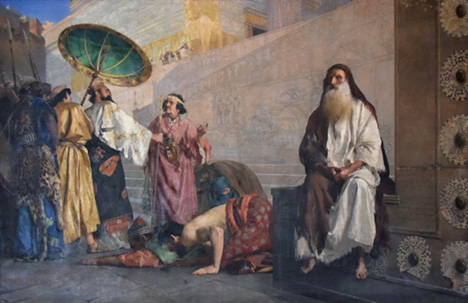
Satan is currently bound from gathering the nations in kingly rebellion so that Jesus might gather them in priestly unity.

Satan is currently bound from gathering the nations in kingly rebellion so that Jesus might gather them in priestly unity.
Why are there four Gospels? There would be so much less confusion — and theological spade work — if there were just the one. The most obvious answer is that each one was written for a different audience, as described here. The least obvious answer is that God was not only writing the commandments in human flesh, He was also “measuring out” the architecture of the Tabernacle in humanity.
Rachel Held Evans is a writer who likes the challenge of “asking tough questions about Christianity in the context of the Bible Belt” while consulting the howling void of modern culture for the answers. That is indeed a challenge. She takes Christians to task for referring to the de-Christianizing of Christmas as “persecution”, offering a helpful chart.
 The intro to the Reading the Bible in 3D seminar mentions the “jokes” in the Bible. In his book Deep Exegesis, Peter Leithart gives us a rundown on what a joke is to justify using the word to describe some of the allusions in Scripture. One of the reasons jokes are funny is their reliance on inside information.
Here’s my all-time favourite joke in the Bible.
Joe Rigney has a great piece on the Trinity House website. With apologies to Joe, I’ll give it to you in a nutshell, then make some brief observations. But make sure you read the entire article.
Continue reading
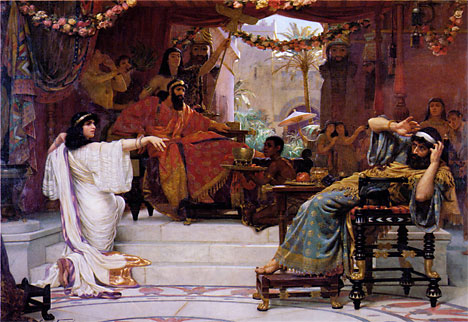
The systematic typology of the Bible Matrix allows us to follow the structures of the Torah thoughout the rest of the Bible. Here’s something that links the Restoration era with the book of Deuteronomy.

We receive baptism, but is membership of the visible New Covenant body entirely objective? The Old Covenant church, “the Body of Moses,” was Adamic. The Tabernacle was a Babelic tower, a ladder to heaven, laid out prostrate on the ground. The New Covenant Body, the Body of Jesus, is Evian. As a Temple filled with the Spirit of God, it stands upright and walks on the Crystal Sea.
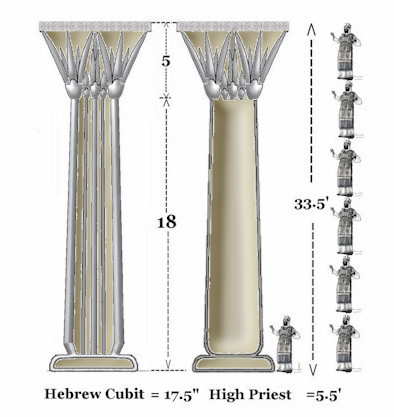
Peter Leithart writes:
“Why so much attention to the pillars of Solomon’s temple in 2 Kings 25? It is likely that these were the last major items left. Ahaz had already dismantled the bronze sea and the water chariots. King after king plundered the temple for bribe money. When Nebuchadnezzar came, not much was left. Perhaps even the ark was among the ‘gold’ items removed earlier.” [1]
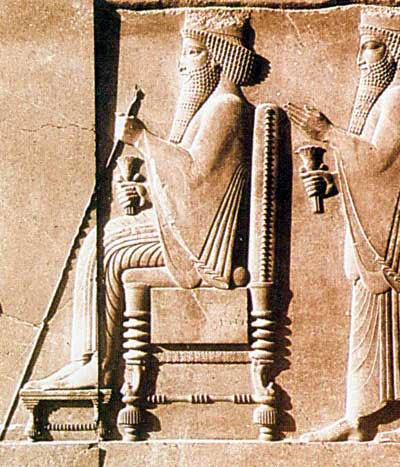
Of course, God’s new golden-haired boy got things wrong, as all Adams do when given the opportunity of glorious kingdom. The metal man in his dream (the new “empire-Tabernacle”) only had gold at the head, but King Nebuchadnezzar’s obelisk was gold from head to foot. This new king, under whom Israel was now a “Covenant vassal,” would be taught by God that he, too, was subject to a higher authority.
It’s cat-among-the pigeons time again.
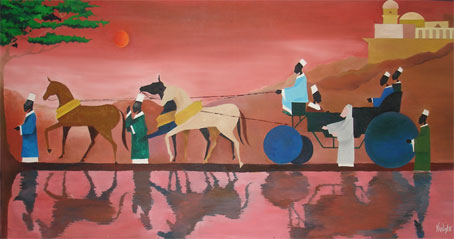
Identifying the Bible Matrix in Acts reveals in quite a number of places that the author, Luke, has a sense of humour. Or the Holy Spirit does. In Acts 8, at Ascension (Firstruits), the Ethiopian eunuch asks Philip to hop up into his chariot. [1]
Philip opens the Law for him at Pentecost, the man is “resurrected” at Trumpets, baptized at Atonement (the Laver), and at Tabernacles we have both a Jew and Gentile whose witness flows out into the nations.
 Bible Matrix blog