Feb
21
2012
or The New Jerusalem has a Moat

“I know your works: you are neither cold nor hot.
Would that you were either cold or hot!” (Revelation 3:15)
The world is a cosmic Tabernacle. The first domain of Mediatory Man was between the waters. The waters below (springs) were necessary for life but they were not “a place to live.” The waters above did likewise. However, these were temporary veils, boundaries to be crossed in an increasing advance-by-faith.
Continue reading
Comments Off | tags: Creation Week, Crystal Sea, Genesis, Laver, New Jerusalem, Noah, Revelation, Tabernacle, The flood | posted in Bible Matrix, Biblical Theology, Creation, The Last Days
Jul
9
2011
Well, here’s Day 6 at last, and the end of Genesis 1 (this is a really bad chapter division!)
Here’s the rest of this series: 1 2 3 4 5
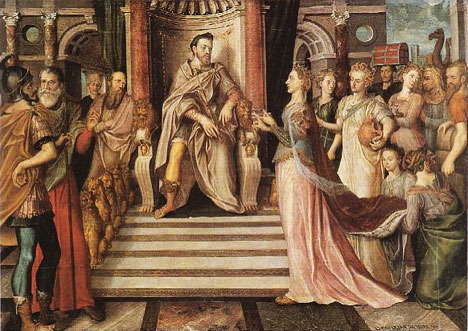
In this final act of Creation, the Lord puts the lords in the palace. As James Jordan observes, ancient kings sat on thrones of beasts. As king, Solomon was enthroned over lions. His priestly government, imaged in the bronze sea, was enthroned over twelve “tribal” sacrificial bulls, carrying the living water to the nations. And in the Revelation, we see the four beasts filled with eyes beneath the throne of God. The animal kingdom was, in some important sense, to become Adam’s throne.
If you’ve read Bible Matrix, you’ll also have seen that Israel’s history follows the Creation Week, with the four Gentile “beast” empires preceding the final “empire of The Man” Christ Jesus (Daniel 7). Using the matrix, we can also see that the initial history in Daniel 1-6 follows the same pattern, with Daniel’s “dominion” over the lions (turning them into “mutes”) situated at Day 6. And, of course, Noah was also enthroned over those “from afar off.” And then, looking at the entire biblical history, at the Last Day, Jesus will be the one fully enthroned over every enemy, with every “beastly” mouth stopped.
Continue reading
Comments Off | tags: Creation Week, Daniel, Genesis, James Jordan, Literary Structure | posted in Bible Matrix, Biblical Theology, Creation
May
30
2011
There is great advantage in tracking the shape of God’s work in history through the Old Testament. This is because God is consistent. Everything He does has the same shape, even though He does it in new and surprising (and sometimes devastating) ways.
One of the big handles in Scripture is the five-fold Covenant pattern, described by Ray Sutton in his book, “That You May Prosper: Dominion by Covenant.” Continue reading
Comments Off | tags: Against Hyperpreterism, Covenant Theology, Creation Week, Feasts, Moses, Ray Sutton, Revelation, Revelation 20 | posted in Against Hyperpreterism, Bible Matrix, Biblical Theology, The Last Days
Mar
30
2011
Psalm 11 seems a simple one to break down. As usual, once the structure is parsed, the author’s allusions are allowed to shine. The odd progression of the subject matter of the song suddenly makes sense. Now, remember we are dealing with poetry. All those silly rules you learnt at Bible college don’t apply. But all those good rules you learnt in English class do apply. The context is the Covenant, and Covenant breakers, and all the allusions are drawn from the history of the Covenant so far. It all takes place inside the tent of God and the Land of God, because that is where judgment begins.
Genesis – Creation – Day 1 – Sabbath
In the LORD (Transcendence)
…..I put my trust; (Hierarchy)
……….How can you say to my soul, (Ethics)
…..“Flee as a bird (Sanctions)
to your mountain”? (Continuity)
Continue reading
2 comments | tags: Chiasm, Covenant curse, Covenant Theology, Creation Week, David, Feasts, Literary Structure, Psalms | posted in Bible Matrix, Biblical Theology
Mar
15
2011
or Raising Up the Temple
An analysis of the literary structure of Day 5 of Creation and passages that are apparently parallel.
Continue reading
Comments Off | tags: Altar of the Abyss, Chiasm, Creation Week, Deuteronomy, Ezekiel, Genesis, Hezekiah, Incense Altar, Isaiah, Literary Structure, Tabernacle | posted in Bible Matrix, Biblical Theology, Creation, The Last Days
Jan
25
2011
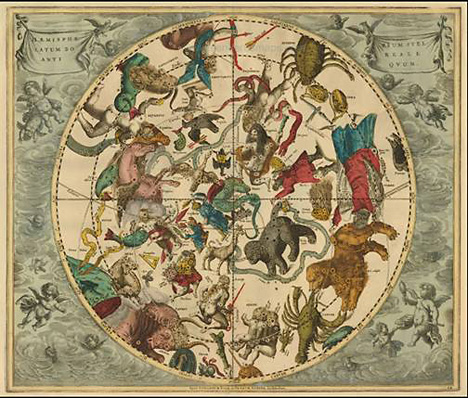
or Ulterior Motifs
Jesus’ reference to sun, moon and stars in Matthew 24 has nothing to do with the physical world, and everything to do with the microcosmic world of the Temple. Because of this, the Covenant Creationists think Genesis 1 is only about the Covenant with Adam, not about physical creation. They’re wrong, just as the literalists are wrong about Matthew 24 predicting the end of the world.
Continue reading
2 comments | tags: Baptism, Covenant Creationism, Creation Week, Dispensationalism, Genesis, Lampstand, Literary Structure, Matthew 24, Tabernacle, Table of Showbread | posted in Against Hyperpreterism, Bible Matrix, Biblical Theology, Creation, The Last Days
Dec
6
2010
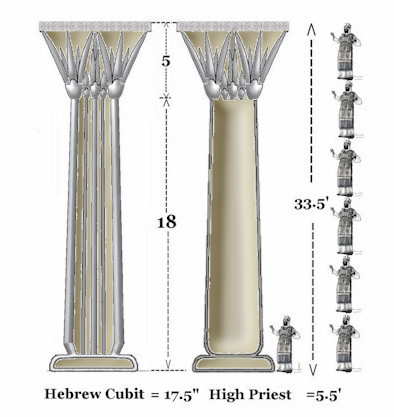
Peter Leithart writes:
“Why so much attention to the pillars of Solomon’s temple in 2 Kings 25? It is likely that these were the last major items left. Ahaz had already dismantled the bronze sea and the water chariots. King after king plundered the temple for bribe money. When Nebuchadnezzar came, not much was left. Perhaps even the ark was among the ‘gold’ items removed earlier.” [1]
Continue reading
Comments Off | tags: Creation Week, Daniel, Kings, Mordecai, Nebuchadnezzar, Peter Leithart, Solomon, Tabernacle, Temple | posted in Bible Matrix, Biblical Theology, Quotes, The Restoration Era
Dec
1
2010
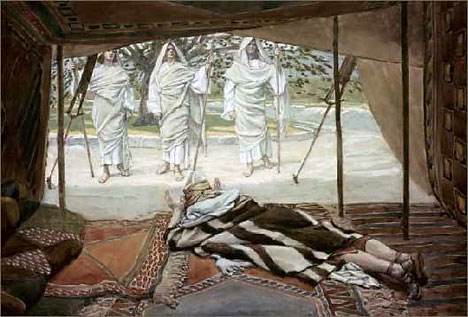
“…of the angels He says:
‘Who makes His angels spirits
and His ministers a flame of fire.’”
God is the source of all things, and He identifies Himself as such in His speeches. Every speech is Covenantal, and every preamble within His speeches is a statement of transcendence. “I am the Lord your God.”
After the initial call comes delegation, Covenantal Hierarchy. A man, a Moses, an Abraham, receives the Word with meekness.
We know that angels are God’s messengers, the sent ones. They administered the Old Covenant as our tutors, Satan becoming the first false teacher, the first corrupt ambassador, or, if you will, the first publican.
[This post has been refined and included in Sweet Counsel: Essays to Brighten the Eyes.]
Continue reading
5 comments | tags: Abraham, Angels, Covenant Theology, Creation Week, Daniel, Genesis, Judges, Leviticus, Nazirite, Nebuchadnezzar, Resurrection, Revelation, Samson, Sodom | posted in Bible Matrix, Biblical Theology, The Last Days
Nov
23
2010
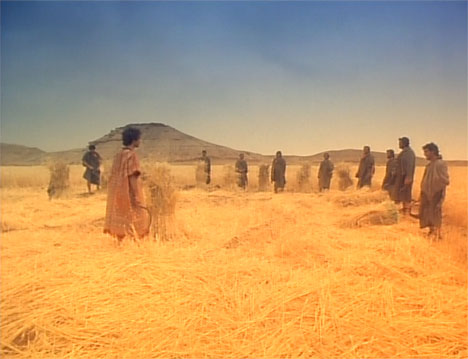
“Therefore I say to you, the kingdom of God will be taken from you
and given to a nation bearing the fruits of it.” Matthew 21:43
We unpacked the “face of the deep” of Day 1 and the “flat universe” created on Day 2. Time to analyse Day 3! Continue reading
Comments Off | tags: Add new tag, Covenant Theology, Creation Week, Firstfruits, Genesis, Joseph, Literary Structure, Tabernacle | posted in Bible Matrix, Biblical Theology, Creation