Why You’ve Been Duped Into Believing The Myth That The World Is Getting Worse and Worse
by J. D. King
A former colleague disclosed his anxiety about the violence in the Middle East. Of particular concern for him were the brutal onslaughts against Christians by an organization known as ISIS. This terrorist organization that began as part of al Qaeda in Iraq has spread throughout Arab world. It has beheaded and brutally opposed anyone who differs from their fierce form of Islamic Fundamentalism.
The letters to the pastors of the seven churches in Asia are a prophecy of the history of the Church, according to dispensationalist Bible teachers. For interpreters who are committed to a “literal” hermeneutic, this is bending the rules in the direction of a “literary” hermeneutic, which is excellent. However, they apply the letters to the wrong future, and overlook the obvious allusions to the past.
Is dispensationalism a theological framework or a hermeneutical approach?
Dispensationalism pretends to be a “literalistic” hermeneutical approach, but it is in fact a contrived framework which results from a single, fundamental error. The fact that this error is so foundational is the reason why its “prophetic plan” is so complicated.
He said, “Who are you?” And she answered, “I am Ruth, your servant. Spread your wings over your servant, for you are a redeemer.” Ruth 3:9
The passage in Numbers 15 concerning Israel’s tasseled robes contains all the matrix elements, but it has taken a few days to crack what’s going on structurally (although it’s more like cutting a diamond). The first difficulty is that English translations swap words around, so the text below sticks to the Hebrew word order. Secondly, a number of the stanzas leave out lines, or “matrix threads,” to make a point. The only way to identify these is to parse the entire passage. If you finish the puzzle with the pieces you have, you can see where the holes are!
By evil age, I do not mean the “terrible twos,” or even terrible teens. Many Christians believe they are living in the “evil age” Paul refers to in Galatians 1. They are wrong. Continue reading
It’s now official. Kirk Cameron’s been hanging around with Darren Doane and Gary DeMar. He’s left the erroneous theology of Tim LaHaye’s silly books behind and embraced the optimism of postmillennialism — the Biblical teaching that the gospel will be victorious in history, through self-sacrifice.
Cheer up, you dispies. It’s not the end of the world.
Creation: In part 1 we saw that the theme of the first stanza of 2 Thessalonians 2 was the “Sabbath” rest of the church. Paul writes to remove the alarm caused by the “conspiracy theorists” who attempted to disturb it.
Division: The second stanza concerned the splitting of the church into two — those who would persevere despite the growing threat of tribulation throughout the empire [1], and those who would succumb to their fears. The attacks would culminate in the completion of Herod’s Temple and the Nero’s burning of Rome in AD64. The first threw doubt upon the words of Christ concerning the Temple, and the second, though hardly believed, was an excuse to scapegoat this new Jew-Gentile sect, now legally separated from the protection afforded to Jews by Rome. The gospel tore Judaism in two. Then it united those believing Jews with Gentiles. But as in the wilderness, new Israel would be threshed and purified.
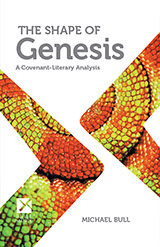
Micah Martin (brother of one of the authors of Beyond Creation Science), has kindly read Bible Matrix II and written about my adherence to the Genesis account of Creation as both Covenant and history (i.e. the account is not simply an account of the physical world being given a Covenantal purpose as a Temple, but also its actual Creation). There is much that we agree on, but the disagreement on this subject couldn’t be sharper, or of more importance.
“Revelation is not just a vision of the King of Kings,
but of the King of Kings in His court.”
Preterists have a go at dispensationalists for interpreting the Bible through the lens of current headlines. We recognize that the Bible must be interpreted in its historical context, for its “first audience.” But there’s a brand of “newspaper exegesis” that plagues preterism as well.
After Pentecost, the firstfruits church met in the Temple. Over the next few decades, the Jewish leaders barred these worshippers from their premises. What they didn’t realise was that the glory was departing as it did in the time of Ezekiel, only this time it was inside people who were living Temples as Jesus was.
Mike Bull is a graphic designer who lives and works in the Blue Mountains west of Sydney, Australia. His passion is understanding and teaching the Bible, and he writes occasionally for Theopolis Institute in Birmingham AL, USA.