Apr
27
2017
Mar
26
2016
Darkness Under His Feet
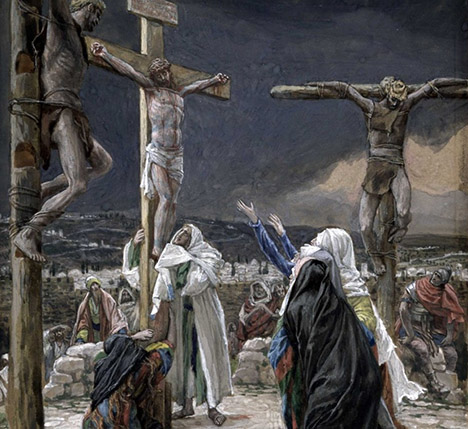
The abandonment of the Son by the Father is made palpable not in the crucifixion of His body, since He willingly laid down His life, but in the darkness which covered the Land for three hours. But perhaps this darkness was a sign of the Father’s nearness rather than His distance.

Jun
24
2015
The Babylonian Unity of the Church

A must-read essay by Toby Sumpter | Theopolis Institute
The unity Jesus is leading us toward has far less to do with hammering out a single organizational structure and far more to do with many different Christian tribes and tongues bringing their respective glories to the King.
There are many legitimate reasons to lament the divided state of the church. Fleshly pride, theological hubris, sectarian rivalries are each in their own ways modern versions of the Galatian heresy, refusing table fellowship with brothers and sisters for whom Christ died. And denominations have frequently played the same role as the names of Paul and Apollos in Corinth, for which we join in Paul’s manifesto to know nothing but Christ and Him crucified.
Mar
8
2015
Rachel Weeping

Satan’s desire was always to turn the “pruning” of circumcision into an ax laid at the root of the tree of Israel.
A handful of treatments of the “massacre of the innocents” by Herod the Great see this bloodshed as the first of the New Covenant’s martyrs. But these miss the point of Matthew’s use of the word “fulfilled,” rendering it as good as meaningless. This massacre was the harbinger of the end of the old era and its promises. It said nothing about the promises of the new.
Mar
10
2014
The Last Sin
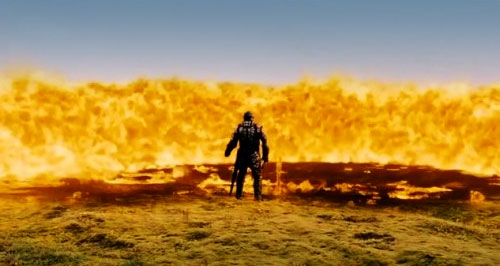
For as in those days before the flood they were eating and drinking, marrying and giving in marriage, until the day when Noah entered the ark, and they were unaware until the flood came and swept them all away, so will be the coming of the Son of Man. (Matthew 24:38-39)
Most disputes concerning the meaning of the Scriptures are not due to a lack of trying when it comes to hermeneutics. They result from a lack of due process. By this, I do not mean the process of interpretation but the identification in the Scriptures of the processes of God.
An example would be the meaning of Christ’s words concerning the unpardonable sin, which have terrified many Christians unnecessarily. Blasphemy against the Spirit is unpardonable not because it is the worst sin. It is unpardonable because it is the last sin.
This post has been slain and resurrected for inclusion in my 2015 book of essays, Inquietude.
Nov
19
2013
The Household of Faith – 3
 Part III – The Feast of Clouds
“But Peter said, ‘I have no silver and gold, but what I do have I give to you.”’ (Acts 3:6)
Israel consistently failed to keep the final feast, the Feast of Sukkot, because she took her calling to be elitist rather than priestly. She thought her calling, gifts and purification were for herself, rather than for the healing of the nations.
Jul
3
2013
The Point of Tongues
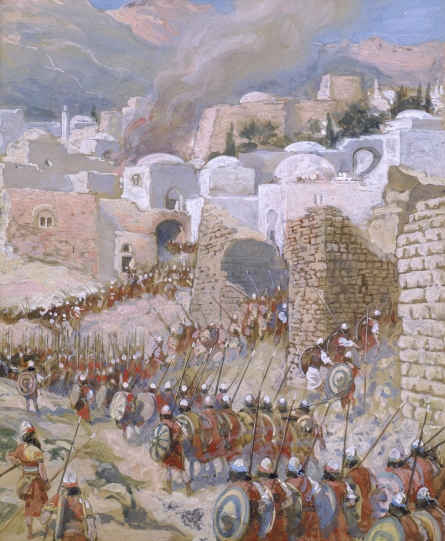 James B. Jordan was the first Bible teacher I ever heard who had an opinion on the gift of tongues in relation to the rest of the Bible. This gent cops a lot of criticism from the establishment for various things, but he is one who really “gets” the Bible. This is because he asks the right questions. And, without being too harsh, he most often makes all the other theologians and Bible teachers in any debate, on both sides of the debate, look like kindergarten children.
Nov
21
2012
Waster of Gifts
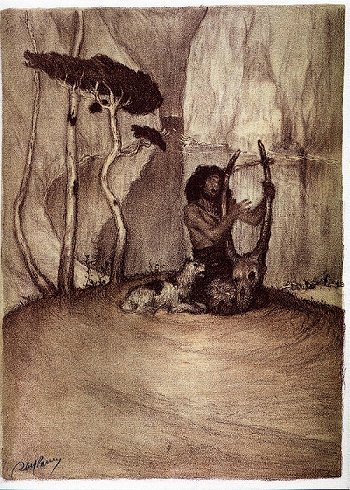 A while ago, Angie Brennan posted a quote from a Touchstone article on God’s apparent wastefulness when it comes to our natural talents:
Continue reading
Jul
10
2012
Shadow Ministry

Excerpt from James B. Jordan, Babylon and the Babel Project, Biblical Horizons Occasional Paper No. 39. Available from www.biblicalhorizons.com
Jun
6
2012
The Ascension of Daniel
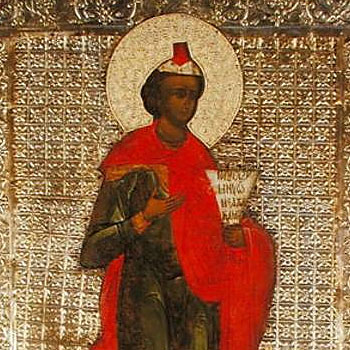 Just as the death and resurrection of Israel in Egypt follows the pattern of the Feasts, so does the death and resurrection of Israel in Babylon. [1]
OUT NOW
COMING SOON

 Bible Matrix blog
-





IN THE WORKS



Jordan Complete