Mar
26
2016
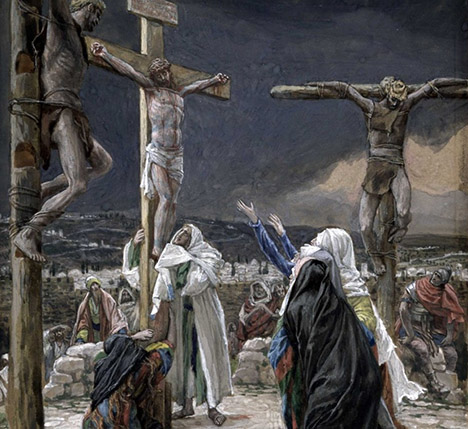
The abandonment of the Son by the Father is made palpable not in the crucifixion of His body, since He willingly laid down His life, but in the darkness which covered the Land for three hours. But perhaps this darkness was a sign of the Father’s nearness rather than His distance.
Continue reading
Comments Off | tags: Acts, Babel, Babylon, Crucifixion, Exodus, Ezekiel, Herod, James Jordan, Judas, Leviticus, Peter Leithart, Revelation, Tabernacle | posted in Biblical Theology, The Last Days
Jul
31
2015
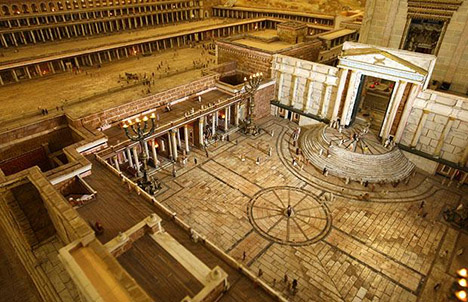
All of the arcane “personal” stipulations in the Torah find their fulfilment in the corporate worship of Israel. Just as the sacrifices were to be without blemish, so also were Israelites to be spotless if they were to stand before God. But the rules for the identification, quarantining and ceremonial cleansing of leprosy only begin with the skin of the worshiper in the wilderness. They then move to the garment, and finally to the house in the Promised Land. A failure in personal holiness would lead eventually to a corruption of corporate worship. James Jordan writes:
Continue reading
Comments Off | tags: AD70, Herod, James Jordan, Leprosy, Leviticus, Matthew, Temple, Zechariah | posted in Biblical Theology, Quotes, The Last Days
Jun
17
2015
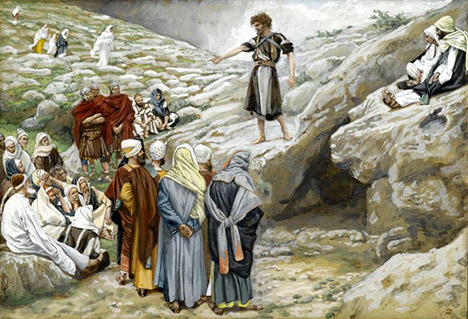
“Behold, The Lamb of God who takes away the sins of the world!”
“Repent and be baptized every one of you in the name of Jesus Christ for the forgiveness of your sins, and you will receive the gift of the Holy Spirit.” (Acts 2:38)
James Jordan has observed that Abraham’s “calling on the name of the Lord” was in fact evangelical proclamation of his faith. Abraham’s witness to the Canaanites was something for which they would be held accountable when Israel returned to claim the land. Chris Wooldridge sees this “vocal allegiance” as the key to understanding the meaning of the washing away of sins in the New Testament. Seen in the context of the last days of the Old Covenant, this was not baptismal regeneration but a public identification by the Jewish worshiper with the final sacrificial lamb (Leviticus 1:1-9).
Chris writes:
Continue reading
2 comments | tags: Abraham, Acts, Baptism, Chris Wooldridge, Covenant Theology, Leviticus, Peter | posted in Biblical Theology, Christian Life, The Last Days
Apr
6
2015
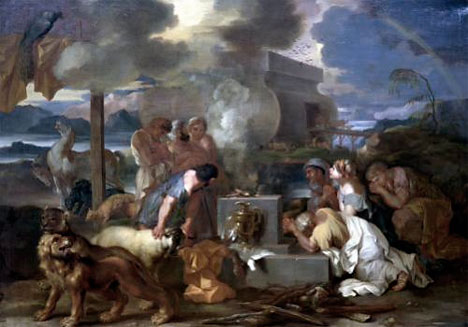
The analogy between human beings and animals, seen throughout the Bible, means that in the animal world there are some who represent the whole.
Continue reading
Comments Off | tags: Flood, Genesis, James Jordan, Leviticus, Noah | posted in Biblical Theology, Quotes
Sep
19
2014
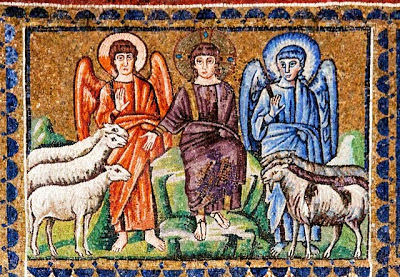
Alpha and Omega
Since the sacred architecture of the Jew-Gentile social structure set up in Daniel was a spiritual expansion of the previous physical sanctuaries, we should not be surprised to find its shape serving as the foundation for the New Testament. Since the Holy Place symbolised the court of the King of Heaven, the Tabernacle sheds some helpful light on Jesus’ cryptic description of judgment from His throne in Matthew 25. It not only becomes clear why the Lord uses sheep and goats as symbols for Gentile nations, but their locations and destinies bring to an end a narrative thread which can be traced back to Genesis 4.
Continue reading
Comments Off | tags: Cain, Jacob, Jeremiah, Leviticus, Matthew, Peter Leithart, Zedekiah | posted in Bible Matrix, Biblical Theology, The Last Days, The Restoration Era
Sep
5
2014

James Kirk learns via Vulcan mind meld that he will never marry.
Now as a concession, not a command, I say this. I wish that all were as I myself am. But each has his own gift from God, one of one kind and one of another. (1 Corinthians 7:6-7)
Reliance upon rules and regulations is a sign of immaturity. There’s nothing wrong with them, of course, just as there is nothing wrong with the “gutter guards” used to keep the ten pin bowling ball moving towards the pins for children’s parties at the bowling alley. Likewise, there was nothing wrong with creeds, rosary beads or religious paintings in their early days. They were simply mnemonic devices for the illiterate. But, just as it was with the Pharisees in the first century, these lifeless, inflexible “stoicheia” become a problem when they turn into legislation and become mandatory. Failing to tithe one’s kitchen herbs leads to certain destruction. The celibacy of certain prominent men in the Bible is part of this discussion. The question is not “Is celibacy holier than marriage?” but why were these spiritual giants, including Jesus, celibate at all?
This post has been slain and resurrected for inclusion in my 2015 book of essays, Inquietude.
Continue reading
2 comments | tags: Corinthians, Daniel, James B. Jordan, Leviticus, Paul | posted in Biblical Theology, Christian Life, The Restoration Era
Jul
13
2014

Getting towards the end of a book on biblical architecture, I am thinking that perhaps the answer to Peter Leithart’s very good question concerning the “missing heart” in Leviticus might be found in the layout of the Tabernacle. He writes:
Continue reading
Comments Off | tags: Leviticus, Peter Leithart | posted in Bible Matrix, Biblical Theology
Jun
28
2014
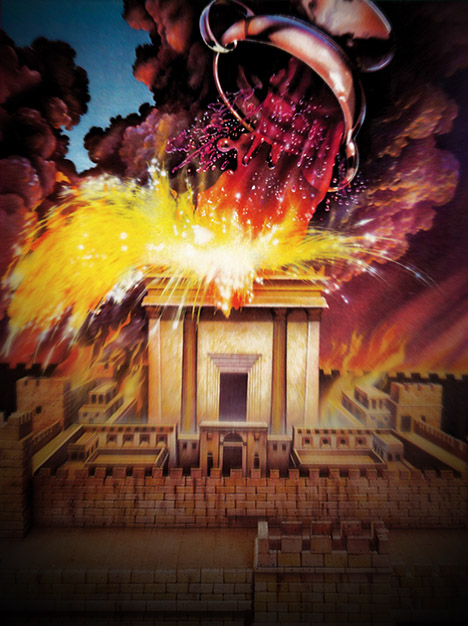
or Where Kenneth Gentry Is Wrong on the Revelation
Part 1 here.
I’ve been meaning to write this post since I wrote Part 1 (over two years ago). A friend’s recent question concerning Kenneth Gentry’s lectures on the Revelation encouraged me to bite the bullet and bust a gut and get it done. The question is this: Is the Revelation to be interpreted in the light of Josephus’ Jewish War, or in the light of the Bible itself?
Continue reading
6 comments | tags: AD70, Ark of the Covenant, Covenant curse, Covenant Theology, Deuteronomy, James B. Jordan, Kenneth Gentry, Leviticus, Literary Structure, Peter Leithart, Revelation, Revelation 20, Thessalonians | posted in Against Hyperpreterism, Bible Matrix, Biblical Theology, The Last Days
Feb
28
2014
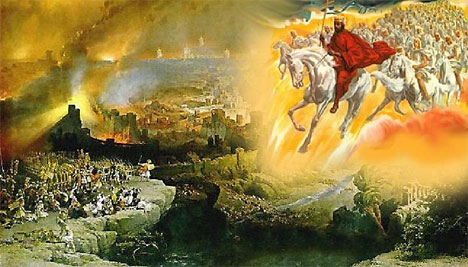
Jesus’ reference to Daniel 7 in Matthew 26:64 (and Mark 14:62) is a source of some confusion. To figure out what is actually going on in Daniel’s vision, we have to go back to Leviticus 16. James Jordan writes:
…when Jesus calls Himself “the Son of Man,” He is referring to Ezekiel, not to Daniel 7 (except perhaps indirectly). Jesus is the Greater Ezekiel. Christians are those who are “like the Son of Man,” like Jesus.
Continue reading
Comments Off | tags: Atonement, Daniel, Ezekiel, High Priest, James Jordan, Leviticus, Systematic typology | posted in Against Hyperpreterism, Bible Matrix, Biblical Theology, The Last Days