Jan
13
2017
Brexit and the Binding of Satan – Part 5
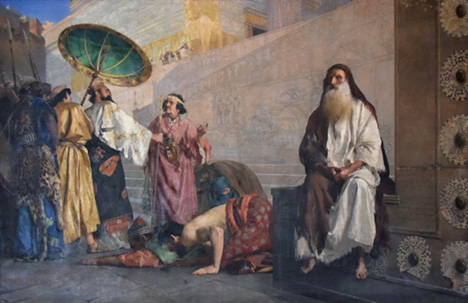
Satan is currently bound from gathering the nations in kingly rebellion so that Jesus might gather them in priestly unity.

Satan is currently bound from gathering the nations in kingly rebellion so that Jesus might gather them in priestly unity.
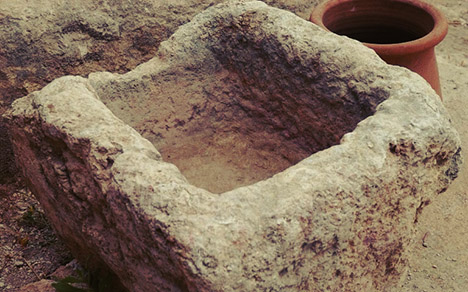
Jesus would be gathered first to the true fathers, then, once enthroned, He would gather the true sons.
In English, the word manger is archaic, preserved for us by the Christmas tradition. In French, the word is still in use, being the infinitive “to eat.” As with every detail in the Scriptures, the fact that the One who would give Himself to us in the elements of a meal was placed in a food trough invites contemplation.
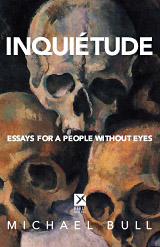
This post has been slain and resurrected for inclusion in my 2015 book of essays, Inquietude.
Part 1 here.
I’ve been meaning to write this post since I wrote Part 1 (over two years ago). A friend’s recent question concerning Kenneth Gentry’s lectures on the Revelation encouraged me to bite the bullet and bust a gut and get it done. The question is this: Is the Revelation to be interpreted in the light of Josephus’ Jewish War, or in the light of the Bible itself?
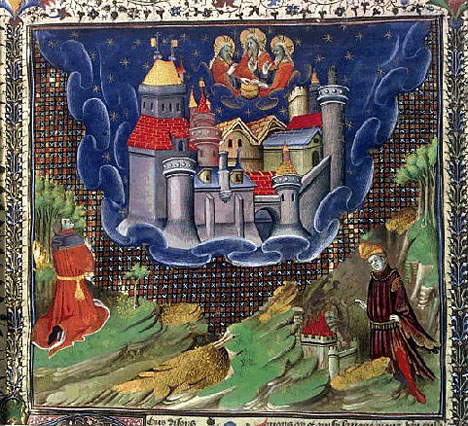
“But now they desire a better, that is, a heavenly country. Therefore God is not ashamed to be called their God, for He has prepared a city for them.” (Hebrews 11:16)
The narrative of the Bible is fairly linear until we get to the kings. But once we hit the prophets the Scriptures turn into a box of puzzle pieces. The literature of the kings used Mosaic symbols to a certain degree but the prophets took all the concrete things we learned from the priests and kings and used them to make amazing promises that never quite materialized. Or did they?
 Part 1 here.
Bible commentators will tell you that Paul’s epistle to the Ephesians contains great riches. Unfortunately, without any reference to its Mosaic literary structure, it comes across as a jumble of jewels in a treasure chest. However, analysis of the structure allows us to appreciate the fine networks and chains of thought in the literary architecture — and also the clever allusions contrasting old Israel with the New. It also demonstrates Jesus’ fulfillment of the Mosaic Law.
 “When Paul had gathered a bundle of sticks and put them on the fire, a viper came out because of the heat and fastened on his hand.” (Acts 28:3)
One interesting facet of biblical symbols is their identification by “use” and “motion.” Objects that have no link in the natural order of things can be tied together through their use in a similar purpose in the work of the house of God. This is not entirely strange. Diverse things which have no relationship in the natural order are brought together by man for use in “housework.” For the Author of the Bible, nature is “plastic.” This factor is one reason why the Bible is strange to modern ears and minds.
[This post has been refined and included in Sweet Counsel: Essays to Brighten the Eyes.]
Continue reading
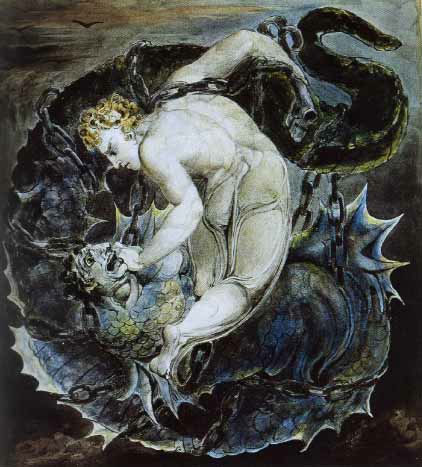
“No one can enter a strong man’s house and plunder his goods, unless he first binds the strong man. And then he will plunder his house.” (Mark 3:27 27)
A lot of commentary on the Revelation seems oblivious to the allusions to the Pentateuch (although there are many that do take it into account and are enlightening at the most obvious points). Even the “binding” of Satan in Revelation has an Old Testament background.
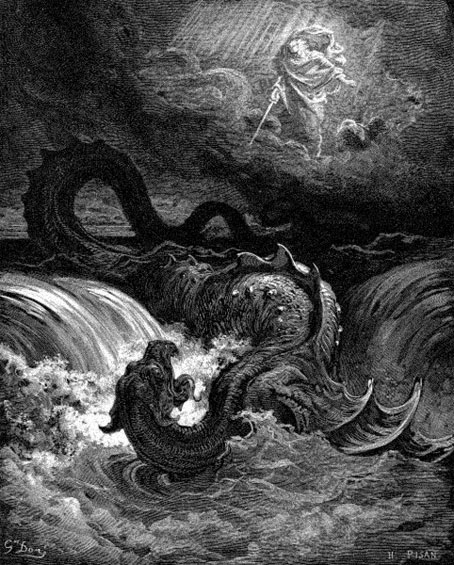
Remy Wilkins recently proposed a thesis about serpents and dragons in the Bible. Is there a difference? Are the words interchangeable? And even if they aren’t, how are these animals–and the spiritual truths they were created to represent–related?
This post has been slain and resurrected for inclusion in my 2015 book of essays, Inquietude.

One of the hyperpreterist/full preterist [1] gents made a keen observation after reading my article Covenant is the Key: Moses vs. Hyperpreterism. My argument was that since the Revelation follows the Covenant structure laid down in the Torah (and echoed throughout the Bible), we should expect the final section of the book to concern the future, otherwise known as Continuity or Succession.
The counterargument was that this section did concern the future when John wrote the book, but that we are living beyond that future now, and there is no final event or consummation. The only consummation was AD70.
This is a really good argument, but it does two things. Firstly, it makes nonsense of their own argument that Revelation 20 is another viewpoint of the events surrounding the end of Judaism in AD70. Also, it fails to take into account the structure and contents of Revelation 20 itself.
 or Mike follows the tracks of the Apostle Peter’s stanza panzer
Few passages have caused as much discussion as the one concerning “the spirits in prison” in 1 Peter 3. It’s also one of the few texts where I found that not a single one of the explanations offered was satisfactory. Well, I’ve run the matrix over it, and I reckon I’ve solved it.
 Bible Matrix blog