Mar
8
2015
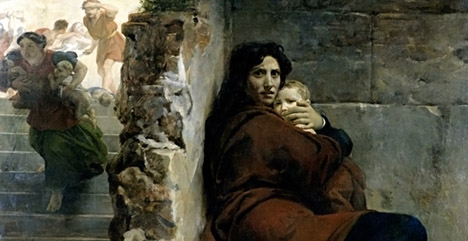
Satan’s desire was always to turn the “pruning” of circumcision into an ax laid at the root of the tree of Israel.
A handful of treatments of the “massacre of the innocents” by Herod the Great see this bloodshed as the first of the New Covenant’s martyrs. But these miss the point of Matthew’s use of the word “fulfilled,” rendering it as good as meaningless. This massacre was the harbinger of the end of the old era and its promises. It said nothing about the promises of the new.
Continue reading
Comments Off | tags: Acts, AD70, Babylon, Baptism, Circumcision, Communion, Covenant curse, Covenant Theology, Herod, Jeremiah, Joseph, Literary Structure, Matthew | posted in Bible Matrix, Biblical Theology, The Last Days
Sep
19
2014
Alpha and Omega
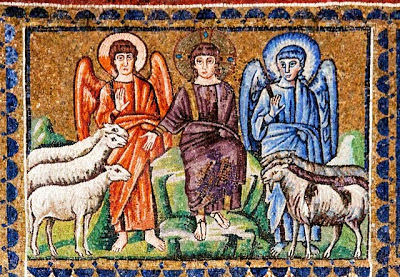
Since the sacred architecture of the Jew-Gentile social structure set up in Daniel was a spiritual expansion of the previous physical sanctuaries, we should not be surprised to find its shape serving as the foundation for the New Testament. Since the Holy Place symbolised the court of the King of Heaven, the Tabernacle sheds some helpful light on Jesus’ cryptic description of judgment from His throne in Matthew 25. It not only becomes clear why the Lord uses sheep and goats as symbols for Gentile nations, but their locations and destinies bring to an end a narrative thread which can be traced back to Genesis 4.
Continue reading
Comments Off | tags: Cain, Jacob, Jeremiah, Leviticus, Matthew, Peter Leithart, Zedekiah | posted in Bible Matrix, Biblical Theology, The Last Days, The Restoration Era
Dec
11
2012
 “When Paul had gathered a bundle of sticks and put them on the fire, a viper came out because of the heat and fastened on his hand.” (Acts 28:3)
One interesting facet of biblical symbols is their identification by “use” and “motion.” Objects that have no link in the natural order of things can be tied together through their use in a similar purpose in the work of the house of God. This is not entirely strange. Diverse things which have no relationship in the natural order are brought together by man for use in “housework.” For the Author of the Bible, nature is “plastic.” This factor is one reason why the Bible is strange to modern ears and minds.
[This post has been refined and included in Sweet Counsel: Essays to Brighten the Eyes.]
Continue reading
2 comments | tags: Exodus, Genesis, Isaiah, Jeremiah, Postmillennialism, Revelation, Revelation 20, Satan | posted in Biblical Theology, The Last Days
Jun
6
2012
 Just as the death and resurrection of Israel in Egypt follows the pattern of the Feasts, so does the death and resurrection of Israel in Babylon. [1]
Continue reading
Comments Off | tags: AD70, Babylon, Covenant Theology, Daniel, Jacob, James Jordan, Jeremiah, Joseph, Nebuchadnezzar, Revelation | posted in Bible Matrix, Biblical Theology, Quotes, The Last Days, The Restoration Era
May
8
2012
 Tinpot Gods and Tinpot Men
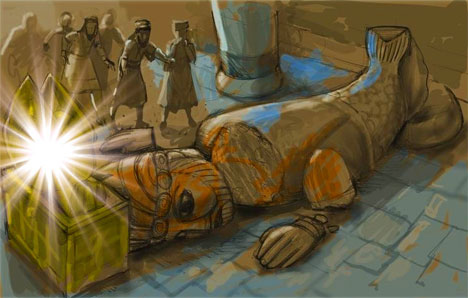
“Idolatry is the Bible Matrix rendered impotent.”
You get out of life only what you put in, or so the saying goes. According to the Bible Matrix, you are supposed to get out more than you put in.
The single grain of wheat that dies is supposed to bring an abundant harvest. A life is given to God in the faith that He will take what is given and turn it into an increase. This is also found in the Covenant pattern: “Who’s the boss?; who’s His representative?; what do I have to do?; what do I get?; and, what’s next? Obedience brings plunder; disobedience brings plagues. [1]
Continue reading
Comments Off | tags: Atonement, Jeremiah, Literary Structure, Peter Leithart | posted in Bible Matrix, Biblical Theology, Quotes
Dec
19
2011
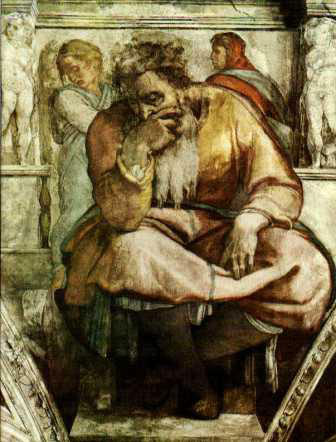
The systematic typology of the Bible Matrix allows us to follow the structures of the Torah thoughout the rest of the Bible. Here’s something that links the Restoration era with the book of Deuteronomy.
Continue reading
Comments Off | tags: Baptism, Deuteronomy, Esther, Exodus, James Jordan, Jeremiah, Mordecai, Moses, Systematic typology, Tabernacle, Ten Commandments, The Law | posted in Biblical Theology, Quotes, The Restoration Era
Jul
19
2011
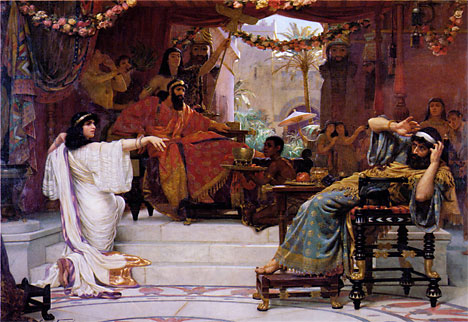
Biblical chronology isn’t always easy, but it provides the answers to many questions we have concerning Bible prophecy. James Jordan shows how crucial the book of Esther is for our understanding of Bible history:
The book of Esther is one of the most neglected of the books of the Bible. To be sure, sermons are preached on it, and commentaries have occasionally been written on it, but almost without exception Esther has been interpreted in isolation from the rest of Biblical history, chronology, and theology. Even many conservative commentators tend to view the events in Esther as minor occurrences that have been inflated in the narrative in order to make the point of the book. This is because they make the wrong assumptions about the dates of these events, and because they do not understand the importance of the events in Esther to the progress of revelation and redemption.
Continue reading
Comments Off | tags: Bible Chronology, Daniel, Esther, James Jordan, Jeremiah, Nebuchadnezzar, Zechariah | posted in Biblical Theology, Quotes, The Restoration Era
Jun
24
2011
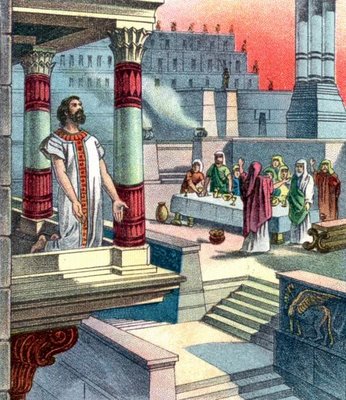
Another gem from Tim Nichols:
Consider Daniel 9, the prayer of the just man Daniel. Go ahead and read it; I’ll wait.
Did you notice that Daniel identifies fully with his people? “We have not obeyed the voice of the Lord our God, to walk in His laws,” he says — although Daniel himself did, in fact, keep them. “We have not made our prayer before the Lord our God” — although Daniel did so daily, even at risk of his life. “Neither have we heeded your servants the prophets,” he says — although he himself was a close student of the prophets, especially Jeremiah.
Continue reading
Comments Off | tags: Communion, Confession, Daniel, Habakkuk, Isaiah, Jeremiah, Judgment, Tim Nichols | posted in Biblical Theology, Christian Life, Quotes
Nov
4
2010

During the fourth year that Jehoiakim son of Josiah was king of Judah, the LORD said to me, “Jeremiah, since the time Josiah was king, I have been speaking to you about Israel, Judah, and the other nations. Now, get a scroll and write down everything I have told you, then read it to the people of Judah. Maybe they will stop sinning when they hear what terrible things I plan for them. And if they turn to me, I will forgive them”… (CEV) Jeremiah 36:1-3
God’s Covenants are always temporary. Every Covenant is a to and fro. It reflects the Word sent to the Son by the Spirit and the “bridal abundance” received in return by the Father. The Word is often pictured as a scroll, for obvious reasons. Scrolls were written and sealed with wax. The seal was temporary, something to protect the confidentiality of the contents, but something to be broken once the document reached its intended destination. The Bible Matrix makes plain the symbols used by God to illustrate this step in the Covenantal order of all He has made. Continue reading
1 comment | tags: Acts, Ascension, Creation Week, Daniel, Jeremiah, John, Moses, Revelation, Trinity | posted in Against Hyperpreterism, Bible Matrix, Biblical Theology, The Last Days, The Restoration Era
Sep
6
2010

The Restoration era Scriptures are the most misunderstood texts in the Bible. Our failure to recognise their recapitulation of patterns from the Torah — and the fact that they are not presented in chronological order but by genre — makes it hard for us to put the pieces together. [1] Very often, we miss great ironies because we don’t get the joke.
Continue reading
1 comment | tags: Covenant Theology, Daniel, Ezekiel, Jeremiah, Joke, Nebuchadnezzar, Zedekiah | posted in Biblical Theology, The Restoration Era