Nov
15
2015
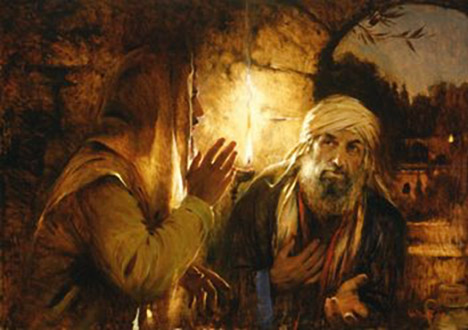
“The first element of evangelism is opening a person’s eyes, that is, his desires, his sense of need. This is not done with the gospel.”
Chapter 1 of Jim Wilson’s new book, Taking Men Alive: Evangelism On The Front Lines. Available December 1.
Continue reading
2 comments | tags: Evangelism, Jim Wilson, John | posted in Biblical Theology, Quotes
Mar
7
2014
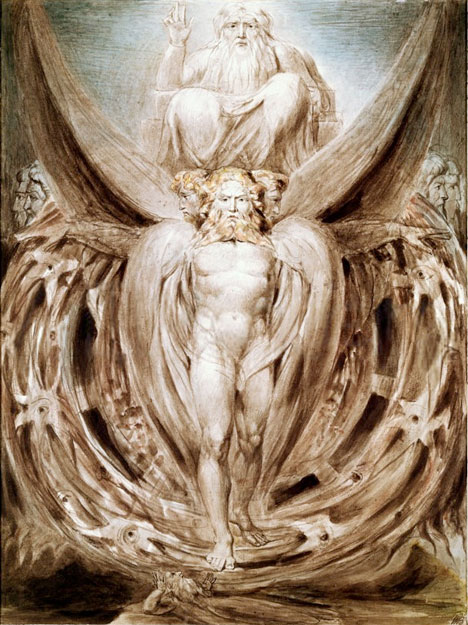
“Truly, truly, I say to you, (Transcendence)
the Son can do nothing of his own accord, (Hierarchy)
but only what he sees the Father doing. (Ethics)
For whatever the Father does, (Oath/Sanctions)
that the Son does likewise.” (Succession)
(John 5:19)
The premise that the entire text of the Bible has a common structure, one which operates at multiple levels, has many implications. Besides the fact that this is clearly a miracle, there is the question of why such a limitation would be placed upon the Words of God.
This post has been slain and resurrected for inclusion in my 2015 book of essays, Inquietude.
Continue reading
5 comments | tags: Christopher Hitchens, Covenant Theology, Culture, Education, Ezekiel, James Jordan, John, Richard Dawkins | posted in Apologetics, Bible Matrix, Biblical Theology, Christian Life
Nov
11
2013
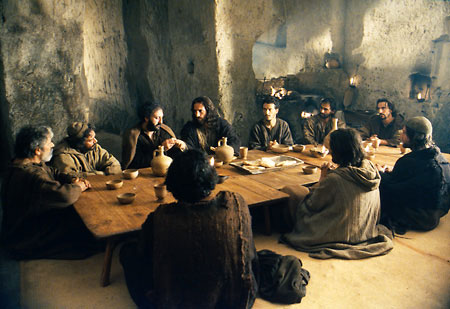
“The Lord’s Table is for dangerous people.”
If you are going to baptize infants, it makes sense that you would also allow them to take Communion. Baptism brings one into the priesthood (through the Laver) to the court of God, and Communion is fellowship in the priestly kingdom. To unite the two is consistent—as consistent as the two pillars flanking the threshold of Solomon’s Temple.
Continue reading
Comments Off | tags: Baptism, Circumcision, Communion, Ecclesiology, Federal Vision, God's Kitchen, James Jordan, John, Lampstand, Passover, Sacraments, Tim Gallant | posted in Biblical Theology
Sep
24
2013
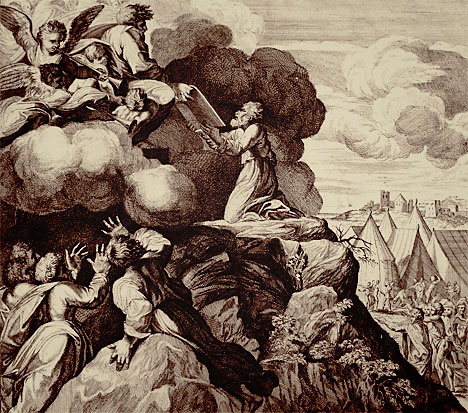
In John 16:7-11, we read:
Nevertheless, I tell you the truth: it is to your advantage that I go away, for if I do not go away, the Helper will not come to you. But if I go, I will send him to you. And when he comes, he will convict the world concerning sin and righteousness and judgment: concerning sin, because they do not believe in me; concerning righteousness, because I go to the Father, and you will see me no longer; concerning judgment, because the ruler of this world is judged.
What does it mean for the Spirit to “convict the world in regard to righteousness?” And what is the causal connection with Jesus going to the Father?
Continue reading
Comments Off | tags: Covenant Theology, Exodus, Firstfruits, Fractals, Genesis, Jacob, John, Literary Structure, Moses, Revelation | posted in Bible Matrix, Biblical Theology, Creation, Q&A, The Last Days
May
23
2013
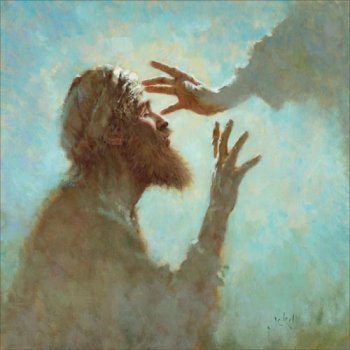 Joe Rigney writes,
While Jesus clearly did many signs throughout his ministry (2:23; 6:2; 20:30), most scholars agree that there are seven signs that are emphasized in the Gospel of John, but only six are universally identified.
Continue reading
Comments Off | tags: Joe Rigney, John, Literary Structure | posted in Bible Matrix, Biblical Theology
Jan
8
2013
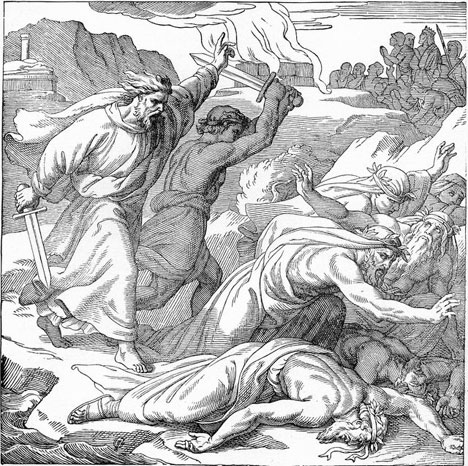 In Born of the Spirit, Peter J. Leithart writes:
Alan Kerr (The Temple of Jesus’ Body: The Temple Theme in the Gospel of John (Library of New Testament Studies), 71) offers this comment on Jesus’ statement that Nicodemus had to be born of the Spirit before entering the kingdom: “It is almost universally accepted that Spirit here refers to the Spirit of God. But at this stage in the Gospel there was no Spirit (7:39), because Jesus was not yet glorified. It is not until Jesus is risen and appears to the disciples and breathes on them and says, ‘Receive the Holy Spirit’ that the Spirit is given (20:22). So from the point of view of Johannine timing what Jesus says to Nicodemus should only be realized in a post-resurrection setting. Properly speaking he can only be reborn from above when Jesus is glorified.”
This obviously affects the use of John 3:5 as a proof text for the doctrine of regeneration.
Is this support for the ‘giving of the Spirit’ in paedobaptism?
Continue reading
Comments Off | tags: Baptism, Elijah, John, John the Baptist, Noah, Peter Leithart | posted in Against Hyperpreterism, Biblical Theology, Creation
Sep
4
2012
The Unexpected Luck of Widows’ Sons
A guest post by Luke Welch.
I’ve been reading The Hobbit again, out loud, to our children, and this time through, one phrase in the first chapter caught my attention.
Continue reading
Comments Off | tags: Crucifixion, Elijah, Isaiah, John, Kings, Luke, Luke Welch, Mary | posted in Bible Matrix, Biblical Theology, Quotes
Aug
13
2012
 James Jordan maintains that Matthew’s Gospel was written first. Eugen Rosenstock-Huessey does too.
Continue reading
Comments Off | tags: Acts, Eugen Rosenstock-Huessy, Gospels, James Jordan, John, Luke, Mark, Matthew | posted in Bible Matrix, Biblical Theology
Jun
21
2012
or Blood versus Water
They answered and said to Him, “Abraham is our father.” Jesus said to them, “If you were Abraham’s children, you would do the works of Abraham… You are of your father the devil, and the desires of your father you want to do.” (John 8:39, 44)
The theme of seed and fruit, or genealogy and mission, runs throughout the Bible. Genealogy is entirely objective. Our heredity is a factor in which we have no choice. It is the tree of life. But the fruit of our lives, what we choose to do with that life, involves our volition. Volition is mission. “It’s not about the hand you are dealt; it’s about how you play it.”
Continue reading
9 comments | tags: Baptism, Circumcision, Covenant Theology, Federal Vision, Film, John, Leviticus | posted in Bible Matrix, Biblical Theology, The Last Days
Jun
19
2012
or The New Commandment
1 John 5: 1-12 | Sermon Notes | 17 June 2012

Introduction
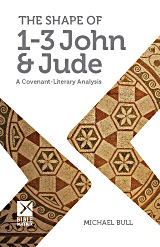
Jewish Christians were first opposed by unbelieving Jews, then by Jews who said they believed. Members of this latter group are called “Judaizers,” and they were the false teachers whom the apostles condemn in their letters.
Not only did these men pervert the gospel by including adherence to the Law of Moses, they also failed to keep the commandments of Jesus. This was Pharisaism dressed up in Christianity, the old leaven carried into the new age. The Pharisees loved to control people, while they failed to control themselves. This is the context of John’s letters to Jewish Christians: despite their profession, these men would be exposed by their lack of of certain things in their character.
Continue reading
Comments Off | tags: Baptism, Circumcision, Covenant curse, Covenant Theology, John, Literary Structure, Mission, Pharisees, Sermons, Ten Commandments | posted in Bible Matrix, Biblical Theology, The Last Days