Oct
18
2014

“A baptism which does not discern between the fruit of the womb and the fruit of the tomb is anti-Christ, denying He has come in the flesh.”
This post follows on from Exposed To The Elements.
An online paedobaptist friend commented that he had never heard sacred architecture offered as an argument for credobaptism before. My experience with the brilliant Bible teaching by the various Federal Vision gents is that I get a principle under my belt, then automatically begin to see its implications for all of Scripture. But then numerous times I would be surprised when no one had thought of applying it consistently. The main offender is paedobaptism. Despite their claims, it is a rite that does not spring naturally from Scripture. In fact, it has to be protected from Scripture, from the very principles I have been taught by paedobaptists.
Continue reading
6 comments | tags: Abraham, Baptism, Circumcision, David, Federal Vision, Genesis, James Jordan, John the Baptist, Peter Leithart, Tabernacle, Toby Sumpter | posted in Biblical Theology
Dec
3
2013
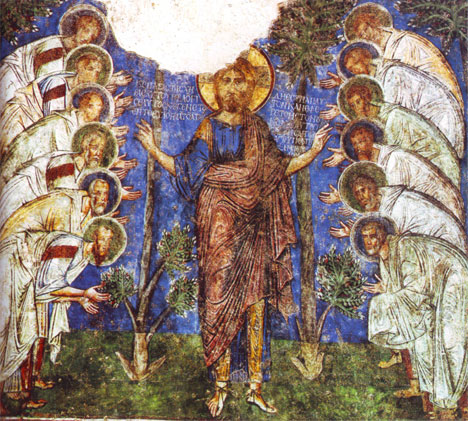
“John was not a court prophet but a man in skins, like Adam, representing both the goodness (covering) and severity (death) of God. John’s food and shelter, like his ministry, came directly from God, and was not the result of the wisdom of men.”
Matthew 10-15: HIERARCHY
The theme of the second major cycle of Matthew is the Hierarchy phase of the Covenant, which concerns the delegation of authority. This section contains seven cycles, a complete “week.” Identification of the structure answers some interesting questions concerning Jesus’ directives.
Continue reading
Comments Off | tags: Covenant Theology, Herod, Herodias, John the Baptist, Literary Structure, Matthew | posted in Bible Matrix, Biblical Theology, The Last Days
Jul
19
2013
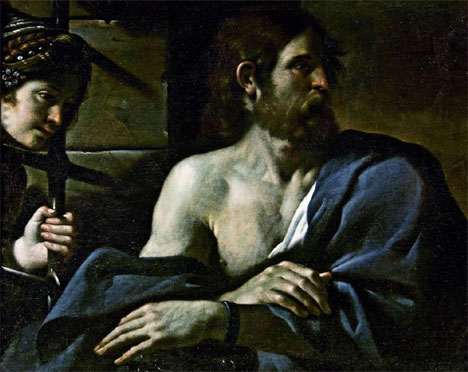
“So, perhaps the best conclusion is that John was not looking for encouragement, but giving encouragement. In effect, he was saying, ‘Get on with it, cousin!’”
The nature of the texts of the Bible is just like the spoken words God gave to Adam. A great deal remained unsaid, and Adam was to “read between the lines” based upon God’s revealed character as his Father. However, Adam let somebody else fill in the gaps with some conflicting information about God’s character, somebody who was very likely jealous of Adam’s commission and had an ax to grind (and even here, we are left to fill in the gaps as to Satan’s motive based upon later scriptures!)
Continue reading
7 comments | tags: Albert Garlando, Bible Matrix III, John the Baptist, Literary Structure, Luke, Tabernacle | posted in Bible Matrix, Biblical Theology, Q&A
Jan
8
2013
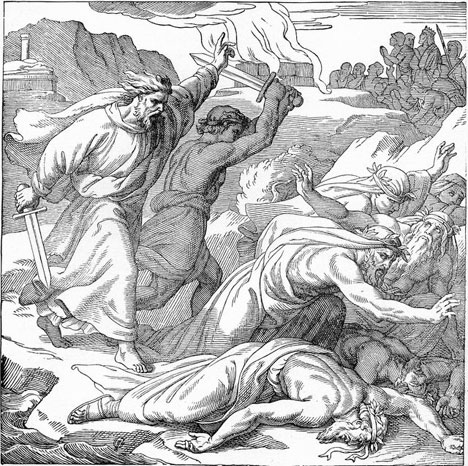 In Born of the Spirit, Peter J. Leithart writes:
Alan Kerr (The Temple of Jesus’ Body: The Temple Theme in the Gospel of John (Library of New Testament Studies), 71) offers this comment on Jesus’ statement that Nicodemus had to be born of the Spirit before entering the kingdom: “It is almost universally accepted that Spirit here refers to the Spirit of God. But at this stage in the Gospel there was no Spirit (7:39), because Jesus was not yet glorified. It is not until Jesus is risen and appears to the disciples and breathes on them and says, ‘Receive the Holy Spirit’ that the Spirit is given (20:22). So from the point of view of Johannine timing what Jesus says to Nicodemus should only be realized in a post-resurrection setting. Properly speaking he can only be reborn from above when Jesus is glorified.”
This obviously affects the use of John 3:5 as a proof text for the doctrine of regeneration.
Is this support for the ‘giving of the Spirit’ in paedobaptism?
Continue reading
Comments Off | tags: Baptism, Elijah, John, John the Baptist, Noah, Peter Leithart | posted in Against Hyperpreterism, Biblical Theology, Creation
Oct
21
2012
“The Sabbatarian vision is too small. This is why Paul chides the Galatians for observing ‘days and months and seasons and years.’ The Sabbath, along with the Torah administration as a whole, belonged to the stoicheia, the “elements of the world,” the things that constituted the first creation.”
From Tim Gallant’s blog:
Continue reading
Comments Off | tags: Elijah, Galatians, James Jordan, John the Baptist, Matthew, Pharisees, Revelation, Ten Commandments, Tim Gallant | posted in Biblical Theology, Quotes, The Last Days
Aug
16
2012
“Now therefore fear the Lord (T)
and serve him in sincerity and in faithfulness. (H)
Put away the gods that your fathers served (E)
beyond the River and in Egypt, (O)
and serve the Lord.” (S)
Joshua 24:14
40 Years of Harlotry
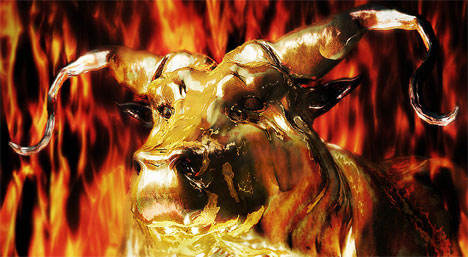
Israel famously wandered in the wilderness for forty years. They were tested, offered as a sacrifice and refined with the holy fire of the Law of Moses. This “threshing” process appears at the centre of the Bible Matrix. It is pictured as the time of harvest (Pentecost – the giving of the Law), and as the burning eyes of the Lampstand watching over Israel (sun, moon and five visible planets). In the Covenant pattern it is the “Ethics,” the bit where God lays out the rules for success. Threshing is also a biblical euphemism for sexual relations. At this point, under the Lawful eyes of God, Israel is either shown to be a faithful bride or an adulteress. Is the fire of her desire true or “strange” (foreign). We can see this pattern in James 1:15. It is a sick parody of the Covenant process because it begins with a “false word.”
[This post has been refined and included in Sweet Counsel: Essays to Brighten the Eyes.]
Continue reading
Comments Off | tags: Aaron, Communion, Covenant curse, Covenant Theology, Exodus, James Jordan, John the Baptist, Joshua, Malachi, Moses, Numbers, Numbers 5, Rene Girard | posted in Apologetics, Bible Matrix, Biblical Theology, Christian Life, The Last Days
Mar
8
2012
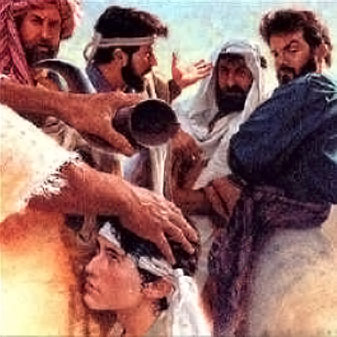 Check out the matrix pattern in 1 Samuel 16. It’s an easy one, but it’s so beautiful. And it makes sense of the (rare) physical description of David, related to the Holy Place. Each of the seven sections follows the matrix, but here is the overall pattern:
Continue reading
2 comments | tags: Baptism, Covenant Theology, David, John the Baptist, Samuel, Systematic typology | posted in Bible Matrix, Creation
Mar
23
2011
A blog post from my friend Albert Garlando, republished here with his permission.
Marriage, Divorce and the Gospel
Jesus is interrogated by the religious ‘mob’ concerning his views on divorce (Mark 10:1-12). The mob are trying to get him to make a call on the Old Testament (Deuteronomy 24:1-4) provision for divorce and remarriage. The 1st Century rabbis did not agree in their own interpretations of this, so they pestered Jesus about it.
Their big question was: “What makes divorce OK?”
True to form, Jesus’ response is, “You have missed the point and are asking the wrong question.”
Continue reading
Comments Off | tags: Albert Garlando, Deuteronomy, Divorce, Herod, John the Baptist, Marriage | posted in Biblical Theology, Christian Life, Quotes
Jan
12
2010
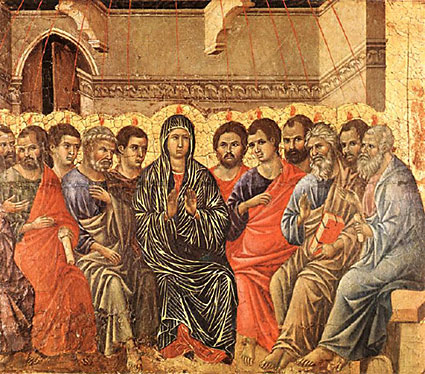
“I indeed baptize you with water unto repentance, but He who is coming after me is mightier than I, whose sandals I am not worthy to carry. He will baptize you with the Holy Spirit and fire.” Matthew 3:11
I remember a scene from X Files where they printed out a binary code and laid the pages out on the floor. When viewed from a distance the ones and zeros made the image of a face. There was a similar scene in one of the Indiana Jones movies, where there was a search for a secret passage and it turned out to be a large X on the floor when viewed from above. This is just my view, but it seems a lot of theologians spend a great deal of time walking in circles in the jungle, lost in the details of prooftexts when we have Old Testament “Google maps” at our fingertips.
Continue reading
2 comments | tags: Baptism, Bible Matrix, Film, John the Baptist, Pentecost, Tabernacle, Tongues | posted in Biblical Theology, The Last Days
Dec
9
2009
Jesus built a new Tabernacle before He tore down the old one that was ready to pass away. This is the basis of His message to John in prison:
Continue reading
Comments Off | tags: Acts, Bible Matrix, Jericho, John the Baptist, Kelby Carlson, Paul, Tabernacle, Trumpets | posted in Biblical Theology, The Last Days