Oct
22
2013

When Moses is given the Ten Commandments they are written on two tablets:
And he declared to you his covenant, which he commanded you to perform, that is, the Ten Commandments, and he wrote them on two tablets of stone. (Deuteronomy 4:13)
Why are the Ten Commandments written on two tablets? Was one tablet not big enough for God’s handwriting? Or did God give Moses two copies of the Law, one tablet being a duplicate of the other?
Continue reading
Comments Off | tags: Aaron, Covenant Theology, Exodus, Literary Structure, Meredith Kline, Moses, Ray Sutton, Ten Commandments | posted in Bible Matrix, Biblical Theology, Q&A
Aug
10
2013
Paul’s Numbers
We have arrived at what appears to be the center of the epistle, which would be Testing (in matrix terms), the “opening” of the Law (Ethics 2 in Covenant terms) and “purification” (in sacrificial terms). And, being at the centre of the book, this part is the Apostle’s main argument, or thesis. Just as Christ and the coming of the kingdom in His sending of the Spirit are found at the centre of Covenant history, so the transformation by fire of the Levitical priesthood into a fragrant Bride are at the centre of Galatians.
Continue reading
Comments Off | tags: Baptism, Galatians, Numbers, Paul, Ray Sutton | posted in Bible Matrix, Biblical Theology
Dec
27
2012
or Shekinah People
“The solution here is not, as Calvin believed, to dress the New Covenant’s ethical maturity in the puerile clothing of paedobaptism.”
In The Failure of the American Baptist Culture [PDF], James Jordan, Ray Sutton and others expose the rot at the heart of baptistic theology, which is inherently man-centred. The authors call us from a view of salvation in isolation to a wider vision of the meaning of baptism, which signifies the broader realities of the Covenant of Grace. I learned a great deal about history and Reformed theology, and thoroughly recommend it to you. In my view, however, they don’t go far enough. A call to understand the vital historical connection between circumcision and baptism certainly deals with the errors of the Anabaptists, but when rightly understood, the progressive nature of revelation also exposes the use of paedobaptism as a connection with the Old Covenant as entirely bogus.
Continue reading
4 comments | tags: Baptism, Calvin, Covenant Creationism, Covenant Theology, Federal Vision, James Jordan, Ray Sutton, Tabernacle | posted in Bible Matrix, Biblical Theology, Ethics, Quotes, The Restoration Era
Nov
30
2012
or Thirty Pieces of Silver
“A Christian culture is a culture of opportunity because it is a culture that flows from the Covenant.”
The Bible Matrix is found throughout the Bible. It is the shape of Creation but it is also the shape of Covenant. It is the process of promise and fulfilment. We see it in Eden. We see it in Canaan. Every Covenant is a mission, a tour of duty, resulting in a safe place to live, a home of abundance, peace and glory. It should be no surprise to Christians that it is also the process that underpins economic growth.
Continue reading
2 comments | tags: Covenant Theology, Economics, Ray Sutton, Worship as commerce | posted in Bible Matrix, Biblical Theology, Christian Life
Dec
9
2011
The Living Dead and the Dead Living
Creation: In part 1 we saw that the theme of the first stanza of 2 Thessalonians 2 was the “Sabbath” rest of the church. Paul writes to remove the alarm caused by the “conspiracy theorists” who attempted to disturb it.
Division: The second stanza concerned the splitting of the church into two — those who would persevere despite the growing threat of tribulation throughout the empire [1], and those who would succumb to their fears. The attacks would culminate in the completion of Herod’s Temple and the Nero’s burning of Rome in AD64. The first threw doubt upon the words of Christ concerning the Temple, and the second, though hardly believed, was an excuse to scapegoat this new Jew-Gentile sect, now legally separated from the protection afforded to Jews by Rome. The gospel tore Judaism in two. Then it united those believing Jews with Gentiles. But as in the wilderness, new Israel would be threshed and purified.
Continue reading
Comments Off | tags: AD70, Atonement, Booths, Dispensationalism, Feasts, James Jordan, Literary Structure, Paul, Ray Sutton, Revelation, Ten Commandments, Thessalonians | posted in Bible Matrix, Biblical Theology, The Last Days
Oct
20
2011

When Sam Frost reviewed Bible Matrix, he was a full preterist. What changed his mind was the Bible’s inescapable trajectory, its relentless reach towards maturity and glory.
From Sam’s blog:
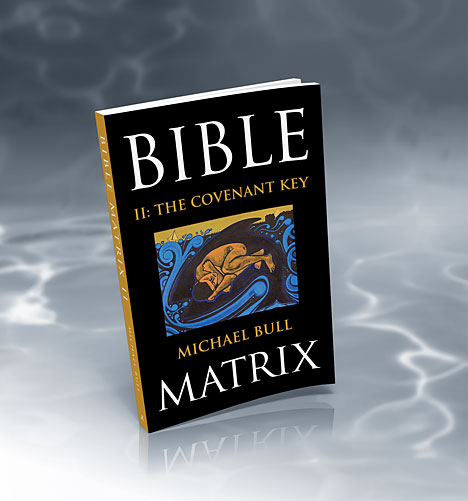
Mike Bull has recently sent me his new book, Bible Matrix II: The Covenant Key (Westbow Press, 2011). Like his Bible Matrix, this one is full of “patterns”. Did you ever think that Esther, probably one of the most neglected books in the Bible, was covenantal in structure and outline? That it speaks directly to us? Get ahold of Bull’s “key” and you will.
Continue reading
Comments Off | tags: Gnosticism, Ray Sutton, Sam Frost | posted in Bible Matrix
Aug
7
2011
 That You May Prosper: Dominion by Covenant by Ray R. Sutton
My rating: 4 of 5 stars
As Doug Wilson says, when you first discover the hammer you think everything looks like a nail. Continue reading
3 comments | tags: Covenant Theology, Ray Sutton | posted in Biblical Theology
May
30
2011
There is great advantage in tracking the shape of God’s work in history through the Old Testament. This is because God is consistent. Everything He does has the same shape, even though He does it in new and surprising (and sometimes devastating) ways.
One of the big handles in Scripture is the five-fold Covenant pattern, described by Ray Sutton in his book, “That You May Prosper: Dominion by Covenant.” Continue reading
Comments Off | tags: Against Hyperpreterism, Covenant Theology, Creation Week, Feasts, Moses, Ray Sutton, Revelation, Revelation 20 | posted in Against Hyperpreterism, Bible Matrix, Biblical Theology, The Last Days
Oct
23
2010
“Let’s face it, even daytime television
is more inspiring than your sermons.”
Ray Sutton’s 5-point Covenant model is crucial when it comes to making sense of the judgments of God, both the blessings and the curses. As he says in his book That You May Prosper, “Everyone talks about the Covenant, but nobody does anything about it.”
When I was writing Totus Christus, I thought it was only natural that the 7-point Creation pattern and the 5-point Covenant pattern could be combined. Transcendence is Light. Testing and Ethics matched. The positive and negative Sanctions were quite obviously the two goats on the Day of Atonement (Ebal and Gerizim). So it was only a matter of figuring out how the 5 of Words becomes a 7 in history. [1] Continue reading
7 comments | tags: Covenant Theology, Eric Rauch, James Jordan, Literary Structure, Preaching, Ray Sutton | posted in Bible Matrix, Biblical Theology
Oct
2
2010

The content of this post has been revised and included in Bible Matrix II: The Covenant Key.
___________________________________________
[1] See Behold Your Mother.
[2] See Incantation or Incarnation.
[3] Ray R. Sutton, That You May Prosper, pp. 73-75. Forget Calvin. Forget Barth. This book is a must-read.
[4] See Little Man With No Hair and Veiled Lawlessness.
Comments Off | tags: Covenant curse, Covenant Theology, Postmillennialism, Ray Sutton, Tabernacles, Zechariah | posted in Bible Matrix, Biblical Theology, Ethics, Quotes