Nov
30
2012
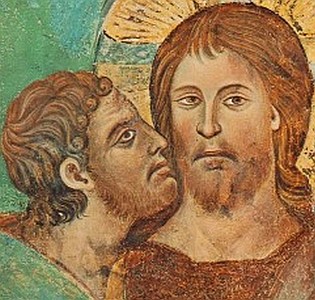
or Thirty Pieces of Silver
“A Christian culture is a culture of opportunity because it is a culture that flows from the Covenant.”
The Bible Matrix is found throughout the Bible. It is the shape of Creation but it is also the shape of Covenant. It is the process of promise and fulfilment. We see it in Eden. We see it in Canaan. Every Covenant is a mission, a tour of duty, resulting in a safe place to live, a home of abundance, peace and glory. It should be no surprise to Christians that it is also the process that underpins economic growth.
Continue reading
2 comments | tags: Covenant Theology, Economics, Ray Sutton, Worship as commerce | posted in Bible Matrix, Biblical Theology, Christian Life
Jul
21
2012
Red Blood, Blue Blood
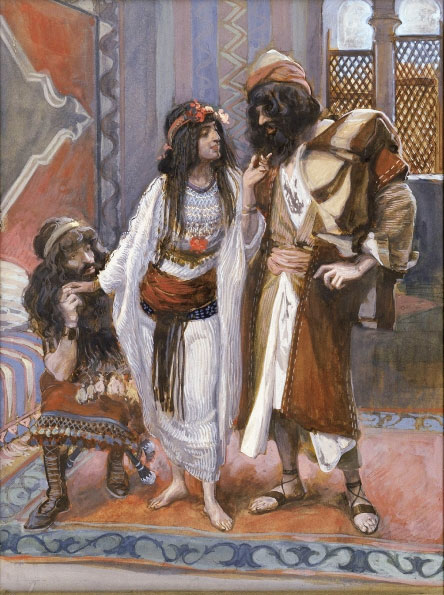 Behold, when we come to the land, you shall bind this line of scarlet thread in the window from which you let us down… Joshua 2:18
Each Israelite was to wear blue tassels on the four corners of his robe. The tassel was a blue cord that unraveled into threads, a “one” that became many. Using the “systematic typology” of the Bible Matrix, we can see that these four blue tassels correspond to the four rivers the flowed down from the spring under the Garden of Eden. [1]
So, what’s the deal with the “red cord” that Rahab was commanded to display in her window in Jericho? Firstly, the Hebrew word isn’t the same word as the “cord” in Numbers 15.
Continue reading
Comments Off | tags: Baptism, Circumcision, Grace, Joshua, Matthew, Peter Leithart, Rahab, Steven Opp, Systematic typology, Totus Christus, Worship as commerce | posted in Bible Matrix, Biblical Theology, Creation, Quotes
Jan
13
2011
or Discerning the True Sword
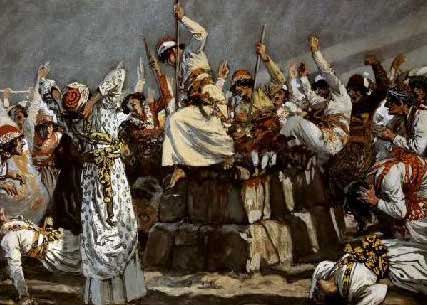
“Beware of dogs, beware of evil workers, beware of the mutilation!”
Philippians 3:2 (NKJV)
Jeff Meyers copped flak for his take on the parable of the Pharisee and the tax collector. He says the tax collector was justified for his Covenant faithfulness, and the Pharisee was not. Was it not the Pharisee who was faithful? And, either way, is this not justification by works? Has Jeff got night and day around the wrong way?
Continue reading
2 comments | tags: AD70, Exodus, Federal Vision, Incense Altar, Jeff Meyers, Tabernacle, Worship, Worship as commerce | posted in Bible Matrix, Biblical Theology, The Last Days
Jun
23
2010

There is a thread that runs right through the Bible concerning men and beasts. When men fail to be wise, obedient stewards—as Adam did—they image the beast. Instead of shepherding, they tear and devour. God actually allowed Nebuchadnezzar to become like a beast so that He might resurrect him as a godly steward.
When you hear the word “economics,” if you don’t think of “stewardship,” your definition of economics is not the biblical one. The modern definition is much less about wise stewardship than it is about opportunistic tearing and devouring. What can I get away with? Hath God said…?
Continue reading
Comments Off | tags: Worship as commerce | posted in Christian Life, Ethics, Quotes
Jan
20
2010
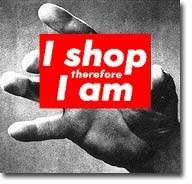
The Bible is full of food and money, and not just because God speaks to us using things we understand. Eating and working and spending wisely are glorifying to God. Our economics flows from our worship. Cultus begets culture, always. Doug Wilson writes:
 .
.
Our nation’s public economists usually refer to you in your capacity as consumer. This is in contrast to previous and wiser eras, when citizens were thought of as producers, and as savers. But we have departed from the way, and when disaster strikes, one of the things we think to do, is spend our way out of it. Republicans want to spend out way out this way, and Democrats that way, but we all think that consumption is king. Our understanding of consuming has become deranged.
Continue reading
3 comments | tags: Communion, Doug Wilson, Economics, Worship as commerce | posted in Biblical Theology, Christian Life, Quotes
Dec
18
2009
or The Crash of AD70
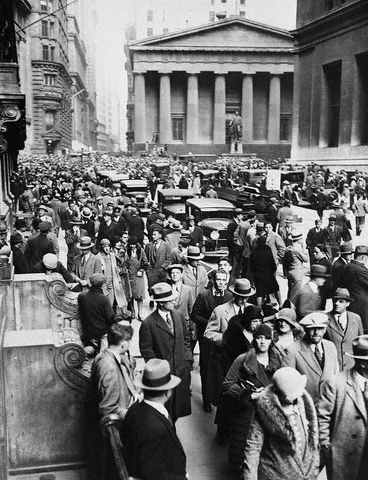
Now a river went out of Eden to water the garden, and from there it parted and became four riverheads. The name of the first is Pishon; it is the one which skirts the whole land of Havilah, where there is gold. And the gold of that land is good. Bdellium and the onyx stone are there. The name of the second river is Gihon; it is the one which goes around the whole land of Cush. The name of the third river is Hiddekel; it is the one which goes toward the east of Assyria. The fourth river is the Euphrates. (Genesis 2:10-14)
After the Herod and Shylock post, I had one complaint that the Worship as Commerce tag didn’t really do what it said on the tin, so I hope to capture it (briefly?) here. Now, where to start? As James Jordan explains, the idea begins in Eden.
Continue reading
1 comment | tags: AD70, Amalek, Gehenna, Genesis, Gnosticism, Herod, High Priest, Isaiah, Manna, Moses, Numbers 5, Revelation, Solomon, Temple, Worship as commerce | posted in Against Hyperpreterism, Biblical Theology, Christian Life, Creation, Ethics, Quotes, The Last Days, Totus Christus
Dec
16
2009
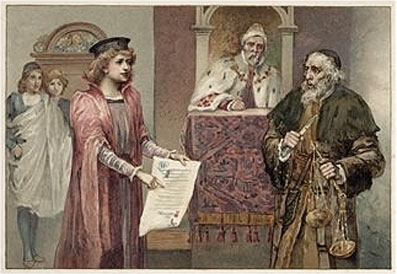
or Cooking the Golden-Egg Goose
Gary North has a free course on reducing your debt. Part of the plan is an application of the 5-point Covenant structure. Basically, God calls a man, gives him a job to do, and returns at the end to assess the man’s work. North refers to the parable of the talents in Matthew 25:
Continue reading
2 comments | tags: Dominion Theology, Economics, Gary North, Herod, Revelation, Worship as commerce | posted in Biblical Theology, Christian Life, Quotes, The Last Days
Sep
18
2009
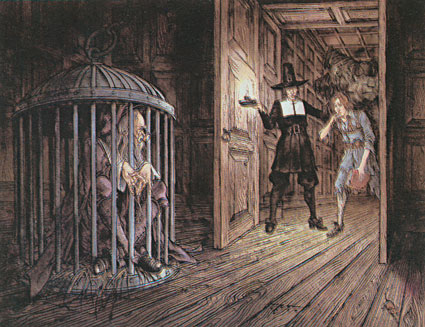
I saw in my dream, that the Interpreter took Christian by the hand again, and led him into a very dark room, where there sat a man in an iron cage. Now the man seemed very sad. He sat with his eyes looking down to the ground, and his hands folded together, and he sighed as if his heart would break.
Then said Christian, “Who is this?”
“Talk with him and see,” said the Interpreter.
“What used you to be?” asked Christian.
“I was once a flourishing professor, both in my own eyes, and also in the eyes of others,” answered the man. “I was on my way, as I thought, to the Celestial City and I was confident that I would get there.”
“But what did you do to bring yourself to this condition?” Christian asked.
“I failed to keep watch,” the man replied. “I followed the pleasures of this world, which promised me all manner of delights. But they proved to be an empty bubble. And now I am shut up in this iron cage—a man of despair who can’t get out.”
No further explanations were given. No one said who put him there. But the Interpreter whispered to Christian:
“Bear well in mind what you have seen.” [1]
. . . . . . . . . . . . . . . . . . . . . . . . . . . . . . . . . . . . . . .
Another thought related to the ideas in Behind Closed Doors.
The whole aim of the construction process, whether in sex, foetal development, education, business, art, music, family or state government, is the ultimate revelation of a mature glory. We are given the opportunity to create, and that involves certain God-given freedoms. If the freedoms are abused, what we construct for ourselves is a cage. Lust is a cage. A dysfunctional family or state is a cage. Enforced egalitarian socio-economics is a cage. Undisciplined children are a cage.
Jesus laid down His life for this world, and the freedoms of western culture have been a direct outcome. In its final stages, we have rebelliously inverted each of these freedoms (including the economic ones) and turned both our Christian protection (including our God-given wealth) and Christian mandate into a cage. Ancient Israel did the same. Why does this inversion process seem such a logical path for fallen human nature?
Continue reading
3 comments | tags: Altar of the Abyss, Babel, Biblical worldview, Culture, Dominion Theology, Doug Wilson, Economics, Incense Altar, John Bunyan, Parenting, Politics, Postmillennialism, Solomon, Tabernacle, Worship, Worship as commerce | posted in Christian Life, Quotes
Aug
27
2009
Desert Trees for a Crystal House
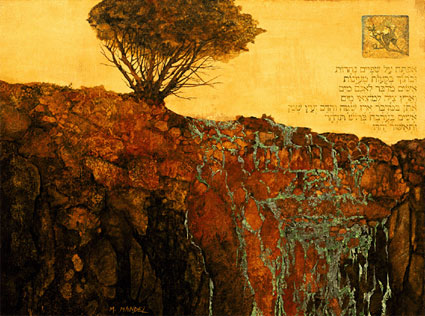
Trees are elementary Bible symbols. James Jordan writes:
We have noted that God’s people are spoken of as trees. Genesis 2 sets up the connection by saying that both men and trees come out of the ground (Genesis 2:7, 9). We have mentioned already such passages as Psalm 1 and Judges 9, where trees symbolize men. An interesting sidelight on this symbolism is provided in Mark 8:24, where the blind man healed by our Lord initially saw men as trees walking.
Continue reading
Comments Off | tags: Havilah, James Jordan, Tabernacle, Worship as commerce | posted in Biblical Theology, Quotes
May
26
2009
[This has been posted previously but it makes sense to include it under this banner. In fact, the article itself might now make more sense!]
Gold, Onyx and Bdellium
(The Tabernacle imagery is as much fun as it is grand and terrifying. I was thinking about rainbow striped onyx. In “Behind the Scenes”, James Jordan wrote:)
“These glorious gems represent the sons matured into tribes. A baby has not yet matured into anything specific. We don’t know if a child will become a good person or a bad one. We don’t know if he will be a musician or a minister or a farmer or a sailor or a computer engineer. As we grow, we grow from being “striped onyx” into a specific glory, which each of us has unique to himself. Thus, as the twelve sons of Jacob matured into tribes, each tribe took on a distinct glory of its own, represented by its gemstone.” Continue reading
Comments Off | tags: High Priest, James Jordan, Revelation, Totus Christus, Worship as commerce | posted in Biblical Theology, Totus Christus