Jun 28 2010

Breath of God

breathofgod1

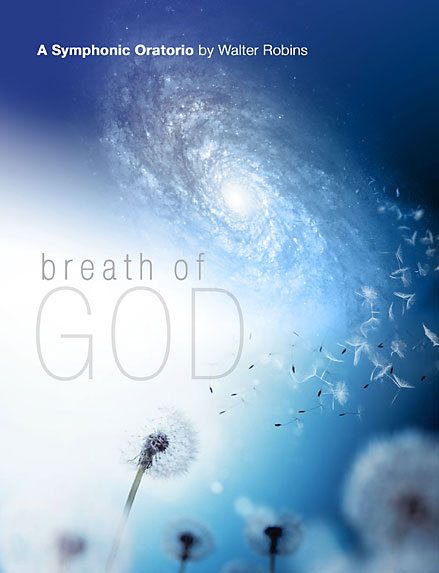
My composer friend Walter Robins’ oratorio Breath of God: A Walk Through the Bible will be world premiered by Capitol Opera Harrisburg PA in May 2011 (visit www.capopera.com)

I love Walter’s music because it has an angular beauty, just like the Bible. It constantly hints through its structure that there is more going on than immediately meets the ear.

Continue reading


Jun 10 2010

Christian Education Defined

Veritas Hall westlake - Christian Education from Darren Doane on Vimeo.


May 5 2010

Jesus On The Job

Now no chastening for the present seemeth to be joyous, but grievous: nevertheless afterward it yieldeth the peaceable fruit of righteousness unto them which are exercised thereby. (Hebrews 12:11)

It becomes apparent that every one of God’s curses in the Bible sooner or later turns out to be a blessing. Every judgment has one eye on the present, which is usually grievous, and another eye on the future. Every discipline is a pruning to bring greater fruit. You just want to make sure you are one of the good figs, not a bad one. God’s justice is always visionary.

hardworker

“There’s no such thing as a dead-end job. There are only dead-end people.”
—Zig Ziglar

Work seems like a curse, but even before the Fall there was work. After the Fall, work was a curse-cloud with a silver lining. Imagine a world where people didn’t have to work? Imagine what all those idle hands would get up to? There are places in the world where this is the case; depressed places where nothing ever changes, nothing improves; where people look at our western rat race with envy.

By faith, we understand that all employment is part of the glorification of the world.

Many Christians view work as something holding them back from ministry. This is not only incorrect, but a terribly gnostic way of viewing the world. Our work is actually not only central, but something extremely important to God. I read this old article I posted in Be Still years ago, adapted from a book by Dallas Willard. I have one of the best jobs in the world and I still grumble, so I really needed to hear this again. Here’s an excerpt:

Continue reading


Feb 8 2010

Trouble at t’Mill

kungfuanimals

Tim Nichols recently posted concerning whether Christians should participate in martial arts that have a pagan background.[1] I suggested that postmillennialism naturally sees what can be salvaged from pagan cultures and “redeemed”, rather than writing it all off as corrupt, as many Christians do. His response was worth repeating:

Continue reading


Nov 20 2009

Hymnbook of Dominion

“There is a very important connection between the Church’s worldview and the Church’s hymns. If your heart and mouth are filled with songs of victory, you will tend to have an eschatology of dominion; if, instead, your songs are fearful, expressing a longing for escape—or if they are weak, childish ditties—your worldview and expectations will be escapist and childish.

Historically, the basic hymnbook for the Church has been the Book of Psalms. The largest book of the Bible is the Book of Psalms, and God providentially placed it right in the middle of the Bible, so that we couldn’t miss it! Yet how many churches use the Psalms in musical worship? It is noteworthy that the Church’s abandonment of dominion eschatology coincided with the Church’s abandonment of the Psalms.”

—David Chilton, Paradise Restored.


Sep 18 2009

Building Cages out of Freedom

dangerousjourney

I saw in my dream, that the Interpreter took Christian by the hand again, and led him into a very dark room, where there sat a man in an iron cage. Now the man seemed very sad. He sat with his eyes looking down to the ground, and his hands folded together, and he sighed as if his heart would break.

Then said Christian, “Who is this?”

“Talk with him and see,” said the Interpreter.

“What used you to be?” asked Christian.

“I was once a flourishing professor, both in my own eyes, and also in the eyes of others,” answered the man. “I was on my way, as I thought, to the Celestial City and I was confident that I would get there.”

“But what did you do to bring yourself to this condition?” Christian asked.

“I failed to keep watch,” the man replied. “I followed the pleasures of this world, which promised me all manner of delights. But they proved to be an empty bubble. And now I am shut up in this iron cage—a man of despair who can’t get out.”

No further explanations were given. No one said who put him there. But the Interpreter whispered to Christian:

“Bear well in mind what you have seen.” [1]

.  .  .  .  .  .  .  .  .  .  .  .  .  .  .  .  .  .  .  .  .  .  .  .  .  .  .  .  .  .  .  .  .  .  .  .  .  .  .

Another thought related to the ideas in Behind Closed Doors.

The whole aim of the construction process, whether in sex, foetal development, education, business, art, music, family or state government, is the ultimate revelation of a mature glory. We are given the opportunity to create, and that involves certain God-given freedoms. If the freedoms are abused, what we construct for ourselves is a cage. Lust is a cage. A dysfunctional family or state is a cage. Enforced egalitarian socio-economics is a cage. Undisciplined children are a cage.

Jesus laid down His life for this world, and the freedoms of western culture have been a direct outcome. In its final stages, we have rebelliously inverted each of these freedoms (including the economic ones) and turned both our Christian protection (including our God-given wealth) and Christian mandate into a cage. Ancient Israel did the same. Why does this inversion process seem such a logical path for fallen human nature?

Continue reading


Aug 28 2009

Harry Potter and the Half-Blood Ministers

twilightofevangelicalism


“If the academies turned out faithful women armed with Picture Bibles we would be better off than we are with you lot.”


Once upon a time, not far from here, there was a graphic designer who busted a gut for five years teaching the Bible in a local high school. He was committed to building a biblical worldview through the communication of the exciting, terrifying, comforting narratives of the Old Testament as a foundation for the gospel, to a generation starving for this stuff and filling the gap with movies and novels like Harry Potter and Twilight. After all, postmoderns love narrative.

Continue reading


Jun 17 2009

A Temporary Wart

 atheistsIt is impossible to impose any foreign worldview, modern or otherwise, onto the Bible. It will never be accommodated to the current ephemera. It comes in like a sword and violates our thinking until we think the way God does. Then it has dambusting consequences in every area of life.

It is a weapon to crush the head, to bring death and resurrection in us, and in the world. It carves up nations like a sacrifice and makes them a pleasing aroma to God. It rebuilds cultures from the inside out, and is the fount of all western society, art, literature (and literacy), music, government and charity.

And western atheism is in reality a black leech hanging off this grandeur, a little horn with a big mouth, totally dependent on the longsuffering and mercy of Christ the ascended King. 

Secular humanism is but a perversion of Christianity. As a ‘Christianity without Christ’, and thus bankrupt, it can only ever survive on borrowed capital. It is a temporary wart.


Apr 15 2009

Exploring God?

A great deal of the theological reflection on the nature of God (at least that which I come across) is human ruminations disengaged from most of the Bible, ie. the Old Testament. It gets treated as a vestigial organ bigger than the body it’s part of. Is this because the Old Testament conflicts more sharply with the modern and post-modern worldviews than the epistles?

Continue reading


Apr 11 2009

A Cure for Modern Theology

Or, Reading the Bible without imposing your own worldview.

It seems we either read the Bible carefully but with the blinkers of remnant higher criticism (modernism), or we ‘get’ the narrative and typology but disregard the basic boundaries of responsible interpretation (postmodernism). Rich Lusk writes:

Biblical Theology requires us to learn to read the biblical narrative from within. We are insiders to the story of Scripture. It’s our story. We have to learn to read the Bible canonically. We have to allow the Word to absorb the world rather than allowing the world to absorb the Word. We have to take Scripture’s outlook as normative rather than imposing another worldview on our reading of Scripture. We must learn to read the Bible organically, in terms of itself. We should read the Bible the same way Peter, Susan, Lucy, and Edmond would read The Chronicles of Narnia: as a story not only for us, but about us.

Reading the Bible organically means reading it intertextually and typologically. Intertextual reading listens for echoes of and allusions to other passages within the canon, using Scripture to interpret Scripture. Typological reading looks for repeating patterns within the unfolding storyline of Scripture. Biblical typology is focused on totus Christus — the whole Christ, head and body, Jesus and the church. Typology means reading the Bible on its own terms, as a revelation of the suffering and glory of Christ (Lk. 24). As we move from type(s) to antitype, there is both correspondence and escalation.

Read his full article here.