Dec
1
2015
James Jordan on Modern Church Music

By James B. Jordan, at Theopolis Institute.
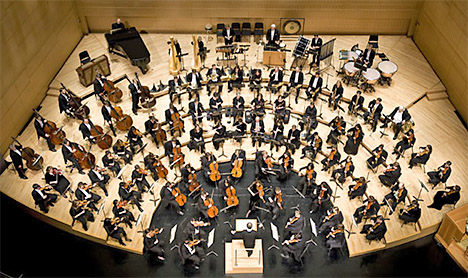
From time to time, when I’ve lectured on how to read the Bible, I’ve used art-music as one example thereof. When we listen to a simple folk song, we hear the same melody over and over again, but this is not how composers write “high” music. Let me amplify.
 or A Kingdom Mind
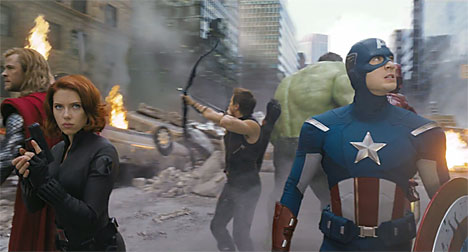
The best part of the Avengers movie for me was the infighting among the super heroes, and how the conflict disappeared once they had a common enemy. Each hero was unique, with his or her special skills. As in any relationship, marriage, community or committee, the differences are misinterpreted as sources of conflict and competition instead of complementary strengths. Once the heroes were out on the ground, the comical infighting (and misuse of gifts) ceased, and they started operating like the well-tuned orchestra they were designed to be.
Covenant Theology on a keyboard
 The three is a five. The four is a seven. The five is a seven. The seven is a twelve.
 Some excerpts from David P. Goldman’s essay, “Admit It, You Really Hate Modern Art,” in It’s Not the End of the World, It’s Just the End of You: The Great Extinction of the Nations.
Why is it that the audience for modern art is quite happy to take in the ideological message of modernism while strolling through an art gallery but loath to hear the same message in the concert hall? It is rather like communism, which once was fashionable among Western intellectuals. They were happy to admire communism from a distance, but very few chose to live under communism.

Some more on the Bandwidth of the Bible:
Don Carson has written a chapter in “Theological Commentary: Evangelical Perspectives.” It’s called, Theological Interpretation of Scripture: Yes, But… (see Carson’s Evaluation of Theological Interpretation of Scripture. There is a link to the chapter in PDF.)
Very briefly, his assessment is that the revival of biblical theology is a good thing, but anything in this revival that is new is bad. Whatever his assumptions, the bottom line is that no new ground of any consequence has been broken.
[This post has been refined and included in Sweet Counsel: Essays to Brighten the Eyes.]
Continue reading

More than thirty years after the release of their hit song, “Down Under,” (1978) Australian rock band Men at Work were hauled into court for ripping their flute riff from a nursery rhyme. The issue came up after discussion on a popular rock quiz TV show. [1]
Most Aussies of my generation knew the original (really uncool) song, and the use of it as a motif in a rock song was, well, really cool. The very fact that it didn’t have a big yellow sticker on it saying “This bit is from Kookaburra,” and the listener picked it up, was gratifying. All good music does this. All good movies do this. TV shows also use subtle allusions to past episodes as a nod to faithful viewers (and no show does it with the concrete-cracking understatement of Mad Men).
In this case of the flute riff, any dunderhead could pick it up. While I think that the current owners of the copyright, Larrikin Records, are a bunch of opportunistic bastards (and though they were once considered indie and cool, I guess they are now really uncool), it pains me that modern teachers of the Bible are too cautious to read the Scriptures in this way, too conservative to pick up the motifs, phrases and structural allusions that are obvious once they are pointed out. They are looking for the big yellow sticker, and it ain’t coming.
 .
.
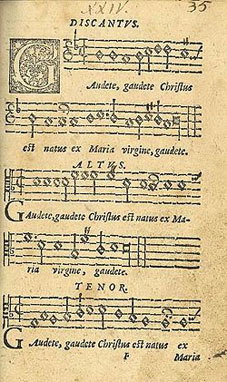
Rejoice, rejoice! Christ is born
Of the Virgin Mary — rejoice!
The time of grace has come—
This that we have desired,
Verses of joy
Let us devoutly return.
God has become man,
To the wonderment of Nature,
The world has been renewed
By the reigning Christ.
The closed gate of Ezechiel
Is passed through,
Whence the light is born,
Salvation is found.
Therefore let our gathering
Now sing in brightness
Let it give praise to the Lord:
Greeting to our King.
 Bible Matrix blog