Sep
28
2013
Sep
8
2013
Armed with Death
“Whoever sheds the blood of man,
by man shall his blood be shed,
for God made man in his own image.”
(Genesis 9:6)
James Jordan’s contribution to the study of any particular book of the Bible is invaluable, but the most important is very likely his work on Genesis. Because spineless modern theologians are unwilling to stand for its complete veracity, and yet very willing to jettison basic logic, they often miss the significance of its early chapters for the rest of the Bible and of history.

Apr
11
2013
Q&A: Against You Only Have I Sinned
 “…there is no sacrifice to Bathsheba…”
Jon Ericson asked this question on the Biblical Hermeneutics site:
To what extent is Psalm 51:4 poetic exaggeration?
The context of Psalm 51 is clear:
To the choirmaster. A psalm of David, when Nathan the prophet went to him, after he had gone in to Bathsheba.
These events are described in 2nd Samuel 11–12. In summary, David essentially murdered Uriah the Hittite in order to cover up an affair with Bathsheba, Uriah’s wife. So this verse causes me trouble:
Continue reading
Feb
6
2013
Wing of the Temple
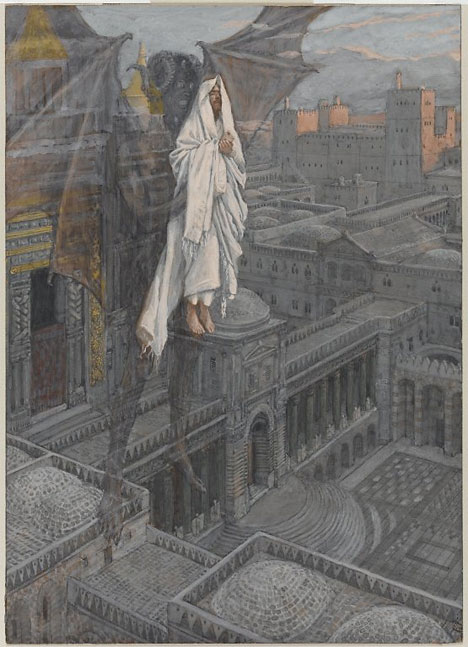 Structure of Psalm 91, with comments on Matthew 4:6
For the tools to make sense of the parsing below, get the Bible Matrix books. Book 1 describes the sevenfold Creation pattern. Book 2 describes the fivefold Covenant pattern from which the sevenfold pattern is derived (and how both of them are derived from the threefold Trinity).
T R A N S C E N D E N C E
He who dwells (Sabbath/Creation – Day 1)
in the covering/shelter/disguise (Passover/Division – Day 2)
of the Most High, (Firstfruits/Ascension – Day 3)
who under the shade of the Almighty/Day abides (Pentecost/Testing – Day 4)
will say of the Lord, (Trumpets/Maturity – Day 5)
“He is my refuge and my fortress; (Atonement/Conquest – Day 6)
My God, in Him I will trust.” (Booths/Glorification – Day 7)
Strangely, the RSV does a better job of the flow on this one than the NKJV or ESV. Here is where literary structure helps translation of Hebrew! Line 5 does not begin a new sentence.
Jul
25
2012
Psalm 121 Halo

God Has You Covered
Parsing Psalms means consulting the Hebrew for the word order. This one was quite difficult, once again because English translations mess with things, and also because the Hebrew author likes to play with the matrix structures to make a point. I find I have to redo sections and keep shaking it up until it all falls into place. Is this sentence part of the previous stanza or the beginning of a new one? Or does this stanza have one line that gets expanded into its own pattern to make a point?
The good thing is that once it shakes out, there are some beautiful surprises. One of the gems in this Psalm is the sentence concerning the sun and the moon. In English it is simply two lines (a parallelism), but in Hebrew it is chiastic. Wonderful.
Continue reading
Jul
11
2012
The Rock That Is Higher Than I
Mar
31
2012
Psalm 119 – Aleph
 Psalm 119 is all about the Law being a (Pentecostal) Light, a fire in the wilderness. It is fitting that it follows a Covenantal pattern. As usual each stanza is a miniature of the whole.
Sep
18
2011
Reasons for Praise
Psalm 33
If you feel spiritually barren, that is a good thing. It is because you are, and because God has shown it to you. However, a barren heart cannot praise God. So often we rock up to church with empty hearts and attempt to feel “worshipful.” Well, we are commanded to worship, but must we draw water from dry wells?
Sep
8
2011
Moses in Psalm 23
OUT NOW

COMING SOON

 Bible Matrix blog
-





IN THE WORKS


Jordan Complete