Jul
6
2015
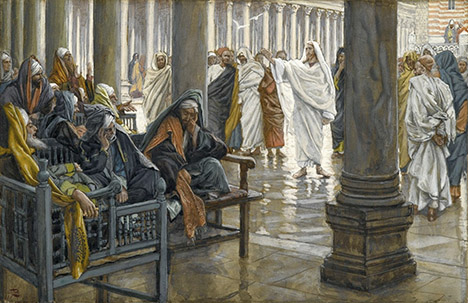
“…who were the Pharisees in their real setting? Where did they come from? There are no such people in the Old Testament, but when we get to Matthew they seem to be hiding behind every rock and shrub.”
Essay by Daniel Hoffman
If people today know anything about the Pharisees, they know them as the villains of the New Testament. Those who know a little more probably have a conception of the Pharisees as overly strict, eating their gruel with a scowl and casting condemnation in every direction, while Jesus was open and chill. Some might go beyond this and imagine the Pharisees as the perfect (or perfectly bad) model of self-salvation: The Pharisees wanted to save themselves by their good works, but the New Testament (it’s thought) is all about salvation through faith, and works are no big deal.
Continue reading
Comments Off | tags: Church History, Daniel Hoffmann, N. T. Wright, Pharisees | posted in Biblical Theology, Quotes, The Last Days
Mar
21
2012
 Following a masterful and beautiful explanation of Israel’s priestly glory, Alastair Roberts writes:
In 1 Corinthians 11:7 we encounter a verse that many might find perplexing.
For a man indeed ought not to cover his head, since he is the image and glory of God; but woman is the glory of man.
I believe that careful attention to the logic of this verse is absolutely crucial to unlocking the puzzle of the difference between the female helper apostle, and the male helper apostle.
Continue reading
Comments Off | tags: Alastair Roberts, Corinthians, Ecclesiology, Genesis, N. T. Wright | posted in Biblical Theology, Creation, Quotes
Jun
15
2010
or There Is No Last Supper
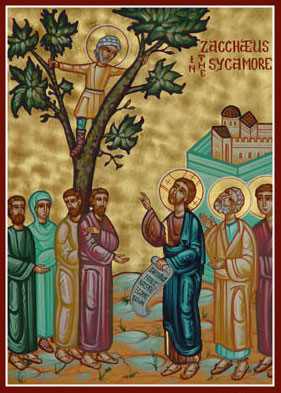
A quote from N. T. Wright on Pentecost (pilfered from Uri’s blog):
Continue reading
2 comments | tags: N. T. Wright, Pentecost, Peter Leithart, Postmillennialism, Uri Brito, Zacchaeus | posted in Biblical Theology, Quotes
Jul
26
2009

My friend Matt has been blogging about how postmodernism, with its openness to narrative, is a great opportunity for the gospel. But evangelicals need to sort themselves out first. Otherwise, to the world, they are just a bunch of Patsys. Patsy Biscoes that is.
Continue reading
4 comments | tags: Archaeology, Compromise, Gnosticism, Ideology, James Jordan, Liberal theology, N. T. Wright | posted in Apologetics, Biblical Theology
May
17
2009
Doug Wilson on Craig Blomberg’s review of N. T. Wright’s book-length response to John Piper’s book (breath):
“Then there is Blomberg’s misunderstanding of the relationship of the Reformers and culture.
‘Fixate on the Reformers’ (understandable) preoccupation with how an individual becomes right with God (crucial in its day against medieval Catholicism) and one may miss the bigger picture, in which the fulfillment of God’s covenant with Abraham through the children of Israel as progenitor of the Messiah looms even larger.’
Notice what is being juxtaposed here. The Reformers had an individualistic fixation on getting individuals into heaven when they die. But we, upon whom the new perspective has shone, now understand that there is a “bigger picture.” I see. And what did the Reformers do with their narrow vision? Well, they toppled kings, transformed laws, overhauled cultures, settled a continent, built nations, founded schools and colleges, inspired musicians and painters, and we could continue in this vein for quite a while. And what do we do, entranced as we are by the new perspective? We write academic papers, download podcasts of academic lectures that we can listen to in the privacy of our ear buds, and we go white in the face if conservative Christians suggest that Jesus might have an opinion about the ongoing slaughter of the unborn. John Piper, with his preaching on the pro-life issue, challenges the principalities and powers. The soft statism that goes with trendy theology these days does nothing of the kind — it simply suggests (but not too loudly) that we need kinder, gentler principalities and powers.”
Comments Off | tags: Abortion, Culture, Doug Wilson, John Piper, N. T. Wright, Reformers | posted in Quotes
Apr
10
2009
 Ecclesia reformata semper reformanda est.
“Reformed theology should be reforming theology, for the Church – finite, sinful, not yet fully glorified – always stands in need of God’s reformation, by his Spirit, through his Word taught, trusted, and obeyed. And so, Ecclesia Reformanda exists to assist the Church in the ongoing task of listening to Scripture in all its depth and richness. It will seek to be truly theological, distinctively Reformed, and prayerfully reforming.”
An “ongoing theological conversation” cannot be tolerated by the academy. James Jordan writes:
“We looked last time at the problem of academic theology. Systematic theology tends to become paramount, a “Greek” discipline that specializes in comparison and contrast… what the academic guards is not the woman, not the Bride, but rather ideas. Loyalty to ideas, and sometimes loyalties to the men who came up with the ideas, is more important than loyalty to the Church and to the Spirit. Does N. T. Wright not say things exactly they way Geerhardus Vos did? Then we might fight him. He must be put down. A spirit of churchly catholicity, of humility before the infinity of the Word and the long future of the church ahead of us, is simply absent, or certainly seems to be.
Continue reading
Comments Off | tags: Amillennialism, Federal Vision, N. T. Wright, Postmillennialism, Reformation | posted in Biblical Theology, Ethics
Apr
8
2009
or Understanding the Restoration Era
Peter Leithart writes:
NT Wright has long argued that first-century Jews considered themselves to be in a continuing exile. The canon of the Hebrew Bible suggests as much.
If we take our arrangement (the LXX arrangement), the Hebrew Bible ends with Malachi, who certainly doesn’t see a gloriously restored Israel when he looks around him.
If we take the MT arrangement, the Hebrew Bible ends with the decree of Cyrus; it’s as if the return has never happened.
Either way, the canonical arrangement supports Wright’s contention.1
 I had a long debate with my friend Matt who holds Wright’s view. I see the point. But regardless of the arrangement of the canon, what does the Bible teach?
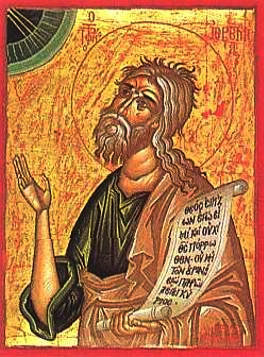
I subscribe to Jordan’s view that the exile/restoration prophecies actually concern the exile/restoration. When Jeremiah predicted a New Covenant with Israel and Judah, it was the one ratified at the beginning of Zechariah. It came to pass, no bull. Those who apply the prophecies of restoration directly to the first century get it wrong.2
The Jews may have thought they were still in captivity. But they also thought the second Temple was less glorious than Solomon’s. Ezekiel’s Temple was a vision of an empire-wide temple made of people, synagogues spread throughout the empire. It was a picture of a restored Israel’s greater spiritual influence, in the same way that Revelation’s new Jerusalem is a picture of the church.
Like many Christians today, they were impatient for the Messiah to come and “wash behind their ears”, fix all their problems, when He had commanded them to conquer the world with their witness. The exile was long over, and atoned for as well. The Jews failed to understand the times they lived in, and so do we in many cases. Like Israel in Ezekiel 37, the first century church was an Israel resurrected for warfare.
_______
1 Peter J. Leithart, Continuing Exile and Canon.
2 Doug Wilson’s excellent new commentary on Hebrews, Christ and His Rivals, still does this from what I have read so far. To be sure, the apostles quoted the prophets because they prefigured the first century, but the details of the prophecies anchor them in previous history.
Comments Off | tags: Doug Wilson, Exile, Ezekiel's Temple, James Jordan, Jeremiah, N. T. Wright, Peter Leithart, Revelation | posted in The Restoration Era