Nov
2
2013
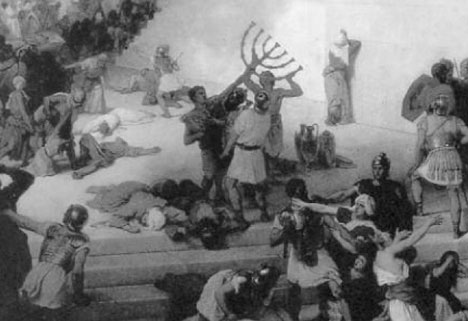
Jesus answered them, “Destroy this temple, and in three days I will raise it up.” (John 2:19)
Every one of God’s houses throughout Bible history has a “former days” and a “latter days.” Each goes through a process of death and resurrection, a “purification by fire.” Following the Bible Matrix, the central “slaying” of every row has a Day 4 symbol, something related to “the governing lights,” the all-seeing eyes of heaven.
Continue reading
Comments Off | tags: AD70, Covenant Theology, David, Ezekiel's Temple, Solomon, Tabernacle, Tabernacle of David, Temple | posted in Bible Matrix, Biblical Theology, The Last Days
Oct
12
2013
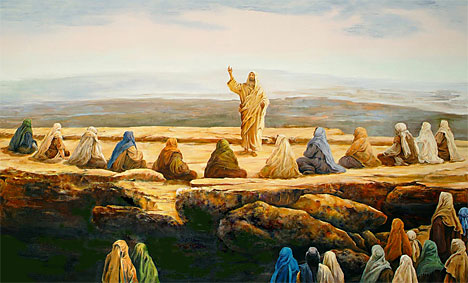
And he opened his mouth and taught them, saying: “Blessed… Blessed…”
(Matthew 5:2-11)
Part 1 is here.
From the mouth of God, (Initiation)
Adam received a natural breath (Delegation)
that he might tend to natural things. (Presentation – priesthood)
He then received spiritual words (the Law). (Purification – kinghood)
He was to repeat these spiritual words (Transformation – prophethood)
that he might receive spiritual (ethical) breath (Vindication)
and become himself the source of spiritual words. (Representation)
Continue reading
Comments Off | tags: Abraham, AD70, Baptism, Covenant Creationism, Covenant Theology, Gensis, Literary Structure, Noah, Sermon on the Mount, Tabernacle of David | posted in Against Hyperpreterism, Bible Matrix, Biblical Theology, Ethics
Oct
1
2013
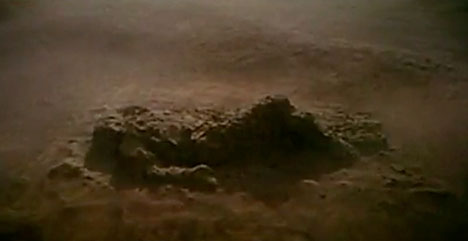
There are heavenly bodies and earthly bodies,
but the glory of the heavenly is of one kind,
and the glory of the earthly is of another.
(1 Corinthians 15:40)
Did Adam receive the Spirit of God? If he did receive the Spirit, was the Spirit taken away when he sinned?
This post has been slain and resurrected for inclusion in my 2015 book of essays, Inquietude.
Continue reading
Comments Off | tags: AD70, Baptism, Covenant Theology, Feasts, Genesis, Tabernacle, Tabernacle of David | posted in Against Hyperpreterism, Bible Matrix, Biblical Theology, Creation
Jul
9
2010
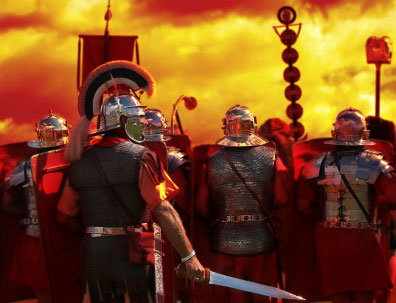
Michael F. Bird recently wrote:
The Jerusalem council achieved a via media by finding in Scripture a justification for the inclusion of Gentiles within the church without requiring circumcision and placing upon Gentiles only the obligation to avoid idol food and sexual immorality. Yet the Jerusalem council also permitted the existence of two parallel theologies: one theology where the Gentiles were uncircumcised equals in a renewed Israel with holiness constituted by the Spirit and another theology where uncircumcised Gentiles were guests in an Israelite remnant that still defined holiness through Torah observance. The Jerusalem council’s decisions seem optimized in a setting where Jewish Christians and Gentile Christians remain in parallel rather than integrated, especially in relation to shared meals. The council did not stipulate the standard of law observance to be upheld for Eucharistic fellowship to ensue.
Bird makes some interesting observations in his post, but two parallel theologies? Is that really what was going on? And does the council’s decision apply to modern observance of the Torah (ie. Messianic Jews)?
Continue reading
Comments Off | tags: AD70, James, Nazirite, Paul, Replacement Theology, Revelation, Tabernacle of David, Tabernacles, Temple | posted in Biblical Theology
Jan
2
2010
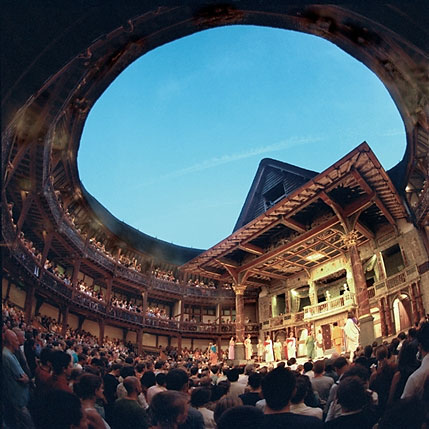
All the events of the Bible take place within a cosmic theatrical “stage,” one based on the structure of heaven. Like the Globe Theatre in Shakespeare’s era, an understanding of the symbolic significance of the physical elements in the literal, historical creation account in Genesis gives us incredible insights into the structure of many prophetic Bible passages and the order of many historical events. When we get to the Revelation, familiarity with this theatrical “set” is crucial to understanding its fulfilment in history.
Continue reading
Comments Off | tags: Baptism, Most Holy Place, Paul, Tabernacle, Tabernacle of David, Temple | posted in Biblical Theology, The Last Days, The Restoration Era