Prisoners of the Future
Reformation: Redefinition or Glorification?
Pastor David P. Cassidy discussed the redefinition of the “unchangeable Roman church” by Cardinal Newman, a component integral to the possibility of the revolutionary Vatican II, before taking listeners on a tour of the changes that swept through the institution in the twentieth century. Here is the conclusion of the lecture:
…Vatican II represents the most significant shift, not simply within the Roman Catholic Church and in our relationship with it, but in the whole history of church councils. Words such as charism, conscience, the priesthood of all believers, brothers and sisters, collegiality, and so on, dominate the discussions in the documents of the councils. Scholastic theological terminology is eschewed largely in favour of biblical vocabulary. Absent, gone, are words of intimidation and threat, and alienation and exclusion. Vatican II issued not a single doctrinal definition, though that is what councils had always done. Not a single anathema, not a single canon. Power words are gone, replaced by persuasion. Style, of course, has a lot to do with the difference in meaning, as the difference between prose and poetry makes clear. By its choice of language, Vatican II sought to present the Roman Catholic Church as one which retained an interior hierarchical reality, but with a new exterior, serving, personality.
So, what do we learn at the end of this tour?
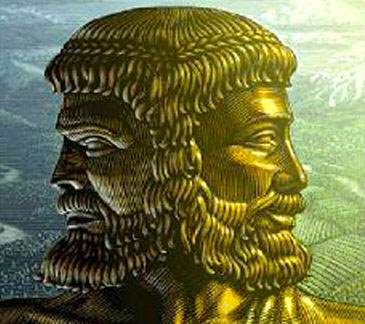
For many Roman Catholics, Vatican II brought immeasurable confusion and uncertainty. They were not sure how the church could have changed so much, a church which was not supposed to be able to change. For us, we find a Roman Catholic Church of many faces, indeed, Janus-faced (facing in two different directions). That leaves us with a certain measure of bewilderment as well. I find, amongst my friends in the Roman Catholic Church, a welcoming attitude by its officialdom, and a proselytising attitude, as never before, by its laity, serving in the world with grace and humility, but also, in partnership with very questionable cultural and theological liberalism. While it’s true that the official documents of the Catholic Church are, for instance, extraordinarily and rightly pro-life, any number of parish priests and the congregations within the contemporary Roman Catholic Church of modern North America are hardly pro-life at all.
Is the current pope a corrector of Vatican II, or a pioneer of Vatican II? Or perhaps a bridge to a more Protestant Roman Church? Only time will tell. As I mentioned earlier, the anathemas against Constantinople have been revoked. But never forget that those against Wittenberg and Geneva have not. Trent stands. And it is here that I would turn to my learned Cardinal Newman, the former Calvinist, and ask, “What is this that has grown in your garden? Is this what was always in the church? A treasury of merit; the Borgia popes; a hunted and martyred Tyndale; a stack of Huguenot bodies; purgatory?
Against all of that, I still hear my Saviour cry from the cross, “It is finished!” I can have Mary as my mother, and I do. I receive the body and the blood of Christ in the eucharist. I can say the Apostles’ and Nicene Creeds and mean every word, and I do. And I can honour the martyrs and the saints of all of Christendom: Protestant, Orthodox and Catholic alike, from Maximus the Confessor to Latimer and Ridley to Father Damien—and I do. But all of this and more is mine, and ours, without the necessity of submission to Rome or the abandonment of what Scripture clearly teaches for the embrace of what Scripture clearly never taught.
Perhaps, just as John Paul II went to Greece and begged forgiveness of the Orthodox for the Catholic sins against them, and then returned the relics of Chrysostom and Naziansus to Constantinople, this German pope, in 2017, will go to Wittenberg on the 500th anniversary of Luther’s 95 theses and say the reformer got it right after all.
Or not.
But let me turn the tables. We began with a rhetorical question about the legitimacy of a continuing reformation. Well, I believe God is at work to reform His church, but let me close with this cautionary note in the form of a question. What is the object of the work of our reformation? If the Roman Catholic Church and Eastern Orthodox Communions are resistant to reformation because of an insufficient doctrine of sin in the church which leads them to posit an infallible church, is it possible that we are resistant to growth and change because we have an insufficient doctrine of sanctification, rendering the church simply the constant slave of error, making us as ministers only expect the worst and spending our lives in heresy hunting among the Reformed? Does semper reformanda now mean digging in the dirt of other preachers until error can be located, at least “as I see it,” and then bringing charges against them? Does semper reformanda mean simply peserving the Westminster Standards under a protective glass in a theological museum?
Or might there be progress?
And might there not be the vocabulary of generosity and love rather than vitriol and anathema? Maybe we can learn a thing or two from Newman and the style of Vatican II. What Reformed Catholics and Papal Catholics need is a more consistent doctrine of glorification, of progress in grace through death and resurrection. Yes, we will sin, missing the mark. Yes, we will rise, with a greater understanding of the faith once and for all delivered.
Perhaps, somewhere, lurking in the dark corners of the Vatican Library is a young, adjuctant bishop, reading Jim Jordan and saying, “Hmmm, interesting, death and resurrection for progress.” You never know.
We too could be prisoners of the past and the present. We need a doctrine of the future because we are most assuredly prisoners of hope. We don’t know where we are in the story. There are many who believe that Jesus will be back very soon. Would that were true. But we don’t know. It could be thousands of years before Jesus comes back, and if that’s the case, we are the early church.
This means that four thousand years from now, some poor guy at Westminster Tehran will be sitting a final exam, going, “Aargh! Athanasius! Ambrose! Augustine! Leithart! I can’t keep these church fathers straight!”
See, I can believe for the glorification of the church, not just her reformation.
David P. Cassidy, Newman Rising: Vatican 2 and the New Faces of Roman Catholicism.
I recommend listening to the full lecture—and his fascinating lectures on the Orthodox church and the Anabaptists as well. They are part of the 2010 Auburn Avenue Pastors Conference, available here. (A quote from one of Jeff Meyers’ lectures is here.)