Dashing Her Little Ones

or Cutting Off the Generations of the Wicked

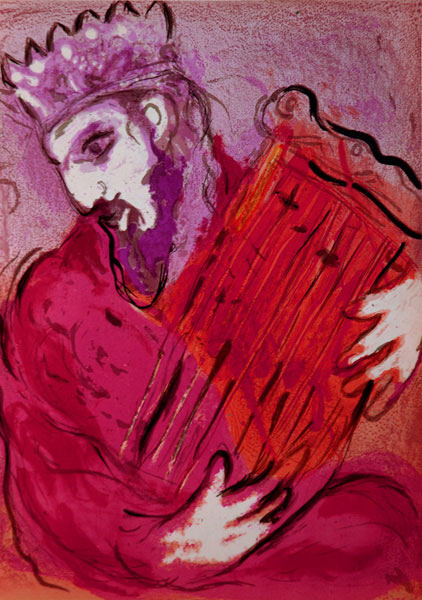
kingdavid-harp

O daughter of Babylon, who are to be destroyed, Happy the one who repays you as you have served us! Happy the one who takes and dashes your little ones against the rock!
(Psalm 137:8-9)
A further comment on Psalm 137 (following Church and State and Liturgy as Prophecy):

The church has the power to excommunicate, but the state alone has the power to execute. In Joshua’s and David’s time, church and state were one, thus Israel’s army slaughtered God’s enemies judicially. In Mordecai’s time, the slaughter of Haman’s followers by the Jews occurred only after church and state became one under Mordecai’s new executive power.

As an advisor to the state, the church gives the word, and offers the sacraments, but it is always the state that carries out the judgment — government. The state is the “outer court” into which the living sword-water flows. Some taste life and others taste death. [1]

Also, the comment in Psalm 137 comes at the end. The Psalm follows the sevenfold dominion pattern, which is based on the fivefold covenant pattern (in practice, the centre point splits into three, so you get Law both before and after Testing in the Wilderness). Thus this verse refers to “negative” succession arrangements.[2] The request was fulfilled in the fall of Belshazzar’s kingdom to the Persians. It was the Lord who dashed Belshazzar’s future generations against the rock, in the same way that the Lord had slain the sons of Zedekiah before his eyes at the hand of Nebuchadnezzar. [3]

This negative succession is the kingdom being taken away and given to a nation that will bear fruit, in both works and godly offspring. Jesus threatened the Jewish polity with the same fate.

But when the tenants saw the son, they said to themselves, ‘This is the heir. Come, let us kill him and have his inheritance.’ And they took him and threw him out of the vineyard and killed him. When therefore the owner of the vineyard comes, what will he do to those tenants?” They said to him, “He will put those wretches to a miserable death and let out the vineyard to other tenants who will give him the fruits in their seasons.” (Matthew 21)

Those who hardened their hearts lost their little ones.

At last Titus drew a line of circumvallation around the doomed city, and began to crucify all the deserters who fled to him. The incidents of the famine which then fell on the besieged are among the most horrible in human literature. The corpses bred a pestilence. Whole houses were filled with unburied families of the dead. Mothers slew and devoured their own children. Hunger, rage, despair, and madness seized the city. It became a cage of furious madmen, a city of howling wild beasts, and of cannibals—a hell!

For the first time for five centuries, on July 17, A.D.70, the daily sacrifices of the Temple ceased for want of priests to offer them. Disease and slaughter ruthlessly accomplished their work. At last, amid shrieks and flames, and suicide and massacre, the Temple was taken and reduced to ashes. The great altar of sacrifice was heaped with the slain. The courts of the Temple swam deep in blood. Six thousand miserable women and children sank with a wild cry of terror amid the blazing ruins of the cloisters. Romans adored the insignia of their legions on the place where the Holiest had stood. As soon as they became masters of the Upper City they only ceased to slay when they were too weary to slay any longer. [4]

The saints’ prayers in Revelation were answered as the Lord made Babylon (Jerusalem’s worship) into Jericho, the first conquest of the church’s ministry of dividing up the world as our inheritance.

The captive saints in Psalm 137 hung their harps on the willow trees in the middle of the river, sat down and wept. They were unable to sing. But not only did the emancipated saints in Revelation 15  rejoice to see the arrival of these horrific events in Jerusalem, they sang about it! This chapter describes them taking up harps and writing a new song, just before the seven angels were given bowls to finish off Herod’s first century Babylon. The Lord again remembered the sons of Edom who tried to raze the New Jerusalem using Roman executive power (Psalm 137:7). He used Roman executive power against them.

Worship is holy war, and in holy war everything is under the ban, everything is devoted. Outside of Christ, God’s enemies have no future. It is the role of the church to bring that heavenly government to pass on earth through her worship.

“Nevertheless I have a few things against you, because you allow that woman Jezebel, who calls herself a prophetess, to teach and seduce My servants to commit sexual immorality and eat things sacrificed to idols… I will kill her children with death, and all the churches shall know that I am He who searches the minds and hearts.” (Revelation 2:20, 23)


_____________________________________
[1] See also Sacramental Doses of Death.

[2] You can see this structure in practice hundreds of times in my book.

[3] I wonder if Nebuchadnezzar was a convert by this time. If he was, that makes him a conscious arm of the Lord in judgment against Jerusalem.

[4] From Frederick W. Farrar, The Early Days of Christianity (1882), Volume II, Chapter VII.


Leave a Reply