Apr
15
2009
Ordinary People
In Judges and 1 Samuel, the weapons used to defeat the enemy reflect the ordinary people who used them: a tent peg, an ox goad, a millstone, an ass’s jawbone, a slingshot. It was Saul who started throwing spears like a Gentile, like Goliath.
Our weapons are not of this world, but many of them are still physical weapons: bread, wine, water, oil, bended knees, soundwaves, books, gifts, open ears, hospitality, open or closed church doors. These physical things capture people’s thoughts and make them obey Christ.
We live in this world, but we don’t act like its people or fight our battles with the weapons of this world. Instead, we use God’s power that can destroy fortresses. We destroy arguments and every bit of pride that keeps anyone from knowing God. We capture people’s thoughts and make them obey Christ. And when you completely obey him, we will punish anyone who refuses to obey.” 2 Cor 10:3-6 [CEV]
WEPOW
Comments Off | tags: goliath, Holy war, Judges, Saul | posted in Biblical Theology, Christian Life
Apr
15
2009

Power Tools
“Then the Lord awoke as from sleep, like a mighty man who shouts because of wine. And He beat back His enemies; He put them to a perpetual reproach.” Psalm 78:65-66
“I’m a 30 year old boy.” Edward Norton, Fight Club.
Guns are dangerous. They are so offensive in fact, that they should be prohibited altogether. And male leadership has been abused so much, and women exploited for so long, that such headship should also be shamed and even prohibited. And alcohol. Alcohol leads to so much misery that it also should be prohibited. Oh, wait. That’s us.
Continue reading
Comments Off | tags: Alcohol, Film, Masculinity | posted in Biblical Theology, Christian Life, Ethics
Apr
15
2009
 Rediscovering our identity is the solution for this lack of confidence. Israel’s history is most assuredly our history, as much as a narrow trunk suddenly fills the sky with branches. This theme of trunk and branches, Adam and Eve, head and body, Old Testament and New, Christ and the church—the Whole Christ—is the deep structure that undergirds the entire Bible, and the New Testament is but the final, majestic sweep. To regain her identity, the church must develop not only an intimate knowledge of the Old Testament, but one that is totally integrated with the New.
Read the Introduction and Chapter 1 here.
Comments Off | tags: Bible history | posted in Biblical Theology, Christian Life, Totus Christus
Apr
15
2009
[from Auburn Avenue blog]
The Christian imagination
Each semester at the Bucer Institute we have a course we call “The Church and Culture” which is basically a catch-all for any topic we’d like to talk about. Our “Church and Culture” class for this semester was held this past Saturday on the topic of “The Christian Imagination” and it was outstanding. (Check out the MP3s when they are ready for downloading, you won’t regret it.).
Too many good things were said to repeat them all, but here are a few of them:
- A woman living on the frontier in the 19th century commented on the quilts she made: “I make them warm to keep my family from freezing; I make them beautiful to keep my heart from breaking.”
- Poetry humbles us by giving us more than we can understand. It’s “bigger” than we are.
- Why are the Reformed so unimaginative? Artists tend to arise from traditions that allow mystery, not from traditions that see mystery as a threat to the “system” and therefore always seek to explain (or define) it away.
- The literal is too skeletal and minimalistic to carry the grand load of truth that the poetic can easily transport.
Some of the things covered were: the importance of the imagination; the imagination and theology; how to cultivate a sanctified imagination; a primer on poetry; and the deeper meaning of watching the dead bodies of plague victims being catapulted over the walls of a besieged city. All in all, it was more fun than ought to be legal.
Comments Off | tags: Auburn Avenue, Bucer Institute, Culture, Poetry | posted in Biblical Theology, Christian Life, Quotes
Apr
14
2009
The quiet, daily betrayals are just as capable of turning an ardent Christian into a confirmed, if uncomfortable pagan. C. S. Lewis believed that the ‘softly, softly’ approach is one of the key tactics of the Devil. To paraphrase Screwtape, he aims to introduce into every life that revolves around God a slight change in orbit that will ever-so-slowly send them spinning into outer darkness.
Read Mark Hadley’s review of the film, Good.
Comments Off | tags: C. S. Lewis, Film | posted in Christian Life, Ethics
Apr
13
2009
Peter Leithart’s excellent 2009 Easter homily is here.
Comments Off | tags: Peter Leithart, Resurrection, Totus Christus | posted in Biblical Theology, Christian Life
Apr
11
2009
In the New Testament and in the early church, preaching (heralding) was something done to outsiders, persuading them to repent and believe the gospel.

“…we face a situation today in most evangelical and Reformed churches in which the reading and preaching of Scripture is the only way in which the Word is made manifest in the lives of the saints. This is a real loss for the people of God. The result is the primacy of the preacher. The preacher not only does the only really important thing in the service (preach), he also composes (if he even does that) the prayers that are prayed, and he prays them by himself. It boils down very often to worship by proxy, exactly what the Reformation fought against. Only in the Lutheran and Episcopal churches is there more than a minimum of congregational participation, because of the use of prayer books.
Since all that is left is preaching, the act of preaching takes on dimensions foreign to the Bible. Continue reading
3 comments | tags: Communion, Ecclesiology, James Jordan, Preaching, Reformation, Worship | posted in Christian Life
Apr
11
2009
A worship service should follow the seven-fold Covenant pattern:
Call to Worship (Genesis – Sabbath)
…..Confession of Sin (Exodus – Passover)
……….Ascension of Praise (Leviticus – Firstfruits)
……………Teaching the Word (Numbers – Pentecost)
……….Offertory (Deuteronomy – Trumpets)
…..Communion (Joshua – Atonement)
Thanksgiving & Dismissal (Judges – Booths)

This pattern also structures the Creation week (Genesis 1), the Tabernacle speeches (Exodus 25-31) and the Ascension offering (Leviticus 1).
What is interesting is that the Firmament is Day 2 (Red Sea – death), but the Tabernacle puts it at Day 6 because Adam needs resurrection (Jordan).
So, in our services, at confession of sin, the saints are in the Laver. At Communion, the Laver is in the saints. We in Him and He in us.
Comments Off | tags: Feasts, Tabernacle, Worship | posted in Biblical Theology, Christian Life
Apr
11
2009
by Halden at inhabitatio dei
“One of the elements of theological discipline that has been lacking for a long time among theologians has been the consistent practice of doing commentary on Scripture.
Continue reading
Comments Off | tags: Commentary, Halden Doerge | posted in Christian Life, Quotes
Apr
11
2009
Chuck Lawless, Jr. writes:
I recently read a book by a mainline pastor who longs for the churches of his denomination to grow again. Comparing those churches to growing churches, he hinted throughout the book at what he could not bring himself to say forthrightly: growing churches are usually characterized by conservative theology…
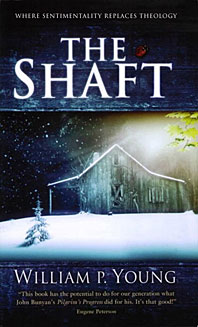 Thom Rainer’s works… have shown that churches that grow by reaching non-believers have a theology that is best described as conservative and orthodox. The bottom line is this: theology really does matter if we want to grow biblical, healthy churches.
We conservatives know this truth, and we are quick to remind others of this fact. What we are not so quick to acknowledge is the focus of this blog: we do a poor job of teaching the very theology that we claim is so important.
We think that our church members understand and believe our basic doctrine, even while those same members are learning their theology from TV talk show hosts, popular television preachers, or the latest religious novel.
Do an anonymous survey of your congregation’s beliefs, and see what you learn. If the majority knows and believes basic biblical doctrine, your church is more an exception than the norm.
Read more for practical tips on teaching theology.
Comments Off | tags: Church Growth, Preaching | posted in Biblical Theology, Christian Life