Sep
10
2011
Living on the Pinnacles
Stephen Henderson posted this quote from Doug Jones’ In Defense of Wind Grasping:
Continue reading

Stephen Henderson posted this quote from Doug Jones’ In Defense of Wind Grasping:
Continue reading

My friend Pastor Albert Garlando has internalized the matrix. He spotted one without even looking for it.
Continue reading
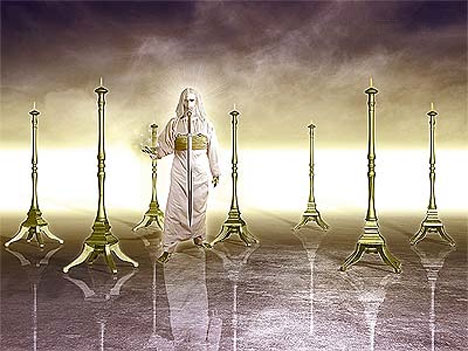
The description of Jesus in Revelation 1 follows the Bible’s new Creation matrix.
Jesus is the Word, and His manifestation is described in the pattern of the Creation Week. He is the Word made flesh, the Sacrament who “tabernacled” among us, and so is described in the pattern of the Tabernacle. He is the Word in Government, ruling over the pastors of the churches, and so we also see elements of the corresponding Dominion pattern.
Revelation is indeed a sublime book. Every stanza refracts the structure of every section, which in turn refracts the structure of the book, which in turn refracts the structure of the entire Bible. This literature comes from the mouth of the uncreated, the One who creates things fully formed from nothing; it is irreducibly complex. Nothing can be added, and nothing can be taken away.
Joel 2: 1-11
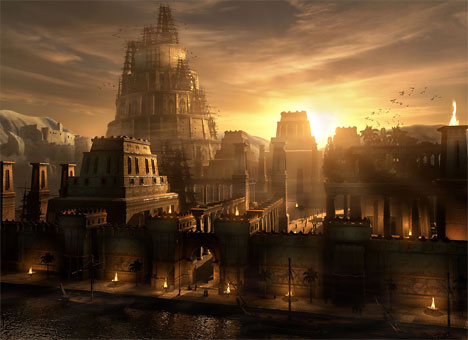
Into Joel again, and he knows nothing of our chapter divisions. At least the chapter break occurs at the end of an obvious stanza. We are still within Ethics 3, so this is the Trumpets stanza of a Trumpets cycle (aren’t fractals fantastic?) It’s a bit like that movie Inception — as the prophecy moves forward, each step is expanded to further level of structure, a dream within a dream. In this case, it is a multi-level nightmare, a brewing, billowing thundercloud. [1]
Jerusalem had become a new Babel, so God raised up a real Babel in order to overrun the Land and swallow her up. Joel uses the Creation, Dominion and Feasts structures but applies them to the invading Babylonians in ironies that would go over our head — if we weren’t familiar with these literary devices!
Here’s the feast/Covenant structure in the doxology that appears near the end of the book of Hebrews:
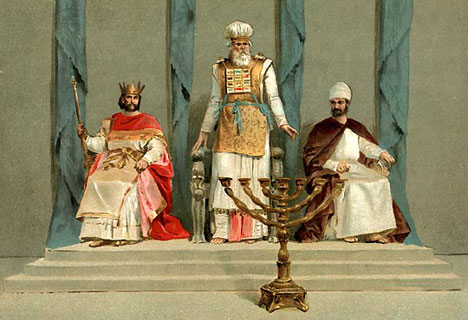
Run-of-the-mill triperspectivalism not only misses the progression inherent in the three roles of prophet, priest and king, it gets the order wrong. Well, kind of…
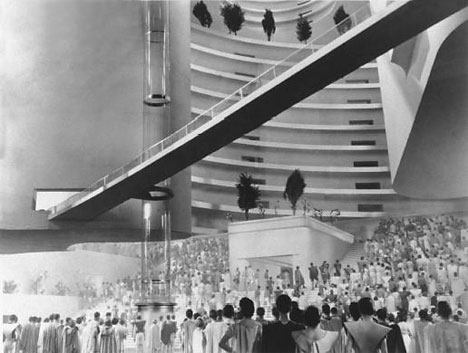
Introduction
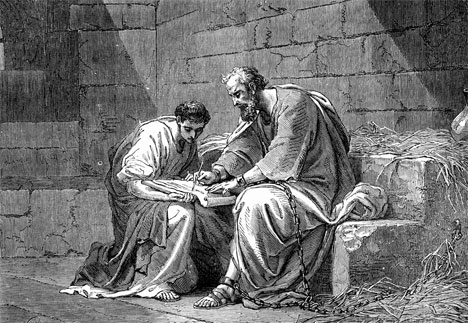
The book of Hebrews follows the Covenant pattern, most obvious in Deuteronomy. The final point is Succession arrangements, the future. The author outlines the most important things that those in the household of faith must remember. He is dealing with the major landmines hidden in the path of Jewish believers in the first century church.
“But when you do a charitable deed, do not let your left hand know what your right hand is doing…” Matthew 6:3
When it comes to doctrine, Mark Driscoll defines all issues as either closed-handed or open-handed. The non-negotiable fundamentals are held with a closed hand. In the open hand are issues that can be debated without shafting a church’s faithfulness to the apostles’ doctrine.
 Bible Matrix blog