Apr
10
2009
In the two trees, Life and Wisdom, bread and wine, priest and king, flesh and blood, Land and Sea, earth and heaven, the Lord presented Adam with a divided world.
The only way it could be united was through obedience. If he obeyed the Father’s will, he would eat the bread, then drink the wine, and the divided world would be united first in his own body. By obedience, Adam became a Tree of Life (Table), then a Tree of Wisdom (Lampstand) uniting earth with heaven. Dominion begins with bread and wine.
Comments Off | tags: Communion, Lampstand, Wisdom | posted in Biblical Theology
Apr
10
2009
Peter Leithart has posted about the structure of Galatians 6:
Structure Of Galatians 6
Galatians 6 is roughly organised as a chiasm:
A. Bear one another’s burdens
…..B. Boasting in oneself and not another
……….C. Sowing and reaping; flesh
……………D. Do good
……….C’. Judaizers want good show in flesh/boast in flesh
…..B’. Boasting only in Christ Jesus: crucified to world
A’. I bear stigmata
The links are mainly verbal. The verb “bear” appears in verses 1, 5, and 17. ”Boasting” is a theme in 6:4 and 13-14, contrasting the boasting-in-flesh of the Judaizers with the boasting-in-the-death-of-flesh of Paul. ”Flesh” is found in verses 8 and 12-13. At the centre is an exhortation to persevere in doing good to all men, and especially to do good to the family or “household” of Abraham that Paul has been describing throughout the letter.
I could be imagining things, but I see the feasts of Leviticus 23 here as well:
A. Sabbath (the Spirit overshadows, the Word comes from God) call to worship
000B. Passover (Adam presented) self-examination/confession
000000C. Firstfruits (High Priest – Adam ascends) ascension of praise
000000000D. Pentecost (Law given) sermon
000000C’. Trumpets (armies – Eve presented) offertory
000B’. Atonement (sin expelled from nation – Eve ascends) communion
A’. Booths (rest) doxology and dismissal
Note also that when this pattern appears elsewhere in the Bible, the last point, Booths, is a glorified Solomon (Sabbath-king) sending out letters or chariots with the Word, beginning this cycle in the next generation. Here, Paul himself is the epistle carrying the graven words of God on tablets of flesh.
Comments Off | tags: Hermeneutics, Literary Structure, Paul, Peter Leithart, Typology | posted in Biblical Theology
Apr
10
2009
Was Moses a murderer?
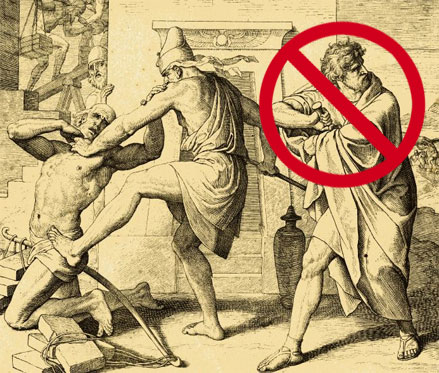 Moses’ execution of the Egyptian was “good death.” It was judicial. Moses had the authority to pass judgment and execute the sentence, and later became the judge of his people. “And Moses was instructed in all the wisdom of the Egyptians, and he was mighty in his words and deeds” (Acts 7:22). However, he rightly feared Pharaoh’s unjust reaction.
The Hebrews’ rejection of Moses as their judge condemned them to 40 years’ more slavery. They were at fault, not Moses.
Okay, so Moses did look this way and that, and buried the body in the sand. Yes, but the point was he feared Pharaoh’s reaction.
The Hebrews’ rejection of him as their judge condemned them to 40 years’ more slavery. Just as in the wilderness when Moses was their judge, it was the next generation that would be delivered. Moses was not condemned:
“The Bible never criticises Moses for this, but presents his action as righteous and faithful (Acts 7:24ff.; Heb. 11:24ff.). The execution of criminals is never said to defile the land, or to require atonement; such execution is itself the atonement required.” James B. Jordan, The Law of the Covenant, p. 254-5.
Moses’ judgment pictured the greater one to come upon the Egyptian taskmasters at his return—prefiguring Christ’s ministry in the first century.
Comments Off | tags: James Jordan, Justice, Moses, Typology, Wisdom | posted in Biblical Theology, Ethics
Apr
10
2009
Solomon’s New Broom
Solomon continued David’s role as redeemer/blood avenger. Like Ham’s attack on Noah, and Absalom’s sin on the roof, Adonijah’s request for one of David’s concubines was recognised as a grasp for the throne. Joab was judged for his shedding of innocent blood, and although he grasped the horns of the altar, refuge was lawfully denied (Numbers 35:15-19).1
The last priest of the house of Eli, Abiathar, was exiled before the Ark was given a permanent house. Like Gideon’s bull, the guilty “died” on the old altar before a new one could be established.
Solomon’s judicial execution of his father’s enemies was not paranoid. It was “good death.” The Lord always builds His house out of the corpses and plunder of His enemies. As death precedes resurrection, so discipline must come before joy (Hebrews 12:11) and Solomon’s actions here demonstrated his great wisdom as a judge.
______
1 “Why grasp the horns of the altar when you’re a fugitive in the temple? How is it legitimate to touch the horns, when the altar as a whole is forbidden to all but the priests? The answer to the first is found in the premise of the second: The altar is holy, and communicates holiness to anyone who touches it (if they aren’t holy already). When a fugitive grasps the horns of the altar, he becomes sanctified and hence inviolable. If found guilty, he will be killed (like Joab) because of a sacrilege; but if he is innocent, he protects himself with a taboo of holiness.” Peter J. Leithart, Horns of the Altar, www.leithart.com
Comments Off | tags: Absalom, Adonijah, David, Ham, Justice, Noah, Peter Leithart, Solomon, Wisdom | posted in Biblical Theology, Ethics
Apr
10
2009
Violence is not wrong
Over and over again when I read essays decrying “violence” I see no definition of the term. What it seems to mean is doing things another person does not like. So, spanking your child is violent because he does not like it. It is violent because it violates his person.
From a Christian standpoint this is idiocy. From a Christian standpoint sinful violence violates God’s integrity and the integrity of the innocent. Sinners deserve and need to be violated. God is all in favour of violating sinners, and will do so to some people in hell forever. God delights to punish the wicked (Deuteronomy 28:63) and though Jesus wept over Jerusalem in AD30, He was delighting to destroy her in AD70 (Psalm 69:21-28), because she had violated His Bride.
The exercise of violence is not a failure of the community, as some have asserted, because the Trinity does not fail and the Trinity will send some people to hell. Get used to it. It is blasphemy to suggest otherwise. Punishing criminals and spanking children does not reveal a mournful failure of community but is in fact the joyous privilege of maintaining community.
Violence is not wrong. Violence can be good, depending on who’s doing it and what the situation is. The psalms, which we are commanded to sing before God in worship, are full of violence. The only question in violence is who is being violated and why.
_____________
James B. Jordan, Evil Empire?, Biblical Horizons Newsletter No. 199, September 2008. Subscribe at www.biblicalhorizons.com
Comments Off | tags: James Jordan, Justice, Psalms, Wisdom | posted in Biblical Theology, Christian Life, Ethics
Apr
10
2009
Bad Death
“Anytime a judgment is passed on a situation, it means that situation or state of affairs, will be so radically altered as to virtually bring it to an end. It will be (in varying degrees and sizes) the end of one world and the beginning of another. One must be mature to deal in death, because passing a judgment always brings a death. And it is to this situation that Paul speaks when he says, “The spiritual man judges all things, but is himself to be judged by no one.”
If we refuse to judge when the necessary time comes, then we forestall the called for death and the cost increases. It never decreases. To live in appeasement of what should be judged is to make the final price of death far higher.”
From Rich Bledsoe, On Becoming A True Judge
http://biblicalhorizons.wordpress.com/2008/01/22/on-becoming-a-true-judge/
Comments Off | tags: Justice, Parenting, Rich Bledsoe, Wisdom | posted in Biblical Theology, Ethics
Apr
10
2009
The Mortification of Sin
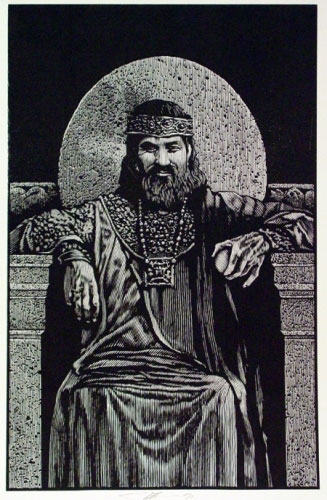
Christ’s glory followed His victory in Gethsemane’s “Eden”.
When the Lord gave Adam the Law, He handed him a “scroll”—Adam’s mission. With clean hands and a pure heart, Adam could unseal and “look into it.” When the Lord returned, full of eyes, the scroll was open for blessing or cursing depending on Adam’s obedience. It was not the Lord who judged Adam, but the Lord’s words,unsealed at his “ascension” to headship over Eve, that judged him at the last day (of the week).
“If anyone hears my words and does not keep them, I do not judge him; for I did not come to judge the world but to save the world. The one who rejects me and does not receive my words has a judge; the word that I have spoken will judge him on the last day.” (John 12:47-48)
An open scroll brings testing. Adam’s disobedience opened his two eyes to his nakedness (Genesis 3:7), and the death of Passover (substitutionary animals). It opened his works to seven eyes of judgment—a cup of curses. Jesus’ obedience under testing brought Him glorification, the seven open eyes of the covered High Priest – the slain Lamb. Either we judge, or we are judged.
As Solomon, we put our “enemies” (sins) to judicial death (good death) as we mortify them (Romans 8:13; Colossians 3:5).
See also: Three Resurrections – 3: The Mission
[Solomon illustration from Barry Moser's illustrated King James Bible. Notice the round "firmament" over his head. Solomon sat enthroned between heaven and earth.]
Comments Off | tags: Culture, Justice, Solomon, Wisdom | posted in Biblical Theology
Apr
10
2009
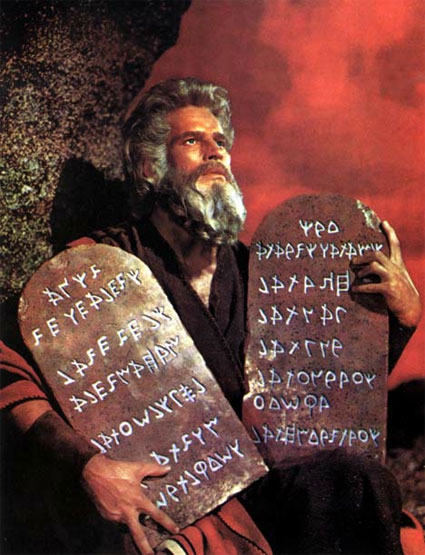
Moses listened on the mountain as God spoke. He digested the law, and repeated it to the next generation in Deuteronomy, partly in a song that he taught them.
Moses’ tabernacle was silent. It was misused and dismembered, then reconstructed in the ‘next generation’ as the Tabernacle of David, with music and Gentile singers.
Continue reading
Comments Off | tags: Culture, Moses, Priesthood, Tabernacle, Temple | posted in Biblical Theology, Ethics
Apr
10
2009
Some good observations by Brian McLaren
Matthew Parris is a self-confessed atheist, but he writes with extraordinary candor and insight about the role of faith in social transformation in a recent Times article. He explains,
Now a confirmed atheist, I’ve become convinced of the enormous contribution that Christian evangelism makes in Africa: sharply distinct from the work of secular NGOs, government projects and international aid efforts. These alone will not do. Education and training alone will not do. In Africa Christianity changes people’s hearts. It brings a spiritual transformation. The rebirth is real. The change is good.
Continue reading
Comments Off | tags: Atheism, Culture, Hermeneutics, Mission | posted in Apologetics, Biblical Theology
Apr
10
2009
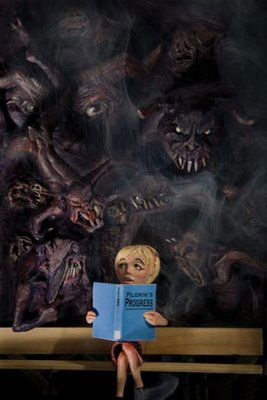 Ecclesia reformata semper reformanda est.
“Reformed theology should be reforming theology, for the Church – finite, sinful, not yet fully glorified – always stands in need of God’s reformation, by his Spirit, through his Word taught, trusted, and obeyed. And so, Ecclesia Reformanda exists to assist the Church in the ongoing task of listening to Scripture in all its depth and richness. It will seek to be truly theological, distinctively Reformed, and prayerfully reforming.”
An “ongoing theological conversation” cannot be tolerated by the academy. James Jordan writes:
“We looked last time at the problem of academic theology. Systematic theology tends to become paramount, a “Greek” discipline that specializes in comparison and contrast… what the academic guards is not the woman, not the Bride, but rather ideas. Loyalty to ideas, and sometimes loyalties to the men who came up with the ideas, is more important than loyalty to the Church and to the Spirit. Does N. T. Wright not say things exactly they way Geerhardus Vos did? Then we might fight him. He must be put down. A spirit of churchly catholicity, of humility before the infinity of the Word and the long future of the church ahead of us, is simply absent, or certainly seems to be.
Continue reading
Comments Off | tags: Amillennialism, Federal Vision, N. T. Wright, Postmillennialism, Reformation | posted in Biblical Theology, Ethics