Nov
14
2011
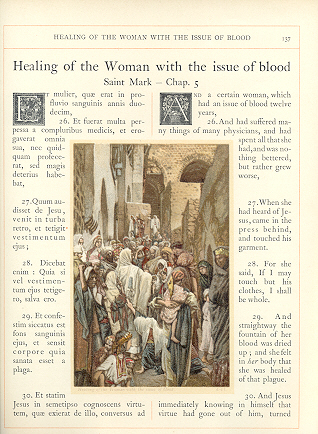
From a recent facebook post by Rick Capezza (reproduced with his permission):
I’m trying to figure out the structure of the miracles of the two daughters in Mark. I looked in a half dozen commentaries for structures, but found nothing. I have yet to try a hierarchical structure, but I took a quick shot at a chiasm using Eric [Pyle]‘s KAYAK tool. [1]
Continue reading
Comments Off | tags: Chiasm, Literary Structure, Mark, Rick Capezza | posted in Biblical Theology, Quotes
Nov
11
2011

“In Genesis 1, God creates the world in six days, through certain steps. Then He creates human beings out of ‘world,’ and human beings made out of world are going to live like ‘world’ does. They are going to go from darkness to light, formlessness to form; they are going to marry and take dominion. They are going to become like lights ruling over the earth. They’re going to live in 24 hour cycles. They will undergo times when God pulls them apart and puts them back together in new ways–all because they are made out of world. And these are all steps of glorification.” — James B. Jordan (The Bible You Never Read)
Some Christians assert that Adam was not the first man, only the first man in Covenant with God. [1] This means that the judgments upon such a Covenant could only be social, not “Creational.” They could only fall upon those under Covenant, not the “pre-Adamic” people from which this Covenant separated Adam. This assertion must be made to support the view that the Great Flood was only a local event, destroying only the “Adamites,” not all people on the planet. Does this assertion have any support in Scripture? Apparently yes, but factually no.
Continue reading
2 comments | tags: Abraham, Covenant Creationism, Covenant Theology, Flood, Gnosticism, James Jordan, Noah | posted in Against Hyperpreterism, Biblical Theology, Creation, Quotes, The Last Days
Nov
9
2011

Micah Martin (brother of one of the authors of Beyond Creation Science), has kindly read Bible Matrix II and written about my adherence to the Genesis account of Creation as both Covenant and history (i.e. the account is not simply an account of the physical world being given a Covenantal purpose as a Temple, but also its actual Creation). There is much that we agree on, but the disagreement on this subject couldn’t be sharper, or of more importance.
Continue reading
2 comments | tags: Abraham, AD70, Against Hyperpreterism, Babylon, Covenant Creationism, Dispensationalism, Flood, Noah | posted in Against Hyperpreterism, Bible Matrix, Biblical Theology, Creation, Quotes, The Last Days
Nov
7
2011
or A Dream Within the Dream

One of the hyperpreterist/full preterist [1] gents made a keen observation after reading my article Covenant is the Key: Moses vs. Hyperpreterism. My argument was that since the Revelation follows the Covenant structure laid down in the Torah (and echoed throughout the Bible), we should expect the final section of the book to concern the future, otherwise known as Continuity or Succession.
The counterargument was that this section did concern the future when John wrote the book, but that we are living beyond that future now, and there is no final event or consummation. The only consummation was AD70.
This is a really good argument, but it does two things. Firstly, it makes nonsense of their own argument that Revelation 20 is another viewpoint of the events surrounding the end of Judaism in AD70. Also, it fails to take into account the structure and contents of Revelation 20 itself.
Continue reading
3 comments | tags: Against Hyperpreterism, Covenant Theology, Feasts, Literary Structure, Millennium, Postmillennialism, Revelation, Revelation 20 | posted in Against Hyperpreterism, Bible Matrix, Biblical Theology, Ethics, The Last Days, The Restoration Era
Nov
4
2011

Vance and his girlfriend wondered whether attending Bully’s Bible study was as safe as they’d been led to believe.
When I first read some James Jordan, I found it a little strange. He forced me to think in new ways. Now I wonder why nobody else seems to think this way. I make a glib reference to “knife and fire” and get strange looks. Has no one before Jordan realised the process of barbecue as an illustration of reality?
Continue reading
Comments Off | tags: Typology | posted in Bible Matrix, Biblical Theology
Oct
31
2011
or The Cultic Core of Revelation
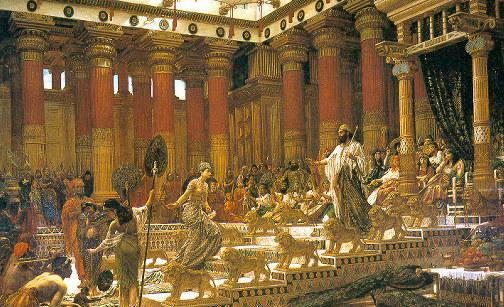
“Revelation is not just a vision of the King of Kings,
but of the King of Kings in His court.”
Preterists have a go at dispensationalists for interpreting the Bible through the lens of current headlines. We recognize that the Bible must be interpreted in its historical context, for its “first audience.” But there’s a brand of “newspaper exegesis” that plagues preterism as well.
Continue reading
Comments Off | tags: Dispensationalism, Ezekiel, James Jordan, Josephus, Kenneth Gentry, Moses, Preterism, Revelation, Tabernacle | posted in Biblical Theology, Quotes, The Last Days
Oct
30
2011

Here’s the amazon description of Christian Smith’s recent book, The Bible Made Impossible.
Biblicism, an approach to the Bible common among some American evangelicals, emphasizes together the Bible’s exclusive authority, infallibility, clarity, self-sufficiency, internal consistency, self-evident meaning, and universal applicability. Acclaimed sociologist Christian Smith argues that this approach is misguided and unable to live up to its own claims. If evangelical biblicism worked as its proponents say it should, there would not be the vast variety of interpretive differences that biblicists themselves reach when they actually read and interpret the Bible.
Smith describes the assumptions, beliefs, and practices of evangelical biblicism and sets it in historical, sociological, and philosophical context. He explains why it is an impossible approach to the Bible as an authority and provides constructive alternative approaches to help evangelicals be more honest and faithful in reading the Bible. Far from challenging the inspiration and authority of Scripture, Smith critiques a particular rendering of it, encouraging evangelicals to seek a more responsible, coherent, and defensible approach to biblical authority.
Continue reading
2 comments | tags: Compromise, Hermeneutics, James Jordan, Peter Leithart | posted in Apologetics, Biblical Theology, Quotes
Oct
26
2011
“What purpose then does the law serve? It was added because of transgressions, till the Seed should come to whom the promise was made; and it was appointed through angels by the hand of a mediator.” Galatians 3:19
Was the Law just a stop-gap measure to hold things together until Jesus was born? Was the Mosaic Covenant just a “parenthesis” between the “graceful” Covenant with Abram and the “graceful” New Covenant?
Continue reading
3 comments | tags: Abraham, Covenant Theology, Resurrection | posted in Against Hyperpreterism, Bible Matrix, Biblical Theology, The Last Days
Oct
24
2011
“He comes to make His blessings flow, far as the curse is found…”
And [Moses] said, (T) (Creation)
…..“If you diligently heed the voice of the LORD your God (H) (Division)
……….and do what is right in His sight, (Ascension)
……………give ear to His commandments (E) (Testing)
……….and keep all His statutes, (Maturity)
…..I will put none of the diseases on you (O) (Conquest – Blessing)
…..which I have brought on the Egyptians. (Conquest – Cursing)
For I [am] the LORD who heals you.” (S) (Glorification)
— Exodus 15:26
“QuantumGreg” posted a comment on Sam Frost’s review of my book. He objects to the idea that, under the New Covenant, obedience to the Law will bring a decrease in disease. It’s a very reasonable objection.
“…does this not sound like Law to you? In fact, it is the Law (Deuteronomy 28). It sounds so much like the Old Covenant that it has no resemblance to the New Covenant, don’t you think?
Continue reading
10 comments | tags: Covenant curse, Covenant Theology, Exodus, James Jordan, Postmillennialism | posted in Biblical Theology, Christian Life, Quotes