Mar
4
2013

or the Covenanto-Architecturo-Historico-Grammatico-Muso Method
“A seal is meant to be broken.”
During the first of his recent lectures in London, James Jordan tore a page out of his Bible. It was the page announcing the New Testament as a separate book with its own pagination. It is one thing to interpret the New Testament in the light of contemporary literature and history, but their importance pales in comparison to the texts being recognized as a continuation of the Scriptures.
Continue reading
3 comments | tags: Ephesians, Fractals, Hermeneutics, Literary Structure, Revelation, Systematic typology | posted in Bible Matrix, Biblical Theology, The Last Days, Totus Christus
Feb
26
2013

“Getting Genesis 1 wrong, capitulating to the worldview and resulting pseudo-science and pseudo-history of darkened minds, will eventually lead you to get Genesis 2 wrong as well.”
[Addendum added below for those who are not familiar with my biblical-theological framework. This post is not really about the complementarian debate. It is about our modern ignorance of biblical structure and process.]
Sydney Anglicans used to have an online forum for discussion of theology. It was a great way to spend a few hours I didn’t have. From those times, two things stick in my mind: the creation/evolution thread that would not die, and one commenter who denied that compromising on a particular controversial issue would lead the compromisers down the proverbial “slippery slope.”
Since I called people names this week, very ungraciously, perhaps it might help if I explained myself a little. I see the interpretation of early Genesis as crucial for our interpretation of the rest of the Bible, but also for our understanding of the world we live in. If a Christian gives in to whatever the prevailing culture demands, there will be ramifications for the rest of his theology. This is because the Bible is fractal in its nature. It is a closely knit network, a carefully constructed grid, just like the created world. To cave on one issue will have outcomes in other areas of theology, and the example I have in mind right now is John Dickson, a brave, educated and wise Christian apologist.
Continue reading
4 comments | tags: Compromise, Genesis, Gnosticism, Hermeneutics, John Dickson | posted in Biblical Theology, Creation
Feb
24
2013
 Most of what you have been taught about the Bible — especially by modern experts — is wrong. The dumb things John Dickson said about Genesis 1 on ABCTV this week are a prime example. Academics are capable of astounding levels of cognitive dissonance. Yes, the texts are ancient, but the ancients weren’t idiots, especially when it came to chronology. Treating the text as a myth throws the entire Bible’s chronology out the window. It’s not the ancients who are the idiots in this case.
Here’s four talks given this week in London by James Jordan. Let him clear away the clutter for you, especially if you are in ministry and have been taught some of the incredibly dumb things invented by those well-meaning but misguided modernist dunderheads in the academies. Learn to read the Bible with new eyes…
Continue reading
8 comments | tags: Hermeneutics, James Jordan, Steve Jeffery | posted in Biblical Theology, Creation
Feb
12
2013
 “With this theory of the joke in mind, the final chapter of Nehemiah is holy and hysterical.”
In his book, Deep Exegesis, Peter Leithart speaks of the biblical text as many things, but none is more confronting than his viewing the text as a “joke.” His explanation, however, makes perfect sense. What makes a joke funny? It is either prior knowledge to which not everyone is privy, or a confounding of expectations (which are also based on prior knowledge to some degree). The Bible is full of such jokes, and realizing one is in on the joke is immensely satisfying.
Continue reading
Comments Off | tags: Compromise, Ezra, Hermeneutics, Joke, Literary Structure, Nehemiah, Peter Leithart | posted in Bible Matrix, Biblical Theology, The Restoration Era
Feb
9
2013
Here’s a visual representation of the literary structure of the Bible. Of course, not every book identical in structure, but the use of literary “coordinates” is made plain. The subject matter of each line is thus a multi-faceted symbol, a relationship between the subject of the line, the subject of the stanza which contains it, the subject of the passage which contains the stanzas, and the books which contains the passages.
Continue reading
Comments Off | tags: Fractals, Hermeneutics, Literary Structure | posted in Bible Matrix
Dec
4
2012

Read a very helpful introduction to the reasons for a preterist interpretation of the Revelation by Msgr. Charles Pope. HT: Micah Martin.
Currently in the Liturgies of daily Mass we have been reading the Book of Revelation. It is commonly read at the end of the liturgical year, for it bespeaks the end of, and passing qualities of all things of this world.
Continue reading
1 comment | tags: Hermeneutics, Preterism, Revelation | posted in Biblical Theology, The Last Days
Nov
18
2012
or Mixed Blessings
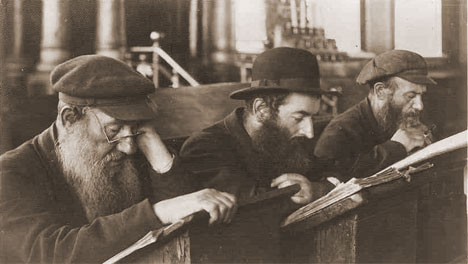
Doug Wilson sees evidence for the classification of “Covenant children” in 1 Corinthians 7:14.
“For the unbelieving husband is sanctified by the wife, and the unbelieving wife is sanctified by the husband: else were your children unclean; but now are they holy” (1 Cor. 7:14).
The Corinthians had wanted to know whether unbelief on the part of a spouse was in itself grounds for divorce. Paul has replied no, provided that the unbelieving partner is pleased to be together with the Christian in a marriage as biblically defined. If the only thing that is wrong is the spouse’s failure to believe in Christ, then the couple should still remain together.
Continue reading
Comments Off | tags: Baptism, Corinthians, Doug Wilson, Federal Vision, Hermeneutics, Mark Horne, Matthew Colvin | posted in Biblical Theology, Quotes
Oct
25
2012
 From Steve Jeffery’s blog:
Augustine has some frankly astonishing things to say in his On Christian Doctrine about how to understand the Bible.
Here he is explaining how we should go about the task of studying Scripture:
Continue reading
Comments Off | tags: Augustine, Hermeneutics, Steve Jeffery | posted in Biblical Theology, Quotes
Aug
19
2012

Holistic Impression
On the shape of biblical language, John Breck writes:
How are we to read the Bible?
The question invites a reply that expresses an attitude: we should read it with respect, with devotion, with curiosity, perhaps even with awe. Certainly these are appropriate responses. Our concern in this present study, however, is not with attitudes but with the approach we use.
Continue reading
Comments Off | tags: Chiasm, Hermeneutics, John Breck, Literary Structure | posted in Bible Matrix, Biblical Theology, Quotes
Apr
30
2012
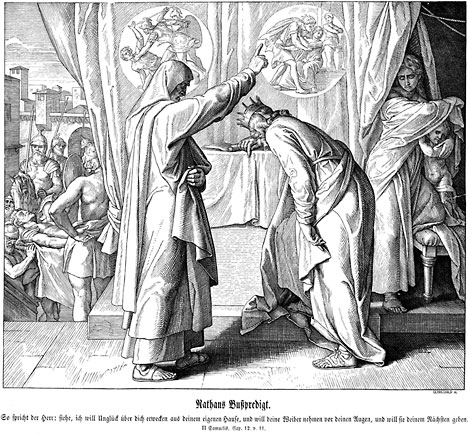 “The apocalyptists said, The world is coming to an end: Give up! The Biblical prophets said, The world is coming to a beginning: Get to work!”
Is it only me that has to restrain himself from violence when someone refers to the Revelation as “Apocalyptic”? I guess using a long word derived from Greek is a handy way of disguising the fact that you have little idea of what’s actually going on in the book.
Continue reading
2 comments | tags: Apocalyptic, David Chilton, Hermeneutics, Postmillennialism, Revelation | posted in Biblical Theology, Quotes