Jul
25
2011

Doug Wilson writes:
“As far as the Jews were concerned, the Bible teaches that because they were born into an Israelite family, circumcised in the covenant on the eighth day, they were attached to the tree. This attachment was an objective historical fact. But the sin and hypocrisy of many of them was also an objective fact, and the Lord of the Orchard consequently removed their branches, and grafted in other branches. Now the interesting thing here is that Paul turns and warns the Gentiles who had been grafted in against the very same sin committed by their fruitful predecessors” (To a Thousand Generations, p. 89).
Pastor Wilson writes that Israel is still the tree, but that the ascended Christ is Israel. I dispute the assumption that “natural branches” are still possible. The tree is now supernatural.
Continue reading
2 comments | tags: Baptism, Circumcision, Doug Wilson, High Priest, Peter Leithart | posted in Biblical Theology
Jul
22
2011
Comments Off | posted in Biblical Theology
Jul
21
2011
or The Systemic Power of Leadership

Everything you know about leadership is wrong.
The five-fold Covenant pattern is found throughout the Bible. Those who claim that Deuteronomy’s shape was borrowed from other Ancient Near East cultures need to explain how it could then be found not only in the Ten Commandments, but in the shape of every story going back to Genesis 1. Their theorizing is the result of their deluded, naturalistic worldview, and Christian scholars suck it right up.
Continue reading
Comments Off | tags: Covenant Theology, Edwin Friedman, Leadership | posted in Bible Matrix, Biblical Theology, Christian Life, Quotes
Jul
19
2011
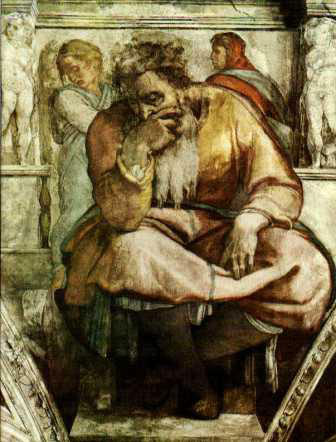
Biblical chronology isn’t always easy, but it provides the answers to many questions we have concerning Bible prophecy. James Jordan shows how crucial the book of Esther is for our understanding of Bible history:
The book of Esther is one of the most neglected of the books of the Bible. To be sure, sermons are preached on it, and commentaries have occasionally been written on it, but almost without exception Esther has been interpreted in isolation from the rest of Biblical history, chronology, and theology. Even many conservative commentators tend to view the events in Esther as minor occurrences that have been inflated in the narrative in order to make the point of the book. This is because they make the wrong assumptions about the dates of these events, and because they do not understand the importance of the events in Esther to the progress of revelation and redemption.
Continue reading
Comments Off | tags: Bible Chronology, Daniel, Esther, James Jordan, Jeremiah, Nebuchadnezzar, Zechariah | posted in Biblical Theology, Quotes, The Restoration Era
Jul
16
2011

God loves fractals. He (Father) speaks (Spirit) the Word (Son) and everything He creates is made in the image of the Triune, three distinct, yet indivisible, named parts working as one.
Continue reading
2 comments | tags: Edwin Friedman, Fractals, Most Holy Place, Noah, Tabernacle | posted in Biblical Theology, Creation, Quotes
Jul
16
2011

More on baptism. Jane Dunsworth has posted some well-thought-out strikes and I figure it’s worth posting my parries here.
Continue reading
Comments Off | tags: Baptism, Covenant Theology, Doug Wilson, Federal Vision | posted in Biblical Theology, Christian Life
Jul
15
2011
Comments Off | posted in Biblical Theology
Jul
14
2011
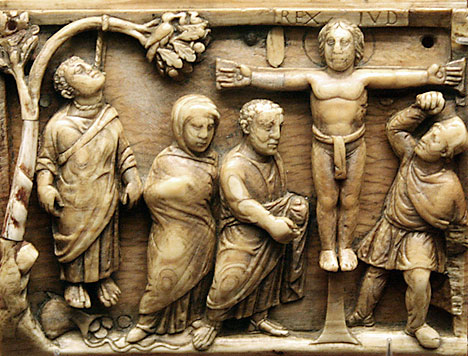
“…falling headlong, he burst open in the middle…”
Todd Robinson commented:
“I’ve enjoyed your particular brand of orthodox preterism. Working through Acts recently, I began to wonder what Michael Bull’s take on Acts 1:11 and 3:19-21 would be… Thanks for any insight.”
Continue reading
2 comments | tags: Abraham, Acts, AD70, Ascension, Atonement, Herod, Judas, Pentecost, Peter, Peter Leithart, Preterism, Urim and Thummim | posted in Against Hyperpreterism, Bible Matrix, Biblical Theology, The Last Days, The Restoration Era
Jul
13
2011

Does Christ’s exhortation to His disciples in John 15 to remain in Him allow for the possibility of unregenerate New Covenant members?
Doug Wilson writes:
“For many Christians, [John 15:1-6] is a ‘problem passage.’ We want Christ to use a different figure. We want Him to be the Marble Box, with us as the individual marbles. When we are saved, we are put into the Marble Box, and we had better watch it, or we might find ourselves taken out of the Marble Box, losing our salvation. Or, if we know that salvation is not a possession of ours, which we could lose, we want the Marble Box to have a great big lock on it, and to be full of elect, non-loseable marbles” (To a Thousand Generations, p. 84).
We agree that the truly elect cannot be lost. We also agree that not all of the Old Covenant people were truly elect. But can we import this “not all Israel are Israel” into the New Covenant order?
Continue reading
3 comments | tags: Baptism, Doug Wilson, Feasts, John Bunyan, Paul, Romans, Tabernacles | posted in Biblical Theology, The Last Days
Jul
13
2011
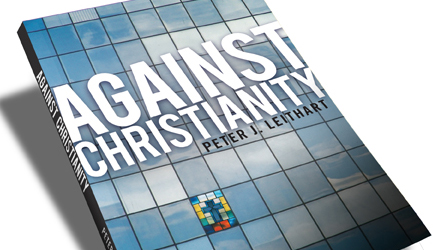
In Against Christianity (pp. 56-58), Peter Leithart writes:
One of the contributions of twentieth-century Catholic nouvelle theologie, and of Henri de Lubac and Hean Danielou in particular, was a rehabilitation of patristic and medieval typological exegesis of the Bible. Typological interpretation assumes that events and institutions of the Old Testament present, to use Augustine’s terminology, “latent” pictures of Christ. Typological interpretation, in short, sees the whole Bible as gospel, with the gospel narrowly conceived (the story of Jesus) as the culmination of a larger story.
Continue reading
9 comments | tags: Ecclesiology, Peter Leithart, Secular humanism, Typology | posted in Biblical Theology, Quotes