Apr
10
2009
Background
In 587 BC, the Jews saw the city of Jerusalem fall to the Babylonians and the Temple, built by Solomon nearly 400 years before, destroyed. The experience of this devastating judgment was made all the more bitter because the Edomites, their brothers and next-door neighbours, not only did not come to the aid of the Jews but, far worse, rejoiced in their humiliation, mocked their pain, looted their goods, and handed over their survivors to the Babylonians. The book of Obadiah is a prophecy, probably given shortly after the fall of Jerusalem, which tells of the judgment of Edom and the restoration of God’s people…
Interpretation
The book of Obadiah does not mention the sins of Judah or the destruction of the Temple – it is emphatically not a “sanctuary” book about the relationship with the Father. Similarly, no mention is made of the Babylonians or of what to do in exile – Obadiah is not a “world” book about the relationship with the outsider. Rather, the book of Obadiah is all about the Edomites – about their pride and self-reliance and malice. This is a “land” book about relationship with the “brother”. But who is this “brother” (see vv.10, 12)? The whole book is spoken to or about Edom. But who is Edom?
Continue reading
Comments Off | tags: Church History, David Field, Esau, Obadiah | posted in Biblical Theology
Apr
10
2009
or An answer for those who think modern day Israel has any special place in Bible prophecy.
After the scattering at Babel, the Lord tore the world in two by calling Abram. With the end of this large Division, signified by circumcision, there was no more distinction between the priest nation and the Gentiles. James Jordan writes:
Continue reading
Comments Off | tags: Abraham, Babel, Bible history, Dispensationalism, James Jordan | posted in Biblical Theology, The Last Days, The Restoration Era, Totus Christus
Apr
10
2009
The Bible was designed to be heard, repeatedly. That’s why scholarship is dangerous. That’s why theological seminaries are dangerous. That’s why an academic approach to the Bible is dangerous. Because it’s all silent, and the Bible becomes a thing…
“One of the problems with modern Bible readers is the deep influence of Greek thinking. Until we are able to think like Hebrews, we will not be able to understand the Bible on the level that God intended. Insightful Bible teacher James Jordan sheds light on the comprehensive story of the Scriptures in this six-part series. Jordan will challenge your assumptions, make you think, and will radically change the way you read God’s word. Your understanding of the Bible will never be the same.”
James B. Jordan, Reading the Bible (again) for the First Time (Audio series).
Comments Off | tags: Hermeneutics, James Jordan | posted in Biblical Theology, Quotes
Apr
10
2009
The New Testament knows of no Christians who are not accountable members of local churches in the sense that we have just seen. “Lone-Ranger Christians” are a contradiction because becoming a Christian means being united to Christ, and union with Christ expresses itself in union with a local body of believers. It seems to us that in the New Testament, to be excluded from the local church was to be excluded from Christ. This is why the issue of membership is so important.
Are you an accountable member of a local church? Not just: Is your name somewhere? But, are you committed to discipline and being disciplined according to biblical standards? Have you publicly declared your willingness to be shepherded and to be led by the leaders of a local church? Do you see yourself and your gifts as part of an organic ministering body? Do you show by your firm attachment to Christ’s body that you are attached to Christ?
Church membership is a blood-bought gift of God’s grace. More than most of us realize, it is a life-sustaining, faith-strengthening, joy-preserving means of God’s mercy to us. I urge you not to cut yourself off from this blessing.
John Piper, How Important Is Church Membership?
Sermon July 13, 2008
Read or listen at www.desiringgod.org
Comments Off | tags: Baptism, Ecclesiology, John Piper | posted in Christian Life
Apr
10
2009
No Jordan means no Canaan. The Lord’s supper (feast) table is for the faithful who obediently follow our Joshua across the river.
Typologically, we dine with Moses and the elders of Israel above the crystal sea (Exodus 24:10), the Laver that washes us before we, as a church, ascend to the Holy Place.
Continue reading
Comments Off | tags: Baptism, Joshua, Typology | posted in Biblical Theology
Apr
10
2009
“For as often as you eat this bread and drink the cup, you proclaim the Lord’s death until He comes.”
If, as preterists maintain, Jesus came in AD70, why do you celebrate the Lord’s Supper?
To answer as an orthodox preterist (I’m sorry, but ‘partial’ doesn’t work for me), I would mention that the communion is a covenant memorial that reminds God of the covenant. The covenant is the key.
Continue reading
4 comments | tags: AD70, Communion, James Jordan, Peter Leithart, Resurrection, Revelation | posted in Against Hyperpreterism, Biblical Theology, The Last Days
Apr
10
2009
[This is based on a post by Peter Leithart, Jew – Gentile – Jew ]
In the NT, I believe Hebrews functions as a “Book of Deuteronomy.” After an “exodus” from Jerusalem (as Egypt) and time in the wilderness, the Jewish Christians scattered throughout the empire were facing the destruction of their city (as Jericho). From Hebrews to Jude, the focus of these final New Testament writings shifts from the Gentiles back to the Jews.
Gospels – to the Jew
Acts – first to the Jew, then to the Gentiles: exodus from Jerusalem
Romans to Philemon – to the Gentiles
Hebrews to Jude – to the Jews again
Revelation – destruction of Jerusalem
So there is a Jew (Leviticus), Gentile (wilderness – Numbers), Jew (Deuteronomy) pattern repeated.
The Law is being repeated by Christ as Moses “speaking from heaven” before the crossing of the foetal church into the heavenly country as a new mediatorial government. The writer of Hebrews was warning them not to die in the wilderness as their ancestors did.
Josephus tells us that the Romans beseiged the city when Jews from all over the empire were in Jerusalem for Passover. Their table became a snare.
Comments Off | tags: Hebrews, Josephus, Peter Leithart | posted in Biblical Theology, The Last Days
Apr
10
2009
Why did Nehemiah pull out the children’s hair? Was this just going too far? Recognising Bible patterns is a big help in interpretation.
Continue reading
Comments Off | tags: Compromise, Nazirite, Nehemiah, Zechariah | posted in The Restoration Era
Apr
10
2009
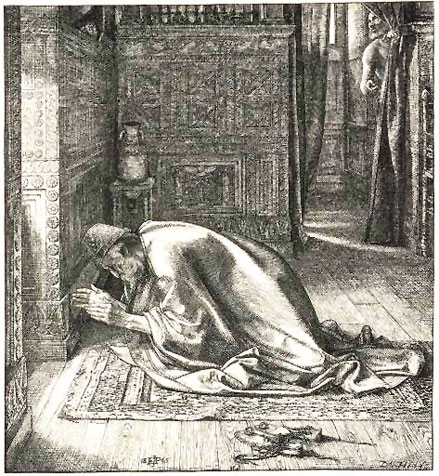
A new Adam (High Priest) ruled the wild animals of the Gentile kingdoms, but without a king this rule would be truly priestly. Daniel prefigured the nature of this new kingdom: obedience would bring persecution, and suffering as witnesses before the Gentiles would be the means of Gentile conversion. A new Israel would be the initial fulfilment of the despised, suffering priestly servant of Isaiah 53. When the Lord scattered His people for their sin, He also spread them to the four winds as witnesses to the empire.
Continue reading
Comments Off | tags: Daniel, Esther, Greek philosophy, Isaiah, Mordecai, oikoumene, Peter Leithart, Power of the Gospel, Typology, Witness | posted in Biblical Theology, The Last Days, The Restoration Era
Apr
10
2009
A recurring pattern throughout the Bible is this one: Called, Divided, Filled and Reunited.
We see it in the exodus. The Hebrews are divided from Egypt through a divided sacrifice and a divided sea (blood and water). In the wilderness, Israel is betrothed to God by Covenant, and fed with miraculous bread. An enormous haul of grapes brings a promise of wine, but they aren’t ready for it.* After a generation, Israel is no longer just a people but an army. She has been ‘filled.’ Through another crossing of water and blood (Jordan and Jericho), she is finally united to her Husband in the promised land.
God always divides, fills and reunites. Creation consisted of three days of dividing and three days of filling the 3 new ‘chambers.’ God divided Adam to construct Eve.
In Communion, the bread and wine are given separately. Christ’s body is dividedfrom His blood. We are filled, and His body and blood are reunited in us. As we partake, we, Greater Eve, fulfill His resurrection as a holy army (Ez. 37; John 12:24).
*We see this pattern in the garden of Eden, with a bread tree (priest) and wine tree (king). Adam wasn’t ready for the wine of kingdom. It would be another generation, Noah’s, who would drink wine before God in a new land.
Comments Off | tags: Communion, Covenant Theology, Noah, Typology | posted in Biblical Theology