Mar
15
2010
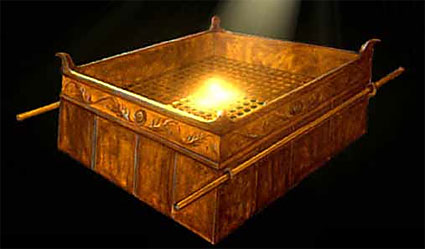
Okay, so The Earth is Flat after all. The Atlar’s being a symbol of the mediatorial Land, (a priesthood between the heavenly sky and Gentile sea) is the key to a fair amount of weird stuff in the Bible. It also means that a lot of what goes on in the Torah is the key to understanding some later enigmatic events.
The Bronze Altar had a grate inside it to support the sacrifice. The ashes would fall through the holes in the grate and the smoke would rise as a pleasing aroma to God.
In Numbers 16, concerning the rebellion of Korah and his sons, after the “censer” showdown between them and Aaron, the ground opened up and swallowed their tents, all their belongings and their families. However, fire consumed the wannabe priests who were offering the “false” incense. Even the rebellion was divided according to the priestly divisions within Israel. Ashes and smoke. [1]
Continue reading
Comments Off | tags: Aaron, Crucifixion, Korah, Liturgy, Revelation, Tabernacle, Zechariah | posted in Biblical Theology, The Last Days
Mar
13
2010
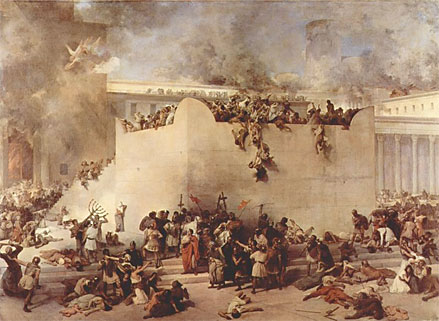
Understanding the “Trinity” of the Bible’s Garden, Land, World architecture is one of the most helpful keys to making sense of the prophets, Matthew 24 and the Revelation. [1] James Jordan writes:
“The Bible repeatedly speaks of the ‘ends’ of the earth. Sometimes the word in Hebrew is ephes, which means ‘end, extreme limits, nothingness.’ Other times it is qatsah or qetsev, which means, again, ‘end, extremity.’ Deuteronomy 13:7, for instance, uses the expression ‘from one end of the earth to the other end.’ Continue reading
Comments Off | tags: James Jordan, Tabernacle | posted in Biblical Theology, The Last Days
Mar
11
2010
or Wax Moon Faces and Books with Pores

“It often seems to me that the night is much more
alive and richly colored than the day.”
—Vincent Van Gogh in a letter to his brother Theo in 1888
Last week I had the privilege of viewing seven Van Goghs, all in one room, including Starry Night Over the Rhone, the depth and texture of which has to be seen to be believed.
The impressionists went out of their way not to paint what they saw. They stretched and strained the norms to communicate how it made them feel. They were expounding—explaining—reality. As Jordan writes, made in the image of God, man is the only symbol which is also a symbol-maker. [1]
This post has been slain and resurrected for inclusion in my 2015 book of essays, Inquietude.
Continue reading
2 comments | tags: Jeff Meyers, Modernism, Music, Postmillennialism, Solomon, Van Gogh | posted in Biblical Theology
Mar
9
2010

or Understanding Apostolic Wine Science
Scholars talk about identifying the “apostolic hermeneutic,” which sounds intimidating. The reason for this phrase is that according to the commonsense rules of interpretation, the apostles are merrily delinquent. They quote many Old Testament texts, rip them out of their historical contexts and claim they are fulfilled in Christ.
Our problem is that the apostles are neither hacks nor mystics. They are authoritative. Some rightly explain that the apostles are just seeing Christ prefigured in the Old Testament Scriptures, which they are, but this explanation is too vague. God’s Word is meticulous.
Continue reading
Comments Off | tags: C. S. Lewis, Hermeneutics, Literary Structure | posted in Biblical Theology
Mar
8
2010

“God’s Cloud over the people forms a Great Booth, within which they live. That Cloud over them is like the glorious canopy of a leafy tree, and thus the reproduction of such an arboreal canopy is a symbol of God’s Cloud.”
An important thread of God’s methodology is His process of bringing us from slavery to Sabbath, from childhood to maturity. It begins with Creation and ends with Glorification.
The Lord speaks the Word from His glory cloud—like the Light created on Day 1—and a stagnant history begins to move forward once again. At the end of the process the Lord returns in His cloud, but it is now made of something even better. The Lord’s robe is no longer a covering of Angels but a covering of redeemed, glorified Men.
In the Tabernacle, the housebuilding process begins with the Ark as “Light” and ends with God’s Cloud—the Shekinah—resting upon it. In the Feasts, it begins with the regular Sabbath as the Creation week and ends with the Feast of Tabernacles, the greater rest. Continue reading
Comments Off | tags: Feasts, James Jordan, Tabernacles | posted in Biblical Theology
Mar
3
2010
Band of Brothers – 1
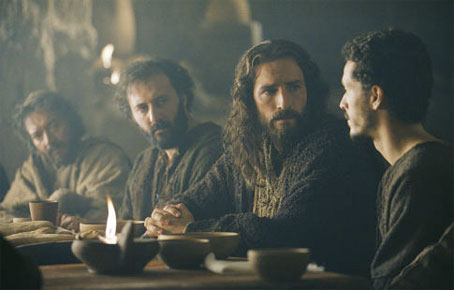
It’s a temptation to water down the Bible to make it palatable for “normal” people (let alone watering it down for ourselves!). Problem is, before we know it, what we are teaching bears little resemblance to the actual Bible. The Bible has odd corners where we think it should be smooth, and it says nothing about many things we moderns deem crucial. So let the hungry eat cake.
Many youth leaders, and even pastors, present the Almighty as being desperate for our company. Although He is not needy, what He desires is more than relationship. He wants “friends,” but His definition of this word is not ours. Even if we don’t go down the track of using the actual phrase “heavenly buddy” in our teaching, we are still further off the biblical mark concerning friendship with God than we might have thought possible.
Continue reading
Comments Off | tags: Abraham, Compromise, David, Joseph, Masculinity, Saul | posted in Biblical Theology, Christian Life
Mar
2
2010
or Meat to Eat – 2
[From last time] …Under this new Levitical Law, a new “Garden” would be constructed, and a great many animals would be slaughtered and offered within its insatiable boundary. It was a King’s Table. Yahweh was already Omega, already Solomon. But Israel, not yet humble, desired Omega food, the food of “ascension.” Not satisfied with the bread of “priestly” obedience, they lobbied for meat to eat.
“So it was that quails came up at evening and covered the camp, and in the morning the dew lay all around the camp.” —Exodus 16:13
We mentioned that bread is Alpha food. Wine, and sometimes meat, are Omega foods. Firstfruits and Pentecost are about grain. Tabernacles is about the grape and olive harvests. This final feast is also the one where the Lord says if you want to carve up an ox or feel like strong drink, knock yourself out (ie. spare no expense).
Continue reading
Comments Off | tags: Exodus, Herod, Moses, Numbers | posted in Biblical Theology, The Last Days
Feb
24
2010
or Meat to Eat – 1
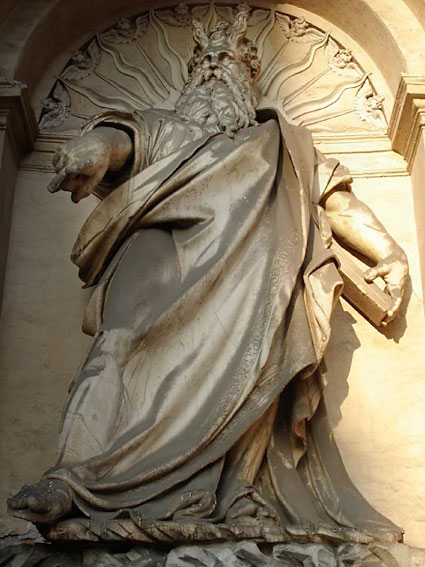
“And whanne Moises cam doun fro the hil of Synai, he helde twei tablis of witnessyng, and he wiste not that his face was horned of the felouschipe of Goddis word..” —Exodus 34:29, Wycliffe
Perhaps you’ve seen those bumper stickers that say, “If we’re not meant to eat animals, why are they made of meat?”
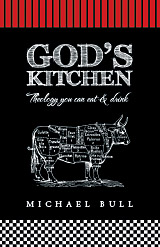
NOTE: THIS POST HAS BEEN REMIXED AND INCLUDED IN GOD’S KITCHEN.
You must be logged in to see the rest of this post.
Join now for a year for $15!
From memory, men didn’t eat meat until after the flood. The history from Adam to Noah follows the Feasts pattern, with Adam as the Alpha male (heh) and Noah as the mature and wise Omega male of that initial process. [1] Moving from vegetarianism (literally “seeds”) to meat was not only a sign of judgment, but a sign of greater judgment put into the hands of God’s Man. [2] Noah could eat meat, and he could also sentence murderers to death. Man now had teeth in a way he had never had them before. Even we use the phrase “toothless” to refer to ineffective pieces of legislation. As mentioned elsewhere here, teeth and tusks and ivory and horns are symbols of justice, whether they be on men, animals, or altars. [3] A blood-covered horn means the crime is atoned for. Just as Christ was a Lamb with seven horns, worthy to open the scroll, Moses came down from Sinai with not only a “scroll” (or tablets in that case) but “horns.” This translation has been dismissed as errant, but perhaps the reason for it should not be dismissed so easily. Here’s my attempt at an interpretation.
Continue reading
Comments Off | tags: Adam, Exodus, Incense Altar, Ivory, Moses, Noah, Tabernacle, Vegetarianism | posted in Biblical Theology, Creation
Feb
23
2010
or Crops and Creeps
 “And because of the surpassing greatness of the revelations, for this reason, to keep me from exalting myself, there was given unto me a thorn in the flesh, a messenger of Satan to buffet me, in order to keep me from exalting myself. Concerning this I entreated the Lord three times that it might depart from me. And He has said to me, ‘My grace is sufficient for you, for power is perfected in weakness.’ Most gladly, then, I will rather boast about my weaknesses, that the power of Christ may dwell in me. Thus, I am well content with weaknesses, with insults, with distresses, with persecutions, with difficulties, for Christ’s sake; for when I am weak, then I am strong.” —2 Cor. 12:7-10
What was Paul’s thorn in the flesh? Theories abound, from a bad temper, to bowlegs, to eye trouble and even epilepsy. Why is it that so many commentators fail to check their concordances for “previous.” These days, with Bible wordsearch software, we have no excuse.
Continue reading
Comments Off | tags: Bible Matrix, Corinthians, David, Paul, Saul | posted in Biblical Theology, The Last Days
Feb
22
2010
or Show Me the Tropes
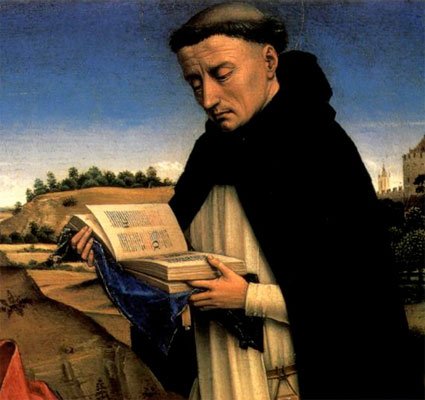
Literary agent Peter Rubie would undoubtedly have read many story synopses, both fiction and non-fiction. His colleague Janet Reid advises that anyone wishing to write a bestseller should read at least two thousand novels before attempting to write their own. Peter gives some helpful advice:
Continue reading
Comments Off | tags: C. S. Lewis, Culture, Feasts, Joke, Literary Structure | posted in Biblical Theology