May
18
2013
or A Ripsnorter Ritual
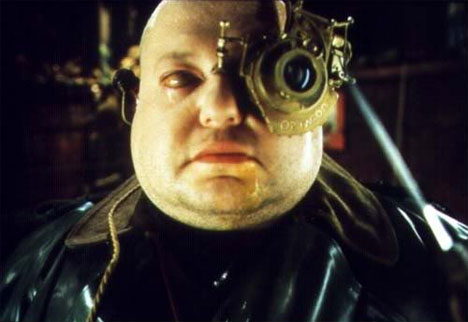 Ritual is powerful stuff. Much of modern evangelicalism prides itself in rejecting liturgy and being “open to the Spirit,” and then turns this “openness” into an uninspired (and very uninspiring) human formula, in place of the inspired Divine one. Instead of following a pattern found in every part of the Bible (worship is literary architecture), we are stuck with either erroneous traditions or off-the-cuff rambles which, although “open to inspiration,” somehow sound exactly the same each week. Human beings love repetition in every area of life, and ritual is a prime method of teaching truth and holiness.
Continue reading
5 comments | tags: Baptism, Liturgy, Peter Leithart, Revelation, Tabernacle, Temple | posted in Biblical Theology, Quotes
Jul
17
2012
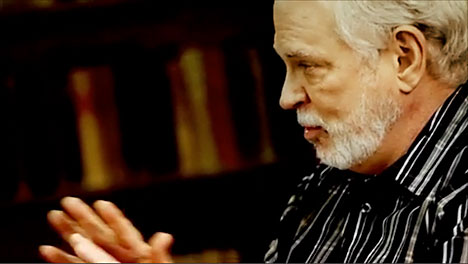
“Jordan lays out all of the theological and typological issues connected to worship, and more specifically to the Lord’s Supper itself.”
Adam Ross, who I reckon gets through five books on a slow day, has reviewed James Jordan’s From Bread to Wine: Toward a More Biblical Liturgical Theology on goodreads.
Continue reading
Comments Off | tags: Adam Ross, Communion, James Jordan, Liturgy, Maturity, Worship | posted in Biblical Theology, Quotes
Feb
29
2012

Howbeit that was not first which is spiritual, but that which is natural; and afterward that which is spiritual. The first man is of the earth, earthy: the second man is the Lord from heaven. As is the earthy, such are they also that are earthy: and as is the heavenly, such are they also that are heavenly. And as we have borne the image of the earthy, we shall also bear the image of the heavenly. (1 Corinthians 15:46-49)
We’ve been talking about “intuition,” which is something ascribed more to women than to men. If we relate it to hermeneutics, does this mean women make better Bible interpreters, or is there something deeper going on?
Continue reading
2 comments | tags: Abel, Cain, Covenant curse, Covenant Theology, Eric Greene, Genesis, Hermeneutics, James Jordan, Liturgy, Paul, Resurrection, Revelation, Systematic typology | posted in Biblical Theology, Quotes
Jun
27
2011
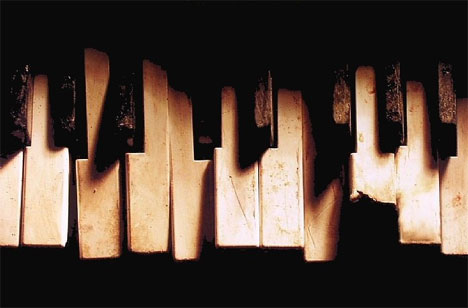
How can we fix modern worship? Nearly all debate on this subject overlooks what the Bible has to say.
In From Silence to Song, Peter Leithart justifies the practice of finding patterns for our worship in the Levitical rites in the fact that King David did precisely this.
“…sacrificial worship did not cease with the coming of the New Covenant, but was transformed into a “spiritual sacrifice” and “sacrifice of praise.” We now do different things than ancient Israelites did, but those actions have the same meaning as the actions in the Levitical ceremonies.
Continue reading
2 comments | tags: Chronicles, Communion, David, Leviticus, Liturgy, Peter Leithart, Typology, Worship | posted in Biblical Theology, Quotes
Jun
27
2011
From Wine, Women and Song, James B. Jordan lectures, Biblical Horizons Conference 2010:
“[Wine, women and song] are three things which are essential characteristics of the New Covenant glory which the Church has done a bad job of affirming over the centuries, and are three things which are hated by Islam. Islam is the scourge of Christendom, and a mirror of Christendom. It’s as if all the mistakes the Church makes are magnified in Islam or in some way directly perverted in Islam. Then, there is a fourth characteristic of the New Creation order: holy war.
Continue reading
Comments Off | tags: Holy war, James B. Jordan, Liturgy, Revelation, Worship | posted in Biblical Theology, Quotes
Jun
7
2011
Some Notes on Liturgical Etiquette by James B. Jordan
We all now live in the age of slob worship thanks to the “sixties.” I never experienced sitting for prayer until 20 years ago. Jesus was unhappy when His disciples could not watch and pray for one hour. Today’s slob Christians complain if they have to stand for five minutes. It’s pretty pathetic when you get right down to it. Our forefathers would be amazed. The only people who sat for prayer in the entire history of the church were the infirm and the elderly. Sitting for prayer is one generation old.
So, for younger readers, here are some basic rules of liturgical etiquette.
Continue reading
4 comments | tags: James Jordan, Liturgy | posted in Creation, Quotes
Apr
23
2010
 “…practical, daily piety (“religious sense”) flows from liturgical piety. The sense of how man approaches God in formal public worship before His throne determines the sense of how man serves God in daily life. It follows from this that changes in practical piety are largely a reflection of changes in liturgical piety. At the same time, as we shall see, misunderstandings of practical piety feed back into liturgical piety. A practical piety that focuses on negation of the world rather than on its transformation will work to destroy the spirit of thanksgiving in the liturgy, and will also give rise to wrong understandings of what is happening during the Lord’s Supper.”
James B. Jordan, Christian Piety: Deformed and Reformed.
Comments Off | tags: James Jordan, Liturgy | posted in Christian Life, Quotes
Mar
15
2010
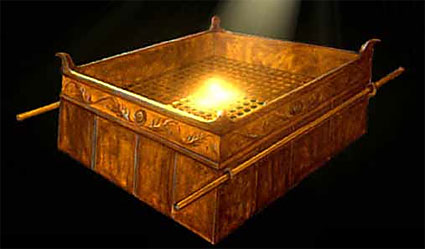
Okay, so The Earth is Flat after all. The Atlar’s being a symbol of the mediatorial Land, (a priesthood between the heavenly sky and Gentile sea) is the key to a fair amount of weird stuff in the Bible. It also means that a lot of what goes on in the Torah is the key to understanding some later enigmatic events.
The Bronze Altar had a grate inside it to support the sacrifice. The ashes would fall through the holes in the grate and the smoke would rise as a pleasing aroma to God.
In Numbers 16, concerning the rebellion of Korah and his sons, after the “censer” showdown between them and Aaron, the ground opened up and swallowed their tents, all their belongings and their families. However, fire consumed the wannabe priests who were offering the “false” incense. Even the rebellion was divided according to the priestly divisions within Israel. Ashes and smoke. [1]
Continue reading
Comments Off | tags: Aaron, Crucifixion, Korah, Liturgy, Revelation, Tabernacle, Zechariah | posted in Biblical Theology, The Last Days
Oct
1
2009
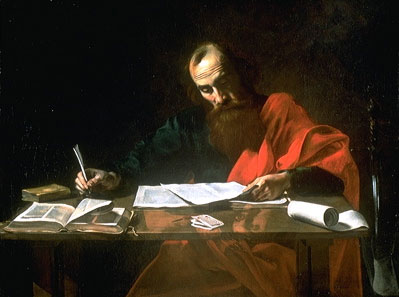
This contribution by Kelby Carlson, who just finished my book. He deserves a big medal. He also thinks it should be longer!
For our English class we are reading The Scarlet Letter. It’s amazing how much symbolism there is in literature, and your book (Jordan’s, too, and a few others) have really started to help me see that. I think man fundmentally fits symbols into everything, even if sometimes it is unintentional. I am just amazed at how something that at first appears simple can say so much; which has me even more in awe of the Scriptures.
Continue reading
Comments Off | tags: Bible Matrix, Chiasm, Colossians, Feasts, Kelby Carlson, Literary Structure, Liturgy, Paul, Totus Christus | posted in Biblical Theology
Aug
14
2009
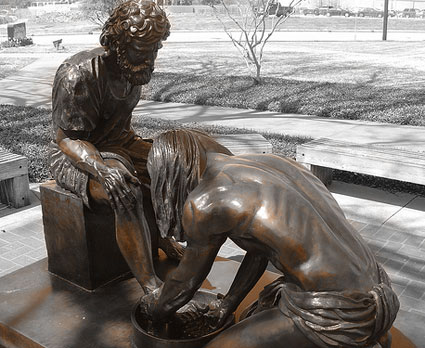
or Filling Up That Which is Lacking
After reading about the Bible’s use of robes as symbols of office (see The Dominion Trap by James B. Jordan), Tim Mitchell commented:
In Bible study we’ve been looking at John, so a few weeks ago was John 13. My Bible translated v.4-5 as “So he got up from the table, took off his robe, wrapped a towel around his waist, and poured water into a basin. Then he began to wash the disciples’ feel, drying them with the towel he had around him.”
So that recalled for me the couple of pages on robe imagery, and it seems to foreshadow what Jesus will do later on very well: He is willing to take off his authority and righteousness, and take on the dirt of our sin.
But then I got a bit unsure, since Jesus then goes on to say “you ought to wash each others’ feet” in v.14 and “Do as I have done to you” in v.15. So if the symbolism applies, how are we also supposed to take other peoples’ sin on us as Jesus did?
Firstly, what a great question. Many New Testament passages become so familiar that we often lose the ability to really think about their ramifications.
The structure of the Last Supper puts this action of Jesus at Atonement, the Laver (Day 6). Jesus is liturgically pre-enacting His role as High Priest. The Adam removed his glorious robes and wore linen for the Day of Covering. Jesus left this in the tomb with our sin on it. But that is not all the High Priest did. He approached the Most Holy twice.
Continue reading
Comments Off | tags: AD70, Against Hyperpreterism, Ahasuerus, Atonement, Daniel, Esther, Hebrews, High Priest, Holy Place, Joseph, Last Supper, Liturgy, Totus Christus | posted in Biblical Theology, Christian Life, Totus Christus