Jul
17
2012
“Jordan lays out all of the theological and typological issues connected to worship, and more specifically to the Lord’s Supper itself.”
Adam Ross, who I reckon gets through five books on a slow day, has reviewed James Jordan’s From Bread to Wine: Toward a More Biblical Liturgical Theology on goodreads.
Continue reading
Comments Off | tags: Adam Ross, Communion, James Jordan, Liturgy, Maturity, Worship | posted in Biblical Theology, Quotes
Jun
27
2012

Her husband is known in the gates,
When he sits among the elders of the land.
Proverbs 31:23
“A Christian is a living, walking, talking testimony to the end of the world—to a cosmic, judicial maturity, the ‘adulthood’ of mankind.”
Doug Wilson is right to emphasize the “eschatological reality” of the final judgment, but surely the requirements and mode of baptism should communicate that reality?
If the process of “salvation through Covenant” is pretty much the same under the New as it was under the Old, as he believes, why did circumcision become baptism? Why the change in the Covenant “road sign” if there’s no real change concerning what’s down the road?
Continue reading
3 comments | tags: AD70, Baptism, Circumcision, Maturity, New Jerusalem | posted in Bible Matrix, Biblical Theology
Jun
11
2012
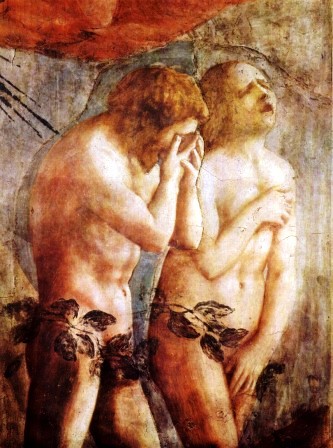
James Jordan’s paper on capital punishment begins with the very first threat of death in history. The rest of the Bible shows us that the curse was subtly paired with a promise of a more abundant life:
Continue reading
Comments Off | tags: Genesis, James Jordan, Maturity | posted in Biblical Theology
May
15
2012
“What if your gospel-preaching pastor is not as good as one of the great orators of our day? Is it time to sell the house, pack up the family, and change churches? No, I don’t think so. But what should you do?”
Continue reading
2 comments | tags: John Piper, Maturity, Preaching | posted in Christian Life, Quotes
Apr
18
2011

“Recall the phrase: ‘Poor planning on your part does not constitute a crisis on my part’. The less mature are always attempting to enroll others in their disquiet, their ‘crisis du jour’. A perceived catastrophe on the part of certain members of the congregation does not constitute a calamity for a well-defined leader.”
Continue reading
Comments Off | tags: Edwin Friedman, Leadership, Maturity | posted in Christian Life, Quotes
Jul
5
2010

Building the Iron Saint
Every plunge brings a tougher skin and a softer heart.
Jesus calls us deeper, so Satan manufactures false depths. There are the deep things of God and the deep things of Satan (Revelation 2:24). Doug Wilson points out that the deep things of God are depths of holiness, not depths of mystical knowledge:
Continue reading
1 comment | tags: Abimelech, Add new tag, Bible Matrix, Jacob, Joseph, Maturity, Oswald Chambers | posted in Biblical Theology, Christian Life, Quotes
Jun
2
2010
or Disputatio with God
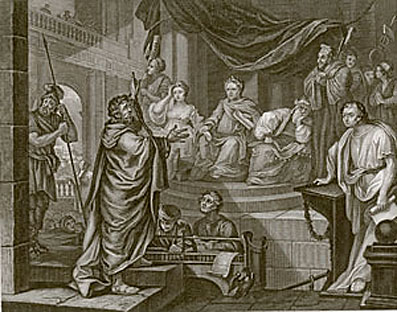
Re The Wrath of Love, Michael Micklow commented:
(Correction – not Michael Shover – Michael got his Michael’s crossed)
“The prophet did not have to remind God, so much as he had to remind himself of the love of God, and to see God’s judgment as the wrath of love.”
What about the dangerous yet successful Mosaic paradigm in Exodus 32:7-14? In this section, the prophet is able to approach, contest and sway God’s wrath (vv. 11-13). In response to Moses’ challenge, the text tells us, “and the Lord changed his mind about the disaster that he planned to bring on his people” (v. 14)…
… And what was the cornerstone of his defense? — the appeal to memory (v. 13). Moses cites the exodus event, and he further appeals to the covenant established with Abraham.
Continue reading
Comments Off | tags: Ascension, David, Habakkuk, Intercession, James Jordan, Maturity, Memorial, Moses, Psalms, Satan, Zechariah | posted in Apologetics, Biblical Theology
May
31
2010
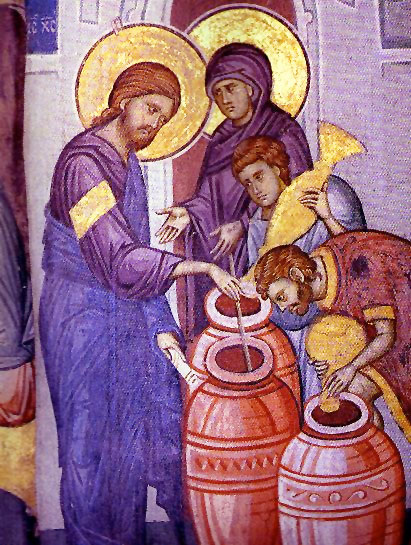
“The Son of Man has come eating and drinking, and you say, ‘Look, a glutton and a winebibber, a friend of tax collectors and sinners!’” (NKJV) Luke 7:34
Some good logical thoughts concerning alcohol from Andre Rook’s blog, and comments from me at the end:
Alcohol is synonymous with sin for many. Still for others it is considered an act of Christian love to perpetually abstain from alcohol, to provide a good Christian witness to others. My beef with the latter view (the former being easily dismissed on account of Scripture, and also condemned in the heresy of Manicheism) is that it creates a counterfeit virtue for the Christian.
Continue reading
Comments Off | tags: Alcohol, Andre Rook, Legalism, Maturity, Pharisees | posted in Biblical Theology, Christian Life, Quotes
Feb
5
2010
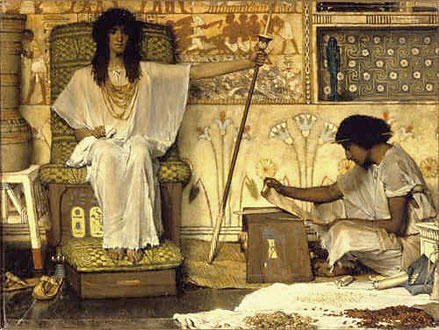
The Pharisees’ call for miracles from Jesus was a sign of immaturity. As the story of the patriarchs demonstrates, the growing maturity of the people of God is illustrated in less of a need for proofs. The Word is enough. Miracles are occurring around the world in places where the gospel is new and faith needs assurance. In the West, genuine miracles of this nature seldom occur. Is it due to a lack of faith or a call to greater faith? We have had the Scriptures forever, and the childish desire for (and manufacturing of) miracles, betrays a reversion to childhood.
Continue reading
2 comments | tags: Abraham, Genesis, Jacob, James Jordan, Joseph, Maturity, Spiritual Growth | posted in Biblical Theology, Christian Life, Quotes
Jan
10
2010

or Being a Truly Impure Thinker
“If you love me, you will keep my commandments.” John 14:15
NOTE: THIS POST HAS BEEN REMIXED AND INCLUDED IN GOD’S KITCHEN.
You must be logged in to see the rest of this post.
Join now for a year for $15!
Peter Leithart wrote this week:
How do we know things? Experimentation, deduction, observation?
In Genesis, knowledge is first associated with two things – with food and with sex. There is a tree of the knowledge of good and evil, whose fruit opens the eyes of Adam and Eve so that they perceive that they are naked. Then Adam knows his wife and she conceives Cain.
If we want a strictly biblical answer: Knowledge is eating. Knowledge is sex.
Continue reading
Comments Off | tags: Add new tag, Communion, Eugen Rosenstock-Huessy, Food laws, Maturity, Moses, Peter Leithart, Solomon, Wisdom | posted in Biblical Theology, Christian Life