May
14
2009
I was told once, after using a symbolic illustration from the Tabernacle while I was song-leading, that “we don’t want to head in that direction.” Basically, modern evangelicalism is not really all that interested in the Bible. The Tabernacle actually structures the New Testament at many levels, but modern Christians are classified as too dumb to cope with it. How many popular theologians ever deal with this stuff? This material IS the Bible.
Peter Leithart has been hauled over the coals for his use of typology in his commentary on Kings. But this is practically the same attitude the Jews have, when they accuse ALL Christians of eisegesis for seeing Christ in all the Scriptures.
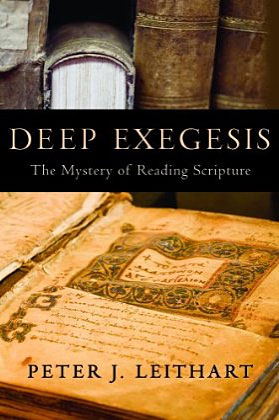
Dr Leithart has a new book you can pre-order here, defending, I assume, his method. Those who question the validity of a sound use of typology would benefit from seeing how the Bible itself provides a safe framework for it.
I don’t know what examples Dr Leithart will give, but one that comes to mind is related to literary structure. When a passage of Scripture obviously recapitulates the structure and symbols of the Creation Week (as the one in my previous post did), is it eisegesis to draw from the passage interpretations related to this observation that are not actually written in the text? The Jews actually have it all over us on that one!
I do fear that Dr Leithart’s book might be an attempt to explain the how-to of flying like an eagle to a flock of emus. To use another analogy, the Bible is like a rainbow coloured balloon they are too afraid to actually inflate.
Comments Off | tags: Peter Leithart, Typology | posted in Biblical Theology
May
14
2009
Why do we put one-eyed, colour-blind pencil pushers in charge of the kaleidoscope?
The white stone mentioned in Revelation 2:17 was always a mystery to me. There are plenty of commentators who make lame suggestions as to its meaning (they sound a bit like a student making up answers during an exam!), but James Jordan got me thinking about it along the lines of its subtle use in the Old Testament. I intend to cover this in a few posts, and consequently may ramble even a little more than usual, but everything is connected in the Bible’s symbol language. This is a bit of a journey, but I am sure we will find it rewarding. Oh, and you will need to switch off your modernistic mind and use your imagination. You know, that thing you only use when you read or watch fiction? You can use it to understand the Bible as well. I know, scholars most often don’t. To cover their inability to make much sense of texts such as the one we are about to inhale, they pretend the writings are a bit primitive. Why do we put one-eyed, colour-blind pencil pushers in charge of the kaleidoscope?
Continue reading
7 comments | tags: High Priest, James Jordan, Modernism, Satan, Tabernacle, Typology, White stone, Zechariah | posted in Biblical Theology, The Restoration Era
May
12
2009
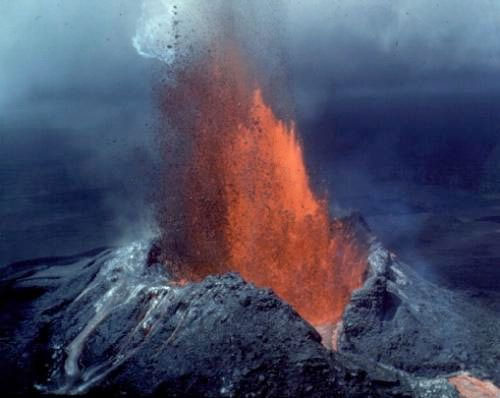
“And in that day His feet will stand on the Mount of Olives, which faces Jerusalem on the east. And the Mount of Olives shall be split in two, from east to west, making a very large valley; Half of the mountain shall move toward the north and half of it toward the south.” Zechariah 14:4
Surprising as His ways are, the Lord always follows procedure. Like Ahasuerus in the book of Esther, anything that is done is done by decree. Although, in the case of Ahasuerus, he needed to consult his elders, whereas God only consults his maturing elders (like Abraham and David–and now the church) to bring us to greater maturity.
A decree is written in the Most Holy, the king’s garden court (head). The elders in the Holy Place respond with liturgy (body). And then they ride out into the world on the swiftest horses to incite a Holy War that divides the world to bring about a New Creation.
Continue reading
Comments Off | tags: AD70, Ahasuerus, David, Esther, Greek philosophy, Liturgy, Numbers 5, Remnant, Restoration, Solomon, Temple, Zechariah | posted in Biblical Theology, The Last Days, The Restoration Era
May
11
2009
Abraham had gone to extreme measures to make sure Isaac didn’t intermarry with Canaan and pollute the promise. He sent his most faithful servant as a forerunner to find a bride for his son. Like John the Forerunner, the most faithful servant found the beautiful bride, Rebekah, by the water in a garden of God. And like Paul the apostle, the servant adorned her with gold in preparation for her presentation to the Bridegroom. Like Herod and the Jews, Laban and his mother didn’t want to let her go, and were given no choice but to bless her with their riches.
Comments Off | tags: Abraham, Ecclesiology, Herod, Isaac, John the Baptist, Laban, Paul | posted in Biblical Theology, The Last Days, Totus Christus
May
7
2009

The Nazirite Vow
(Article requested by Drew J.)
This vow in Numbers 6 follows the “inspection of jealousy” in Numbers 5. Mark Horne observed that, just as the woman in Numbers 5 was to be inspected for harlotry with her hair untamed, so the Nazirite (whether male or female) was not to cut his or her hair. A Nazirite is a human picture of the church as a warrior bride. Hair is glory. Hair is the cloud of angels (and now, saints) surrounding the throne of God.
“Therefore the woman ought to have a symbol of authority on her head, because of the angels.” (1 Cor. 11:10)
A woman is the glory of her man. A woman’s hair is a symbol of submission, but also a symbol of her own “cloud of angels” – her godly offspring (See Ezekiel 5 for the children of Israel symbolised as the prophet’s hair, Micah 1:16, Matthew 10:30 and also my comments on Nehemiah and his hair-pulling). In battle, a Nazirite was like a blazing torch (the Ark-chariot/Adam) and smoking firepot (the smoke clouds of the incense altar/Eve army), parting his enemies like the pillar of God.
The hair is her “crop”, the twelve stars around her head (Rev. 12), and the question constantly posed to Israel concerns her role as God’s mediatorial Land. Is her crop one of thorns and thistles, or is it godly grain? This is also the question in Numbers 5, and the Lord put Israel to this exact test after the idolatry with the golden calf. The “harlots” were slain with the Levitical sword.
Continue reading
3 comments | tags: Adam, David, James Jordan, John the Baptist, Judges, Nazirite, Numbers 5, Numbers 6, Obed, Paul, Revelation, Samson, Samuel, serpent, Showbread, Tabernacle, Uriah, Wisdom | posted in Against Hyperpreterism, Biblical Theology
May
3
2009
I just noticed that the passage concerning the slain Lamb (Rev. 5) and the passage concerning the victory of the church (in 9-11) correspond chiastically.
The first is the Adam conquering Herod’s Egypt and moving out through a bloody door (Passover/Circumcision)
SCROLL: Word – Most Holy Place – Garden
……LAMB: Sacrament – Holy Place – Land
…………NATIONS: Government – Courts – World
These cover the three territories corrupted by Adam, Cain and the ‘sons of God’. Between this ‘first generation’ (head) and the ‘next generation’ (body), there is a battle in the first century ‘wilderness’.
………………WILDERNESS BATTLE: Gospel as Pentecost Law
Later, there is the redeemed Eve conquering Herod’s Jericho and crossing the river into a heavenly country over the corpse (Atonement/Baptism)
…………SUNRISE ARMY of 200 million Jew/Gentile saints:
…………Government – Courts - World
……CHRIST the true brother/High Priest with the little scroll:
……Sacrament – Holy Place - Land (and Sea)
TWO WITNESSES, saints as the Ark cherubim: Word – Most Holy Place - Garden
Not only does this pattern follow the seven feasts of Leviticus 23 (if we include the central wilderness), each of these seven points contains the same sevenfold structure within itself. It is like Zechariah’s Lampstand with 49 lights. And this is just another overlay on the already manifold structures in Revelation. There really is no bottom to this book.
Comments Off | tags: Atonement, Baptism, Cain, Chiasm, Circumcision, Herod, Literary Structure, Passover, Revelation, Zechariah | posted in Biblical Theology, The Last Days
May
2
2009
Peter Leithart writes:
Reflections on a class discussion earlier today about place, our connection to the ground, and gnosticism.
- Blood and soil are “powers” that can and have dominated human life, and caused lots of human misery.
- Jesus overcomes those powers. We are identified by water and feast, not by blood or color or place.
- YET (here’s where my thought is undeveloped): Jesus doesn’t just overcome and send the powers packing. He pacifies and reconciles powers; He turns them to the purposes of His kingdom (Col 1-2).
The dilemma: How to express the reconciliation of blood and soil without falling back into the old creation, and without going fascist? How to express Jesus’ pacification of “blood” without letting it usurp the place of the water, and how to express Jesus’ pacification of “soil” without letting it usurp the place of the feast?
Continue reading
Comments Off | tags: Atonement, Canaan, Communion, Compromise, Gnosticism, Herod, High Priest, Holy Place, Most Holy Place, nationalism, Nazirite, New earth, Nimrod, Peter Leithart, Worship | posted in Biblical Theology
May
1
2009
“I pray for them. I do not pray for the world but for those whom You have given Me, for they are Yours. And all Mine are Yours, and Yours are Mine, and I am glorified in them.”
Jesus prayed these words shortly before these disciples betrayed, deserted and denied Him. As High Priest, the twelve were still just names etched on His shoulders. Unformed and uninteresting.
After Pentecost, with God’s breath breathed into them, each would become a precious stone, differing in glory from the others. They would be fully formed elders surrounding the slain Lamb (Rev. 5:6), walls and gates of a new Jerusalem.
With the seven eyes of the High Priest, the light of the Lampstand flames, Jesus could already see Pentecost, when the disciples would become the ‘angelic glories’ sent to warn Herod’s Sodom (Rev. 11:8) and curse it with blindness. Old Jerusalem was sulphur in God’s nostrils, but the apostles became an incense altar of aromatic smoke.
The twelve spoke words that changed the whole world in a matter of decades. Jesus sees us with those same eyes. We deny Him. We betray Him. We desert Him. But we are His, and He sees our future. Breathe into us, breath of God.
Comments Off | tags: Gethsemane, Herod, High Priest, Pentecost, Sodom | posted in Biblical Theology, The Last Days
Apr
28
2009
or How Modern Conservative Theologians Unwittingly Use Literary Genres to Mask Their Unbelief
One of the big problems with modern theology is its habit of categorising parts of the Bible into literary genres. For sure, the Bible contains historical prose, visions, poetry and songs. But many passages won’t actually fit into these neat little pigeon holes without hamstringing their intended purpose. And as it turns out, these “genre-lisations” are excuses to compromise with humanistic pop-philosophy and pop-history.
The three main gripes I have are misuses of the genres poetry, polemic and apocalyptic.
Continue reading
1 comment | tags: Apocalyptic, Daniel, David Field, Esther, Ezekiel, Gnosticism, Ideology, James Jordan, John Dickson, Peter Leithart, Restoration, Revelation, Rowan Williams | posted in Biblical Theology, Creation, The Last Days, The Restoration Era
Apr
24
2009
“The earth shall soon dissolve like snow,
The sun forbear to shine;
But God, who call’d me here below,
Will be forever mine.”
This verse in John Newton’s otherwise wonderful Amazing Grace makes me cringe. Bible symbolism is incredibly diverse, but also incredibly consistent, as a word search for flood or snow will show.
A flood is the rising of the Abyss in judgment, and after the historical flood, it was used by the prophets to picture Gentile nations flooding in from the ‘outer courts’ boundary over the four-cornered ‘Altar’ of Israel to wipe out the unfaithful ‘sons of God.’ It is used to picture Egypt, Babylon, and even the false teachings of the Judaisers in Revelation 12, but never mercy.
Snow only gets one negative rap, and that is the whiteness of ‘leprosy’ (actually, plague). In this case, it is the evil twin of true glory. It is death masquerading as life, an un-covering instead of a glorious robe.
“Woe to you, scribes and Pharisees, hypocrites! for you are like whited sepulchres, which indeed appear beautiful outward, but within are full of dead [men's] bones, and of all uncleanness.”
The symbols are important, and we are mostly illiterate concerning them. They are not poetic fluff in any way. God communicates truth by His word to interpret His creation. But we think like Greeks instead of Hebrews.
Comments Off | tags: John Newton, Typology | posted in Biblical Theology, Quotes