Jul
21
2009

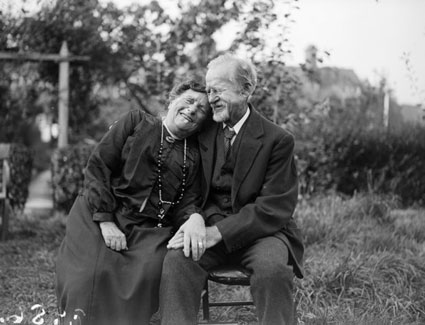
“I gave the sermon on Hagar and Ishmael today… I began my remarks by pointing out the similarity between the stories of Hagar and Ishmael sent off into the wilderness and Abraham going off with Isaac to sacrifice him, as he believes. My point was that Abraham is in effect called upon to sacrifice both his sons, and that the Lord in both instances sends angels to intervene at the critical moment to save the child. Abraham’s extreme old age is an important element in both stories, not only because he can hardly hope for more children, not only because the children of old age are unspeakably precious, but also, I think, because any father, particularly an old father, must finally give his child up to the wilderness and trust to the providence of God. It seems almost a cruelty for one generation to beget another when parents can secure so little for their children, so little safety, even in the best circumstances. Great faith is required to give the child up, trusting God to honour the parents’ love for him by assuring that there will indeed be angels in that wilderness.
I noted that Abraham himself had been sent into the wilderness, told to leave his father’s house also, that this was the narrative of all generations, and that it is only by the grace of God that we are made instruments of His providence and participants in a fatherhood that is always ultimately His.”
Reverend John Ames, in Gilead by Marilynne Robinson, p. 128-129.
Comments Off | tags: Abraham, Marilynne Robinson, Parenting | posted in Christian Life, Quotes
Jul
18
2009
Alexander Schmemann writes:
“O Lord our God, crown them with glory and honour!” says the priest after he has put the crowns on the heads of the bridal pair. This is, first the glory and honour of man as king of creation: “Be fruitful and multiply and replenish the earth, and subdue and have dominion…” (Gn. 1:25). Each family is indeed a kingdom, a little church, and therefore a sacrament of and a way to the Kingdom. Somewhere, even if it is only in a single room, every man at some point in his life has his own small kingdom. It may be hell, and a place of betrayal, or it may not. Behind each window there is a little world going on. How evident this becomes when one is riding on a train at night and passing innumerable lighted windows: behind each one of them the fullness of life is a “given possibility,” a promise, a vision. This is what the marriage crowns express: that here is the beginning of a small kingdom which can be something like the true Kingdom. The chance will be lost, perhaps even in one night; but at this moment it is still an open possibility. Continue reading
Comments Off | tags: Alexander Schmemann, Communion, Marriage, Veil | posted in Christian Life, Quotes
Jul
12
2009
More on baptism (sorry). Douglas Wilson writes:
“You could even say that this is one of the differences between presbies and baptists — all Christians of course believe in “covenant baptism,” but for the baptists the relationship is between the individual being baptized and the covenant itself, Christ Himself — that’s what makes it a covenant baptism. But for the presbie, other people are involved.”
Good observation. But surely this is a contrast between good presbie practice and an error baptists are only prone to?
Continue reading
Comments Off | tags: Baptism, Doug Wilson | posted in Biblical Theology, Christian Life, Quotes
Jul
10
2009
Can trying to be relevant make a Christian irrelevant? John Piper writes:
Continue reading
Comments Off | tags: Culture, John Piper, Peter Leithart, Spurgeon | posted in Christian Life, Quotes
Jul
9
2009
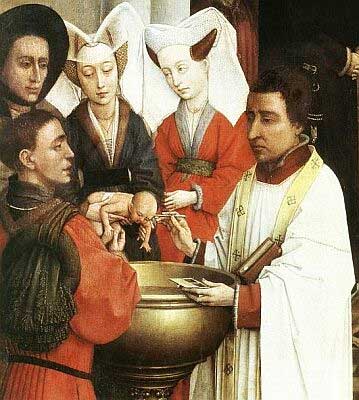
or Why Are We Baptizing the Dead?
Peter Leithart writes concerning baptism:
“In Genesis 9:11, Yahweh promises not to “cut off flesh” by water. That is the covenant with Noah.
A few chapters later, Yahweh tells Abram that he must cut off the flesh of all male children of Israel, not by water but by a knife.
Continue reading
2 comments | tags: Adam, Baptism, Circumcision, Federal Vision, John Piper, Noah, Peter Leithart, Systematic typology, The flood | posted in Christian Life
Jul
7
2009
“The point is, we had this relationship the Law. The Law was our husband—over us—and we were bound by the Law through the angels. Now, what died? The Law didn’t die. We died. We died in Christ, and that was the end of that relationship to the Law. It snapped that Covenant string… It was like a rubber band. When we tried to get away from it, it snapped back. But now it’s gone, because we died. Now we’ve come back to life and there is a string joining us to Jesus. We are married to somebody else. That’s the picture.
The Law is still there, but it’s no longer our husband. It’s our tool. We are no longer under Law. We are over Law and we use the Law as a tool.
Continue reading
Comments Off | tags: James Jordan, Postmillennialism, Romans, The Law | posted in Christian Life, Ethics, Quotes
Jul
3
2009
“Be meticulous to present yourself for the praise of God as an unashamed workman, cutting the word of truth in a straight line.” (II Timothy 2:15)
Is this verse simply teaching that if we “divide up” the Scriptures correctly, we’ll get an AWANA[1] merit badge from God? Hardly. It is flanked by condemnations of those who fight over the Scriptures to no profit, and those whose vain babblings are gangrenous.
Paul speaks of a soldier and a farmer, and then a productive workman. Paul is concerned about building saints and churches, and they are built by a straight and true cutting of the word. Like most of Paul’s statements, there is a very long, fully-loaded freight train of Old Testament history and typology right behind it, and it’s coming right at you, right now.
Continue reading
Comments Off | tags: Darius, David, Esther, Ezekiel's Temple, Nebuchadnezzar, New Jerusalem, oikoumene, Peter, Peter Leithart, Postmillennialism, Revelation, Solomon, Stigmata, Temple, Totus Christus, Worship | posted in Biblical Theology, Christian Life, The Last Days, The Restoration Era
Jun
29
2009
“If you’re a pastor and you want your people to hear the hard things you have to say, you’ve got to give them your flesh and your blood. Jesus gave His to earn the right to a hearing. People will hear what you have to say when they see that you bleed for them and that you give them yourself.”
–James B. Jordan, The Bible as Literature, Basilean Lectures 1990.
Comments Off | tags: James Jordan, Preaching | posted in Christian Life, Quotes
Jun
22
2009
James Jordan writes:
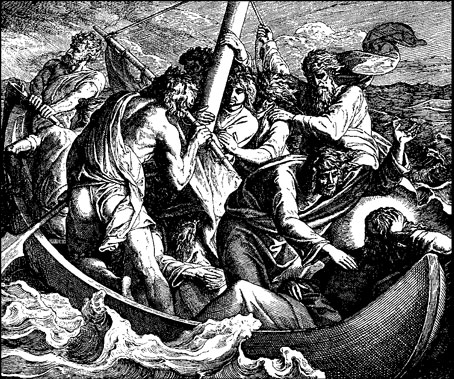
High culture naturally self-destructs apart from true faith. Lacking a true sabbath context, the increase of leisure time in high cultures eventuates in high amounts of psychic stress, decadence, and homosexuality. We see this in America today. Unless a high city culture is founded in the Biblical principles of true worship and free labour, it will collapse under its own decadence.1
Continue reading
Comments Off | tags: Adam, Contentment, Culture, James Jordan, Peter | posted in Christian Life
Jun
22
2009
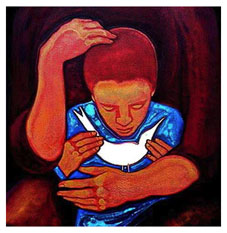 “…the crisis of fatherhood, in its many forms, is at the root of most disorders in this late stage of Western civilization. And the root is intimately connected to the loss of our consciousness of the hierarchical nature of the created order. Large numbers of people not only seem unable to believe in God, but also cannot conceptualize Him in their thoughts and their hearts. The icon in the heart—the icon of fatherhood—is either damaged or absent entirely. Continue reading
Comments Off | tags: Culture, Fatherhood, Michael O'Brien | posted in Biblical Theology, Christian Life, Quotes