A Guest Post by Chris Oswald, a pastor in the St. Louis, Missouri area
Gospel Proximity: Credo- and Paedobaptism and Pneumatological Signage
In the shadow of a tall bookshelf containing all 144,000 Douglas Wilson books, next to the covenantal family sing-a-long piano which held the covenantal tea set on a covenantal doily, I sat on a covenantal couch trying to explain our credo-baptist position to some dear Christian friends who wished to join our church without getting wet.
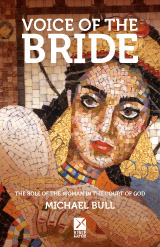
Any discussion of women’s ordination will obviously revolve around the direct Pauline statements on the subject, and we will certainly spend the lion’s share of our space there. However, the Pauline instructions were not delivered in a vacuum and when he makes his appeals outside his immediate situation, he makes those appeals to the Old Testament, ground his appeals in both the history recorded there and the law given there.
Doug Wilson sees evidence for the classification of “Covenant children” in 1 Corinthians 7:14.
“For the unbelieving husband is sanctified by the wife, and the unbelieving wife is sanctified by the husband: else were your children unclean; but now are they holy” (1 Cor. 7:14).
The Corinthians had wanted to know whether unbelief on the part of a spouse was in itself grounds for divorce. Paul has replied no, provided that the unbelieving partner is pleased to be together with the Christian in a marriage as biblically defined. If the only thing that is wrong is the spouse’s failure to believe in Christ, then the couple should still remain together.
Alastair Roberts has some wise things to say about rational public debate on important issues being hampered by the new culture of “tolerance.” Of special interest to me are his observations concerning the nature of the recent spat involving Doug Wilson, Jared Wilson and Rachel Held Evans. I have had similar experiences in online discussions. I’m relying on and presenting facts and somehow the other side is irate that facts are being presented. And the fact-free, vitriolic, ad hominem comebacks would make my hair curl if I had any.
My people—infants are their oppressors, and women rule over them. O my people, your guides mislead you and they have swallowed up the course of your paths.
(Isaiah 3:12)
Doug Wilson has a great little book with the title, Why Ministers Must Be Men. He demonstrates from Scripture that ministers must be not only male but manly, that is, courageous and self-sacrificial, ruling out both misogyny and machismo in the process. I believe we can also find evidence for his case in the very structure of the Bible. The proof boils down to the question, “What is a man in the created order?” That is, what is a man physically, and what is he to be in the very process of things?
[Apologies to those readers who have had enough of me railing against paedobaptism. It's not personal. It's not that I have any loyalty to any doctrinal system, denomination or tradition. It's that a group of godly guys taught me how beautiful the structure of the Bible is but maintain, to my eyes at least, a tradition which contradicts that beauty. The internal logic of the Scriptures -- including the Old Testament Scriptures -- spits out paedobaptism at every turn. In every round of typological musical chairs I play, paedobaptism has nowhere to sit.]
We ended last time with the observation that all Israel was a “bridal” nation. The Israelite robe, like the Nazirite vow, was something that pertained to both males and females. Why is this?
In a recent sermon on 1 Samuel 30, Doug Wilson commented on David’s insistence that those who stayed behind to guard the supplies received an equal share of the plunder:
Here’s a discussion that’s gone on over at Doug Wilson’s blog. If you have read it there, you can skip it here. I’m posting it for those who haven’t, and also for my own future reference (there’s a book on baptism coming from me at some point not too far away). Also, if there is some more discussion over there I will add it over here.
Mike Bull is a graphic designer who lives and works in the Blue Mountains west of Sydney, Australia. His passion is understanding and teaching the Bible, and he writes occasionally for Theopolis Institute in Birmingham AL, USA.
 In the shadow of a tall bookshelf containing all 144,000 Douglas Wilson books, next to the covenantal family sing-a-long piano which held the covenantal tea set on a covenantal doily, I sat on a covenantal couch trying to explain our credo-baptist position to some dear Christian friends who wished to join our church without getting wet.