Aug
17
2010

Here’s my go at the structure of the first of these seven praise psalms. (The introduction is here.) Apparently, it has five verses, following the Covenant structure. Within this, each stanza also has five lines, which echo the same structure while maintaining the theme of the stanza. The only exception is verse 4 which concerns the Sanctions. It has seven lines. As I maintain, the 5-point Covenant model expands into the 7-point matrix as Ethics gets split into three: Law opened/Death under the Law/Resurrection fulfilling the Law. 5-point Word creates 7-point History. The Sanctions correspond to the Day of Atonement (Conquest) which has the theme of the resurrected body ascending to govern under God. On that Day, every year, Israel died and rose again.
Comments Off | tags: Psalms | posted in Bible Matrix, Biblical Theology, Creation
Aug
16
2010

Psalms 111 to 117 are the “Praise the Lord” psalms, an obvious unit due to the repetition of that phrase. Are they arranged in any order, or is there some internal logic going on? You know what I’m going to say next, don’t you?
Continue reading
2 comments | tags: Fractals, Literary Structure, Psalms | posted in Bible Matrix, Biblical Theology
Aug
14
2010

“Do you suppose that I came to give peace on earth? I tell you, not at all, but rather division.” Luke 12:51
Another weird idea James Jordan presents in his Revelation lectures is the premise that the famous Four Horsemen of the Apocalypse represent the gospel. As Uri Brito wrote a couple of years ago, first you think Jordan is nuts; then, as you continue to study, you think he is less nuts. Finally you give in and accept his genius, because his premise is vindicated by the similar use of the symbols in the Old Testament, and the literary structure of the event.
Continue reading
Comments Off | tags: AD70, Balaam, Herod, John, Literary Structure, Numbers, Revelation, Systematic typology, Zechariah | posted in Bible Matrix, Biblical Theology, The Last Days, The Restoration Era
Aug
12
2010
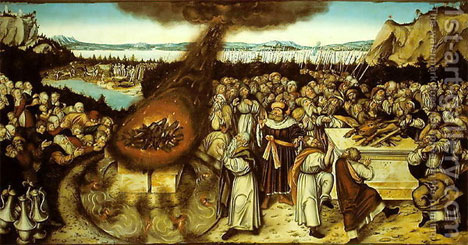
Does the Bible really contain everything the man of God requires? The curve balls of history call the church to greater and greater wisdom, but the principles remain the same. What if one of the oddest books of the Old Testament contained crucial advice for modern western culture and the Christians attempting to deal with its tragi-comic apostasy? Continue reading
1 comment | tags: Economics, Evolution, James Jordan, Judges, Worship | posted in Biblical Theology, Creation, Quotes
Aug
11
2010
The Art of Interpretation

Oh, the depth of the riches and wisdom and knowledge of God! How unsearchable are his judgments and how inscrutable his ways! (Romans 11:33)
Hermeneutics is a big word you learn at Bible College. It is the study or practice of interpreting texts in the areas of literature, law and religion.
In literature, discovering the intent of an author can be an enlightening game. In law, one’s life (or life sentence) can hang in the balance of a judge’s interpretation. In religion, besides plumbing the depths of the mind of God, it is an enlightening game in the balance of which many lives hang. God has revealed His mind in His Word, and has also seen fit to give to His people the often difficult job of interpreting it.
[This post has been refined and included in Sweet Counsel: Essays to Brighten the Eyes.]
Continue reading
Comments Off | tags: Ezekiel, Hermeneutics, John, Literary Structure, Revelation, Timothy, Typology, Warren Gage | posted in Biblical Theology
Aug
10
2010

Part 2 of the Bible Matrix interview on Trinity Talk is now available.
Continue reading
Comments Off | posted in Bible Matrix, Biblical Theology
Aug
9
2010
An Exhortation to Be A Fruitful Tree
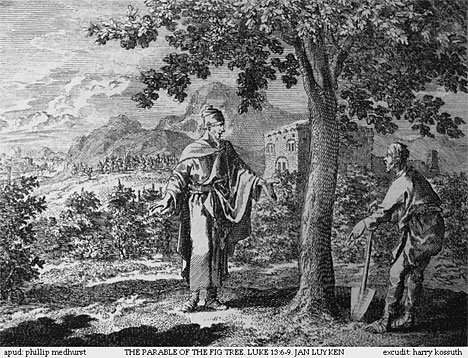
Tabernacles was the final annual feast, a Godfest to be thrown by Jews as a ministry to Gentiles. At the Feast of Clouds [1], every household temporarily became a new house of God, a “local branch” of the Tabernacle, a “priesthood of all believers.” Of course, we see this fulfilled in the book of Acts. Just as we see Paul exhort the Ephesians (Gentiles!) to put on the mediatorial body-armour of the High Priest, [2] his final exhortation to the Roman Christians alludes to not only Israel’s feasts but Israel’s priesthood. Pretty much every church he established was a “booth” made of natural Jewish branches and ingrafted Gentile branches. [3] At Pentecost, the same cloud that received Jesus filled the house. [4] Now every household of faith was a Tabernacle, a glorious cloud with a government of human angel-elders. [5] In the Bible’s literary structure, a recurring motif at Tabernacles is good fruit, godly offspring. God wants more than just a covering of leaves. As in Eden, future generations hang upon wise government.
Continue reading
8 comments | tags: AD70, Add new tag, Atonement, Doug Wilson, Feasts, Genesis, Laver, Literary Structure, Paul, Roman Catholicism, Romans, Systematic typology, Tabernacles, Temple | posted in Bible Matrix, Biblical Theology, The Last Days
Aug
6
2010
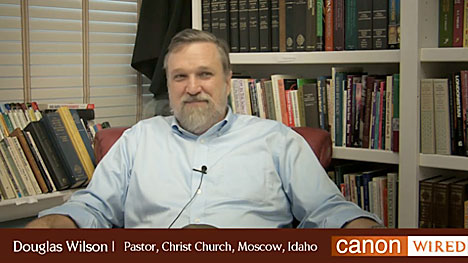
Here, Doug Wilson explains why the accusation that he is “mono-covenantal” is false.
It seems to me that if any distinction is to be made, it is not between pre- and postlapsarian history. The dichotomy Paul describes in Galatians is not between God’s Covenant with Adam and His Covenant in Christ, but between the Mosaic Covenant and the Adamic Covenant.
Continue reading
1 comment | tags: AD70, Covenant Theology, Galatians, Genesis, Paul, Postmillennialism, Revelation 20 | posted in Biblical Theology, The Last Days
Aug
4
2010
or Festivals from the Abyss

Herod, when he saw that he was deceived by the wise men, was exceedingly angry; and he sent forth and put to death all the male children who were in Bethlehem and in all its districts, from two years old and under, according to the time which he had determined from the wise men. Then was fulfilled what was spoken by Jeremiah the prophet, saying: “A voice was heard in Ramah, lamentation, weeping, and great mourning, Rachel weeping for her children, refusing to be comforted, because they are no more.” Matthew 2:16-18
Continuing from New Covenant Virility – 2
GLORIFICATION: (Tabernacles feast, marriage, children, rest)
Wow. This last bit really rubs in the kind of offspring (fruit) Israel gave God. It is the seventh stanza of this section, yet in itself it has seven stanzas. Each section submits itself to the common themes in Glorification, yet each section reiterates one step the sevenfold pattern. Tabernacles was the big feast, so in this final ascerbic prophecy, the prophet turns the annual Feasts into curses. [1] What sublime poetry is Isaiah.
Tabernacles is the Feasts of Booths. It is God’s people reaching maturity as a great tree and sheltering the nations. The cycle began with dry trees (eunuchs, etc.) being made fruitful. Here, God lays the ax to the root of the old tree.
Continue reading
1 comment | tags: Altar of the Abyss, Cyrus, Darius, Esther, Isaiah, Solomon, Tabernacles, Un-Passover | posted in Bible Matrix, Biblical Theology, The Restoration Era
Aug
4
2010
A. T. Ross gave Bible Matrix 4 out of 5 stars on goodreads.com:
Continue reading
Comments Off | tags: Adam Ross, Bible history | posted in Bible Matrix, Biblical Theology