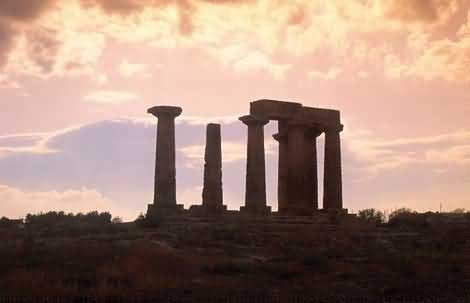
One thing I have realised over the last few years is how little the New Testament is commonly taught in the context of God’s “worship economy.” This is mostly due to the fact that the destruction of the Herods’ temple—or at least its significance—doesn’t even register on most Bible college lecturers’ radar, let alone that of the average Christian. We understand why the temples of the pagan gods were abandoned. Do we understand that the Temple of the true God had become a synagogue of Satan?
I love the LORD, because He has heard my voice and my supplications. Because He has inclined His ear to me, therefore I will call upon Him as long as I live.
“And the posts of the door were shaken by the voice of him who cried out, and the house was filled with smoke.” Isaiah 6:4
“The temple was filled with smoke from the glory of God and from His power, and no one was able to enter the temple till the seven plagues of the seven angels were completed.” Revelation 15:8
Step 5 in the Bible matrix appears to be the trickiest. Out of the seven points, it was the last one James Jordan figured out (see his article Re-Creation in the Ascension Offering.)
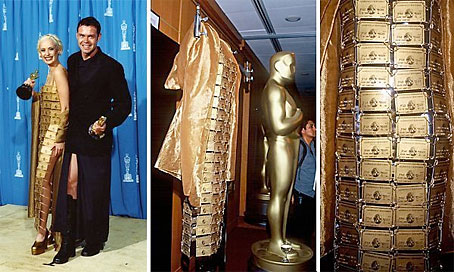
This step concerns the Covenant “body.” It is fundamentally “plural.” It concerns armies, or “hosts.” The symbols all picture multitudes, so some unlikely companions are tied together here: birds and fish, incense clouds, brothers, soldiers, and cold, hard cash.
For he is our peace, who has made us both one, and has broken down the dividing wall of hostility, by abolishing in his flesh the law of commandments and ordinances, that he might create in himself one new man in place of the two, so making peace, and might reconcile us both to God in one body through the cross, thereby bringing the hostility to an end. And he came and preached peace to you who were far off and peace to those who were near; for through him we both have access in one Spirit to the Father. (Ephesians 2:14-18)
So, the New Jerusalem—at least the way it is described in Revelation 21—is the culmination of all the “Day 6s” since the original in the Garden of Eden. And, like the walls of water at the Red Sea and Jordan crossings, this entire, miraculous arrangement is held together by the Mediator-Man, the Lamb standing at the centre.
“Blessed are the meek, For they shall inherit the Land.” (Matthew 5:5)
Some more thoughts related to Walking on Water. Please read Joshua 3 before proceeding.
If the New Jerusalem is the fulfilment of the “wall of water” at the Jordan crossing, the Lamb at the centre of the city is the Ark in the middle of the riverbed, surrounded by a human government. [1] If you know your James Jordan, the Ark of the Covenant was an image of the Light that shone on Day 1. The Lamb remains at the centre of the city, surrounded by the firstfruits saints, until the last saint is redeemed and Christ hands the kingdom to the Father.
He will set up a banner for the nations, And will assemble the outcasts of Israel, And gather together the dispersed of Judah From the four corners of the Land. Also the envy of Ephraim shall depart, And the adversaries of Judah shall be cut off; Ephraim shall not envy Judah, And Judah shall not harass Ephraim. But they shall fly down upon the shoulder of the Philistines toward the west; Together they shall plunder the people of the East; They shall lay their hand on Edom and Moab; And the people of Ammon shall obey them. The LORD will utterly destroy the tongue of the Sea of Egypt; With His mighty wind He will shake His fist over the River, And strike it in the seven streams, And make men cross over dry-shod. There will be a highway for the remnant of His people Who will be left from Assyria, As it was for Israel In the day that he came up from the land of Egypt. (Isaiah 11:12-16)
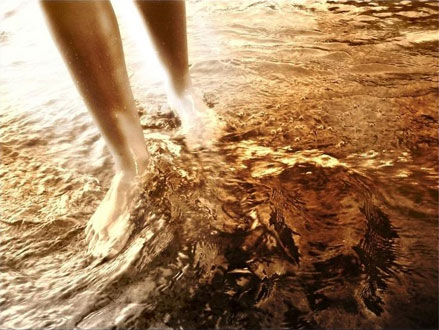
Everyone knows what “walking on water” means. You can do the impossible. Often it has a negative spin, as when it is applied to politicians with a Messiah-complex.
But what does it actually mean in the Bible? And why did Jesus do it?
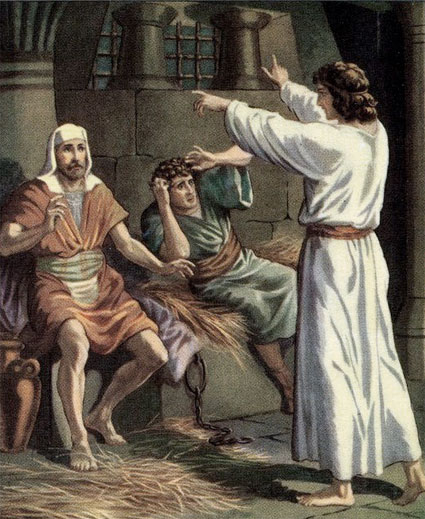
Now it came to pass on the third day, Pharaoh’s birthday, that he made a feast for all his servants; and he lifted up the head of the chief butler and of the chief baker among his servants. Then he restored the chief butler to his butlership again, and he placed the cup in Pharaoh’s hand. But he hanged the chief baker, as Joseph had interpreted to them. Yet the chief butler did not remember Joseph, but forgot him. (Genesis 40:20-23)
Joseph’s life has three “matrix” cycles: as a prophet betrayed by his brothers [1], a priest tempted to “harlotry”, and finally as a conquering king.
Michael Stead (The Intertextuality of Zechariah 1-8 (Library of Hebrew Bible/Old Testament Studies)) points to a number of intertexual connections between Ezekiel 1-11 and the vision of Zechariah 5:5-11. He concludes that the vision of Zechariah is an inversion of the Ezekiel’s vision of Yahweh’s departing glory: “Ezekiel 1-11 describes the departure of Yahweh from Jerusalem because of the idolatry (Ezek 8), iniquity (Ezek 4) and wickedness (Ezek 5) of his people, and his departure is attended by winged creatures riding on the wind. But, now that Yahweh is returning to dwell in Jerusalem, idolatry/iniquity/wickedness is being forced to depart, in a parody of Yahweh’s earlier departure.”
Mike Bull is a graphic designer who lives and works in the Blue Mountains west of Sydney, Australia. His passion is understanding and teaching the Bible, and he writes occasionally for Theopolis Institute in Birmingham AL, USA.