Sep
22
2009
Lambs in Limbo
or Understanding Dominion by Covenant
The New Covenant is not about salvation. It is about dominion. Before you call in the inquisitors, have a look at this diagram from my book:
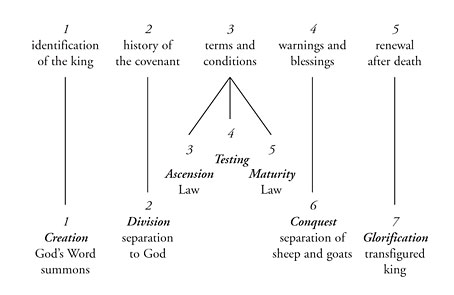

The New Covenant is not about salvation. It is about dominion. Before you call in the inquisitors, have a look at this diagram from my book:

THIS POST HAS BEEN REMIXED AND INCLUDED IN GOD’S KITCHEN: THEOLOGY YOU CAN EAT AND DRINK
You must be logged in to see the rest of this post.
Join now for a year for $15!
An added thought based on this from a post last week:
Living things have brains, guts and outsides. This is Word, Sacrament and Government. Word is intangible, but our emotions are communicated symbolically through our bodies. Facial expressions and body language are the response of the “Holy Place” to the “Most Holy” of our inner soul. Eyes are organs of judgment. Eyes are also the windows to the soul. The crystal sea is a window to heaven. The “outer court” interacts with the world and needs cleaning. Only clean stuff is allowed inside the “Holy Place.”
So, basically, as a Tabernacle, if my mind is a symbol of the command from the Most Holy (Word), and my body carries out my thoughts and intents in the world (Government), what is in between? The Holy Place, the place of flesh offered to God.
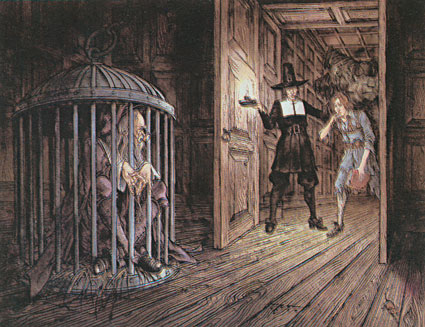
I saw in my dream, that the Interpreter took Christian by the hand again, and led him into a very dark room, where there sat a man in an iron cage. Now the man seemed very sad. He sat with his eyes looking down to the ground, and his hands folded together, and he sighed as if his heart would break.
Then said Christian, “Who is this?”
“Talk with him and see,” said the Interpreter.
“What used you to be?” asked Christian.
“I was once a flourishing professor, both in my own eyes, and also in the eyes of others,” answered the man. “I was on my way, as I thought, to the Celestial City and I was confident that I would get there.”
“But what did you do to bring yourself to this condition?” Christian asked.
“I failed to keep watch,” the man replied. “I followed the pleasures of this world, which promised me all manner of delights. But they proved to be an empty bubble. And now I am shut up in this iron cage—a man of despair who can’t get out.”
No further explanations were given. No one said who put him there. But the Interpreter whispered to Christian:
“Bear well in mind what you have seen.” [1]
. . . . . . . . . . . . . . . . . . . . . . . . . . . . . . . . . . . . . . .
Another thought related to the ideas in Behind Closed Doors.
The whole aim of the construction process, whether in sex, foetal development, education, business, art, music, family or state government, is the ultimate revelation of a mature glory. We are given the opportunity to create, and that involves certain God-given freedoms. If the freedoms are abused, what we construct for ourselves is a cage. Lust is a cage. A dysfunctional family or state is a cage. Enforced egalitarian socio-economics is a cage. Undisciplined children are a cage.
Jesus laid down His life for this world, and the freedoms of western culture have been a direct outcome. In its final stages, we have rebelliously inverted each of these freedoms (including the economic ones) and turned both our Christian protection (including our God-given wealth) and Christian mandate into a cage. Ancient Israel did the same. Why does this inversion process seem such a logical path for fallen human nature?

The content of this post has been revised and included in Bible Matrix II: The Covenant Key.

NOTE: THIS POST HAS BEEN REMIXED AND INCLUDED IN GOD’S KITCHEN.
“…who shut in the sea with doors, when it burst forth and issued from the womb?” Job 38:8
As with all good government, important kingdom decisions are carried out in private. This is pictured in many ways, not least in God’s design of our everyday lives.
by Colin Phelps
There can be few people who know anything about missions in the 20th Century who have not heard the story of the five young men who died, January 8th, 1956, in their attempt to reach the Woarani [1] Indians of Ecuador. Jim Elliot, Nate Saint, Ed McCully, Pete Fleming, and Roger Youderian were cut down in the prime of their lives as they waited on a sand bar in the Ecuadorian jungle; waited for further contact with a people unreached with the Gospel and hostile to anyone from the outside world. The Christian world, particularly in the West reeled as it tried to make sense of this incredible tragedy. “Why would God allow such potential to be destroyed?” Even the secular press couldn’t ignore this tale. LIFE magazine ran a 10 page article featuring journal entries from the men themselves. Their headline? … “‘Go Ye and Preach the Gospel’ – Five Do and Die.”
“For the eyes of the LORD move to and fro throughout the earth that He may strongly support those whose heart is completely His.” 1 Chron. 16:9
The Bible was written to be understood by word-search software, or by believers who think that way. There are many expressions and phrases that are used repeatedly—very deliberately—so that the reader makes connections.
“Look now toward heaven, and count the stars if you are able to number them.” And He said to him, “So shall your descendants be.” And he believed in the LORD, and He accounted it to him for righteousness.
—Genesis 15:5-6
Abraham didn’t sleep in on the day he was to take his beloved son, his only son, to Moriah, kill him and offer him as an ascension. He got up early. By this stage in the narrative, Abraham had been tried and tested many times, but this seems just a little too keen.
“The Bible is not a history of poor people struggling under oppression. Nor does the Bible ever give any example of poor people rising up and overthrowing established order. Deliverance, when it comes, comes from people who are not poor helping those who are. The Bible history is a history of wealthy and royal people, giving us an example of how we are to think and live now that we are all wealthy and royal in Christ as members of His Kingdom Body.”
James B. Jordan, Getting Real with the Patriarchs, Biblical Horizons No. 202. Subscribe at www.biblicalhorizons.com
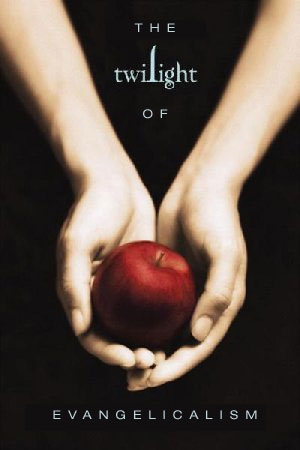
Once upon a time, not far from here, there was a graphic designer who busted a gut for five years teaching the Bible in a local high school. He was committed to building a biblical worldview through the communication of the exciting, terrifying, comforting narratives of the Old Testament as a foundation for the gospel, to a generation starving for this stuff and filling the gap with movies and novels like Harry Potter and Twilight. After all, postmoderns love narrative.

 Bible Matrix blog