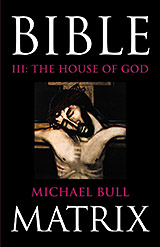
Apr
10
2012
or The Practical Expression of Commonality in Primary Doctrinal Truth
Presbyterians and Baptists have a long history of working together. As is God’s way, any new endeavour must take the past into account but not be bound by it. This is a guest post by my friend Matt Carpenter.
The questions surrounding the origins and necessity of denominations have been discussed at great length and I don’t intend on bringing them up here. But it doesn’t mean we have a license to continue without giving it another thought. This isn’t another call for lip-quivering ecumenism. Fellow soldiers in God’s army can learn a lot from one another and the two groups I currently have in mind are Baptists and Presbyterians. Traditionally they have shared a lot in common.
Continue reading
2 comments | tags: Church History, Evangelism, Evolution, Humanism, Philosophy, Puritans, Revivalism, Spurgeon | posted in Christian Life, Creation, Quotes
May
2
2011
 .
.
“Modernity has for many moderns been a singularly joyless place… And no wonder: Continue reading
Comments Off | tags: Modernism, Peter Leithart, Philosophy | posted in Apologetics, Quotes
Jul
31
2010

Many atheists think it is their void-given right to make disrespectful, insulting or condescending remarks about religion. One I have heard a number of times is a common atheist response to “Your atheism is a religion”: If religion were a hair colour, then I am bald.
Continue reading
3 comments | tags: Animism, Atheism, Education, Philosophy, Postmillennialism | posted in Apologetics, Christian Life, Ethics
Dec
12
2009
 An interesting excerpt from James Jordan’s review of Wayne House and Thomas Ice’s, Dominion Theology: Blessing or Curse?: An Analysis of Christian Reconstructionism
The quietist is committed to inaction. The pietist, by way of contrast, is frequently active in social and charitable affairs, but what makes his position inadequate is that pietism is in general uninterested in social theory. (In general, pietist movements are not much interested in theology either.) There is no self-conscious reflection on the concerns of political philosophy in the broad sense. It is simply a matter of “doing good” here and there, without reflection. This is not bad, but it does not go far enough.
Continue reading
2 comments | tags: Dispensationalism, James Jordan, Philosophy, Pietism, Secular humanism, Theonomy | posted in Quotes
Nov
13
2009
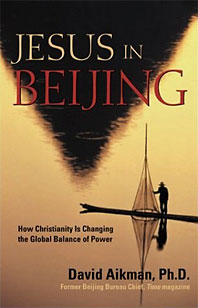
.
or The Root of Democracy is the Spirit of Christ
An excerpt from Jesus in Beijing: How Christianity is Transforming China and Changing the Global Balance of Power by David Aikman, Chapter 13: “Artists, Writers and Academics.”
This post is dedicated to the memory of the false premise of Christopher Hitchens.
Continue reading
1 comment | tags: China, Christopher Hitchens, Democracy, Mission, Philosophy | posted in Quotes
Jul
14
2009
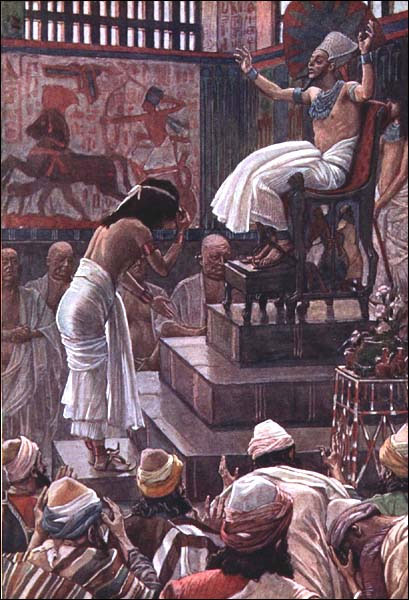
or Theonomy in the Bible
“…instead of Moses and Aaron challenging the powers that be, we have Herodian preachers crying “Peace, peace” when there is no peace. Nathan is not qualified to confront David because Nathan himself has been sleeping around.”
In his post Christianity as Comprehensive Cultural Tribunal?, timsmartt questions the validity of philosophy’s self-appointed role as an unbiased cultural referee and wonders whether Christianity should take that role:
Continue reading
Comments Off | tags: Aaron, Abraham, Against Hyperpreterism, antichrist, Daniel, Esther, Herod, Jethro, John the Baptist, Korah, Melchizedek, Mordecai, Moses, Nathan, Philosophy, Postmillennialism, Solomon | posted in Biblical Theology, The Last Days, The Restoration Era
Jul
13
2009
or A Thimbleful of Watery Bible Broth
The Modernist Bible is very thin. The Old Testament is a mix of myth and history, and Revelation is just a general picture book of the gospel’s work in the world (or a polemic against first century Rome). It boils down basically to some key statements by Jesus and the letters of Paul. And even here, there are problems. Evangelicals love Paul because he communicates like a Greek, but even evangelicals choke on some things he says.
Continue reading
2 comments | tags: Compromise, Duane Garner, Gnosticism, Philosophy, Theistic Evolution, Tim Nichols | posted in Biblical Theology, Creation
Apr
10
2009
The Old Testament surely has a measure of built-in obsolescence. But it is the obsolescence of childhood. The New Testament, the Covenant of the Man, cannot be truly understood without a detailed knowledge of the Old. A friend posted this quote from Rudolph Bultmann: “who went on to cast a large shadow of influence over 20th century theology. Bultmann argues that the whole Old Testament narrative is of no importance to the Christian faith.”
Continue reading
1 comment | tags: Biblical worldview, Bultmann, Church History, Gnosticism, Hermeneutics, Peter Leithart, Philosophy, Typology | posted in Biblical Theology
Apr
10
2009

Darwin’s Joker
by Gary DeMar
There are no spoilers in this review. I saw The Dark Knight, the new Batman film, this weekend. It’s everything the reviewers have been saying about it and more. Heath Ledger’s performance is certainly worthy of an Academy Award and not because of sentimentality over his premature death. The role was a once in a lifetime opportunity, and he played it perfectly. You will believe he is the Joker. I suspect that Ledger called on some of his below-the-surface struggles, his own demons if you will, to bring the character to life. We all have the potential to play the Joker, but we keep it in check because of the “work of the law” written on our heart (Rom. 2:15).
The movie is disturbing. It’s meant to be. I don’t know the worldview of Christopher Nolan, director, co-writer, and co-producer with an impressive film pedigree, but he got so much right in depicting fallen human nature and the consistency of living out the implications of a worldview without a moral rudder.
Continue reading
Comments Off | tags: Atheism, Biblical worldview, Film, Gary DeMar, Philosophy | posted in Apologetics, Ethics
Apr
10
2009
‘Evolution is promoted by its practitioners as more than mere science. Evolution is promulgated as an ideology, a secular religion—a full-fledged alternative to Christianity, with meaning and morality. I am an ardent evolutionist and an ex-Christian, but I must admit that in this one complaint—and Mr [sic] Gish is but one of many to make it—the literalists are absolutely right. Evolution is a religion. This was true of evolution in the beginning, and it is true of evolution still today.
‘… Evolution therefore came into being as a kind of secular ideology, an explicit substitute for Christianity.’
Reference: Ruse, M., How evolution became a religion: creationists correct? National Post, pp. B1,B3,B7 May 13, 2000.
Michael Ruse was professor of philosophy and zoology at the University of Guelph, Canada (recently moved to Florida), He was the leading anti-creationist philosopher whose (flawed) arguments seemed to convince the biased judge to rule against the Arkansas ‘balanced treatment’ (of creation and evolution in schools) bill in 1981/2. At the trial, he and the other the anti-creationists loftily dismissed the claim that evolution was an anti-god religion.
Comments Off | tags: Compromise, Philosophy | posted in Creation, Quotes