Oct
1
2010
Eschatology as Cooking

NOTE: THIS POST HAS BEEN REMIXED AND INCLUDED IN GOD’S KITCHEN.
As a young Christian, I found the New Testament irresistible and the Old Testament mysterious. But as I began to actually read through the Old Testament, I also began to find it really annoying. Instead of finding snappy answers, sound bites and knockout quotes, there are long stretches of detailed information or seemingly redundant poetry. Surely Jeremiah and Lamentations could have been combined and slashed to a few short, sad chapters. Daniel is short, but it’s second half has caused nothing but problems. Isaiah is inspiring in parts, but tedious as a family slide night in many places. He should have just gotten to the point. After all, wasn’t calf skin horrendously expensive?
Continue reading
3 comments | tags: Fractals, Literary Structure | posted in Biblical Theology, Creation
Sep
30
2010
Cooking as Eschatology
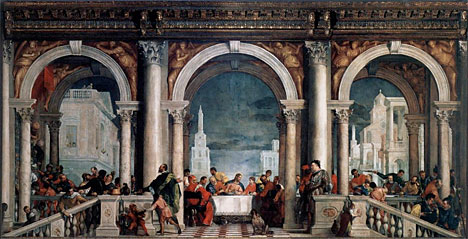
But while they still did not believe for joy, and marveled, He said to them, “Have you any food here?” So they gave Him a piece of a broiled fish and some honeycomb. And He took it and ate in their presence.
NOTE: THIS POST HAS BEEN REMIXED AND INCLUDED IN GOD’S KITCHEN.
Thanks to Doug Wilson’s recommendations of it, one of the books I took to hospital was The Supper of the Lamb by Robert Farrar Capon. It is a mouth-watering fusion of cookbook and theology, pushing the idea of multi-disciplinary insights to the outer limit. But then, we moderns don’t have such biblical horizons, do we? We refuse to see the world as the Bible reveals it to us.
Continue reading
1 comment | tags: Daniel, Doug Wilson, Esther, Food laws, James Jordan, Leviticus, Noah, Robert Farrar Capon | posted in Apologetics, Bible Matrix, Biblical Theology, Christian Life, Creation, Quotes, The Restoration Era, Totus Christus
Sep
29
2010
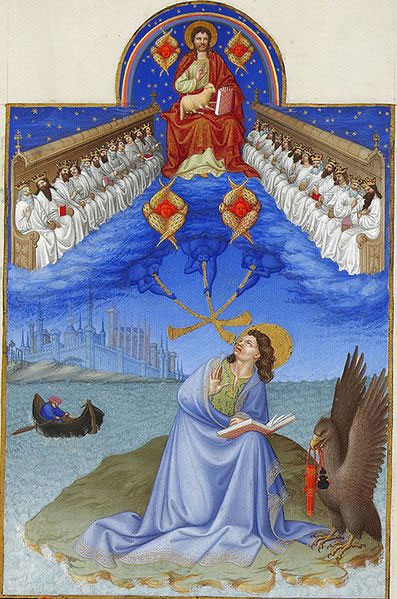
“What was from the beginning, what we have heard, what we have seen with our eyes, what we have gazed upon and our hands handled concerning the word of life—and the life was manifested, and we have seen and bear witness and announce to you the life, the eternal one, which was toward the Father and was manifested to us—what we have seen and heard, we announce also to you…”
IF I BELIEVE that the first resurrection occurred around AD70 [1], and that the New Covenant administration consists of saints living and reigning with Christ in heaven [2], these “joint-heirs” become co-mediators in some fashion. Does this open the door to the Roman Catholic practice of praying to glorified saints, or to the Eastern Orthodox love for beautiful icons?
Continue reading
8 comments | tags: AD70, Holy Place, John, Millennium, Peter Leithart, Revelation 20, Roman Catholicism | posted in Against Hyperpreterism, Biblical Theology, Quotes, The Last Days
Sep
28
2010
or The Universe is Flat
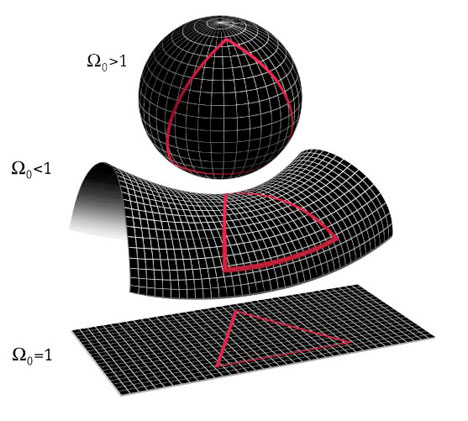 The three density ratios (Ω omega) and the corresponding cosmological morphology. (Goddard Space Flight Center WMAP Cosmology)
Therefore, brethren, having boldness to enter the Holiest by the blood of Jesus, by a new and living way which He consecrated for us, through the veil, that is, His flesh, and having a High Priest over the house of God, let us draw near with a true heart in full assurance of faith, having our hearts sprinkled from an evil conscience and our bodies washed with pure water. (Hebrews 10:19-22)
The “firmament” is the most troublesome element of the Creation week. Even when we understand its symbolic counterpart in the Tabernacle (the veil), how do we account for its description as a physical part of the world?
On Day 4, God created the governing lights and put them in the firmament. If this refers to some sort of “water canopy” that later came crashing down in the Great Flood, the language referring to it as a home for stars is then visual. The Adam-to-Noah pattern puts the floodgates of heaven at “Atonement,” which means the opening of this original “proto-veil” brought men face-to-face with the Ark/throne of God and washed away the sin of the world, quite literally. All flesh was cut off. All sin was covered. And it was the end of that Covenant. The sky was rolled up like a scroll. In Noah, God founded a new heavens and a new (mediatory) Altar-Land. Symbolically, the old sun, moon and stars came crashing down. They were the “mighty men” of Genesis 6. Symbolically, God put new rulers in the firmament: a body of men and animals in a covered vessel.
But, of course, the actual governing lights remained. So, there remains something beyond this original watery “sea.” The word translated “firmament” means something flat, beaten out like metal. It is architectural. Cosmologists now tell us that the universe may well be both spherical, hyperbolic and/or “flat,” a bit like the surface of the earth, I guess. [1] God speaks of the mediatory Land as flat because it is an Altar. [2] Space is a veil between men and the throne of God. Filled with lights, it pictures for us the Holy Place before God’s throne, which is populated with angels and the redeemed. This cosmic hall of government resembled a crystal sea.
But there is something strange about the account of the creation of this veil, this dark garment stretched out on Day 2. Like the “waters above” of the original Covenant, space itself has a built-in obsolescence.
Continue reading
6 comments | tags: Abraham, Creation Week, Genesis, Pentecost, The flood | posted in Against Hyperpreterism, Bible Matrix, Biblical Theology, Creation, The Restoration Era
Sep
9
2010
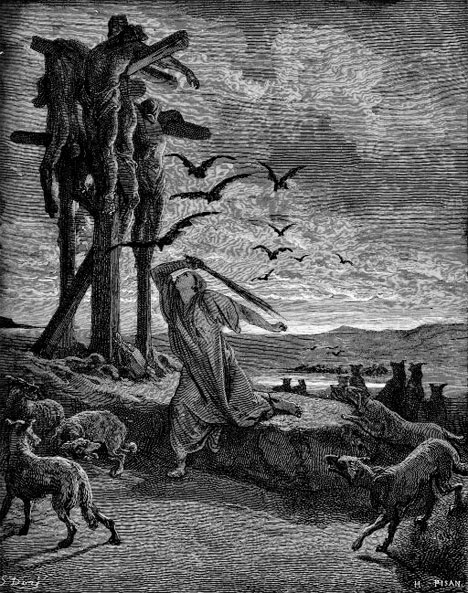
“Now Rizpah the daughter of Aiah took sackcloth and spread it for herself on the rock, from the beginning of harvest until the late rains poured on them from heaven. And she did not allow the birds of the air to rest on them by day nor the beasts of the field by night.” 2 Samuel 21:10
NOTE: THIS POST HAS BEEN REMIXED AND INCLUDED IN GOD’S KITCHEN.
At the heart of the Bible Matrix is Testing. Although all the major narratives follow the pattern, many of the minor ones do too. If Adam had not failed his initial “qualifying round,” he would have progressed to the next stage of dominion. We know this because we see others later in the Bible move beyond this first round to greater glory. For instance, Daniel’s first challenge mirrors Adam’s challenge exactly. He was offered kingdom food and refused it.
Continue reading
Comments Off | tags: AD70, Atonement, Exodus, Herod, Jericho, Nebuchadnezzar, Postmillennialism, Samuel, Temple, Two witnesses, Witness | posted in Biblical Theology, Christian Life, The Last Days
Sep
7
2010
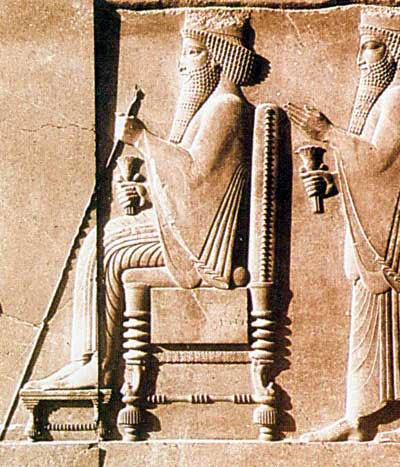
Of course, God’s new golden-haired boy got things wrong, as all Adams do when given the opportunity of glorious kingdom. The metal man in his dream (the new “empire-Tabernacle”) only had gold at the head, but King Nebuchadnezzar’s obelisk was gold from head to foot. This new king, under whom Israel was now a “Covenant vassal,” would be taught by God that he, too, was subject to a higher authority.
Continue reading
Comments Off | tags: Ahasuerus, Belshazzar, Covenant Theology, Daniel, Esther, Haman, James Jordan, Matthew, Mordecai, Nebuchadnezzar, Persia, Revelation | posted in Biblical Theology, The Last Days, The Restoration Era
Sep
6
2010

The Restoration era Scriptures are the most misunderstood texts in the Bible. Our failure to recognise their recapitulation of patterns from the Torah — and the fact that they are not presented in chronological order but by genre — makes it hard for us to put the pieces together. [1] Very often, we miss great ironies because we don’t get the joke.
Continue reading
1 comment | tags: Covenant Theology, Daniel, Ezekiel, Jeremiah, Joke, Nebuchadnezzar, Zedekiah | posted in Biblical Theology, The Restoration Era
Sep
4
2010
or Forbidden Mixtures – 2
NOTE: THIS POST HAS BEEN REMIXED AND INCLUDED IN GOD’S KITCHEN.
You must be logged in to see the rest of this post.
Join now for a year for $15!
Many theologians will tell you that the Old Testament Scriptures have little to say about resurrection. Yet, typologically, they scream about it constantly if we have eyes to see. Many modern conservatives don’t understand the nature of revelation. God paints the same picture of death and resurrection over and over again at both personal and national levels and all these gents do is record how many pixels are in each image.
For a visual blow-by-blow account of this death and resurrection process, get a copy of Bible Matrix and read it twice. Here, I want to concentrate on the significance of Melchizedek in the Last Supper.
Continue reading
2 comments | tags: Abraham, Communion, Ezekiel, Ezekiel's Temple, Genesis, Joseph, Resurrection | posted in Bible Matrix, Biblical Theology, The Last Days, The Restoration Era
Sep
3
2010
or Insanity and Spiritual Songs
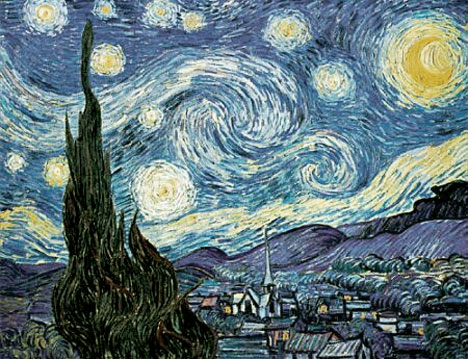
Van Gogh’s work has been regarded by some as “hallucinatory,” however his letters show that few artists were as intelligent and rational. His work was not the product of his dark times but of his struggle against them.
“I am feeling well just now… I am not strictly speaking mad, for my mind is absolutely normal in the intervals, and even more so than before. But during the attacks it is terrible—and then I lose consciousness of everything. But that spurs me on to work and to seriousness, as a miner who is always in danger and makes haste in what he does.” [1]
Continue reading
Comments Off | tags: Covenant Theology, Evolution, Hebrews, Jeremiah, John Piper, Martyrdom, Mission, Noah, Paul, Persecution, Poetry, Psalms, Ray Sutton, Van Gogh, Vindication | posted in Bible Matrix, Biblical Theology, Christian Life, Creation, Quotes